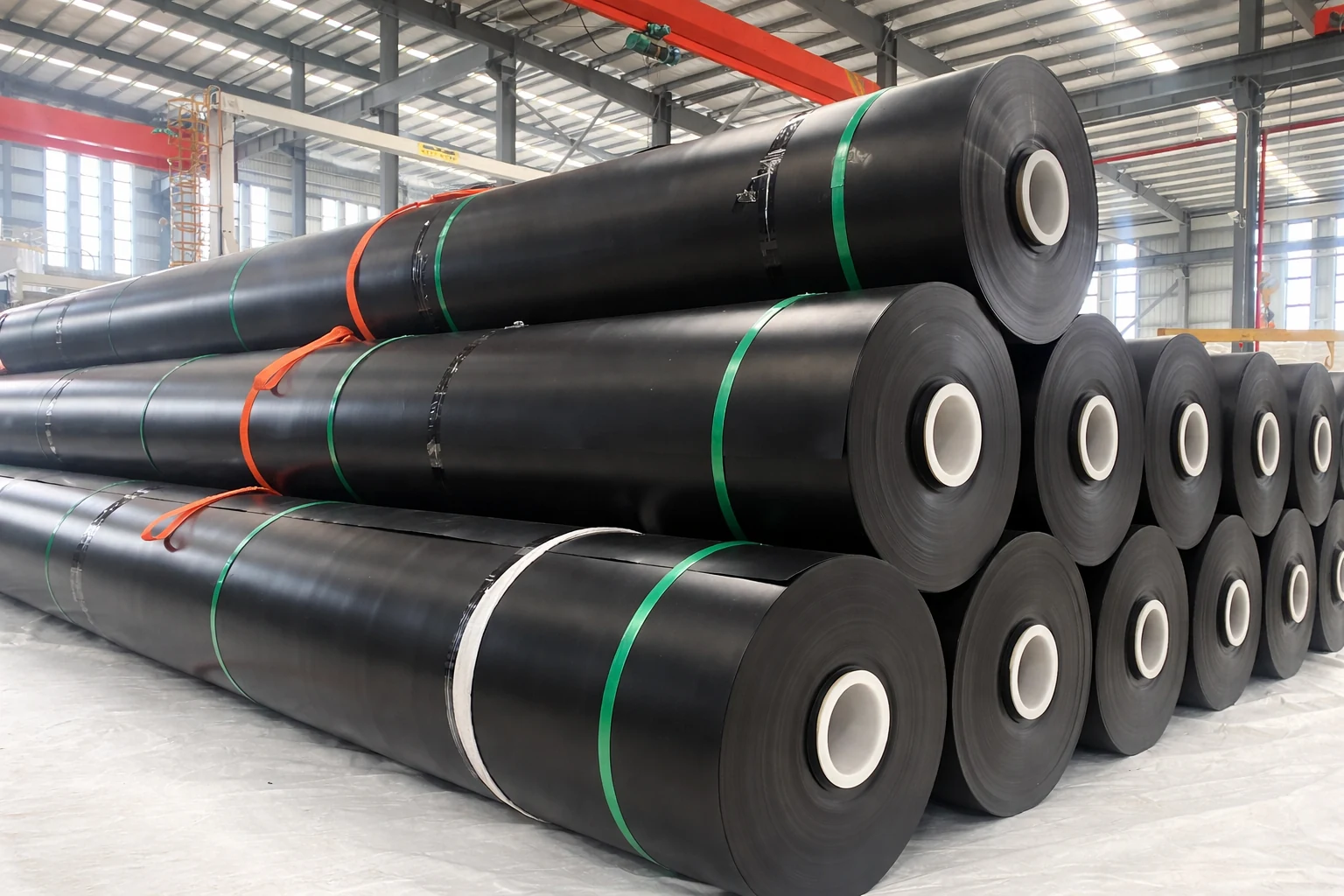
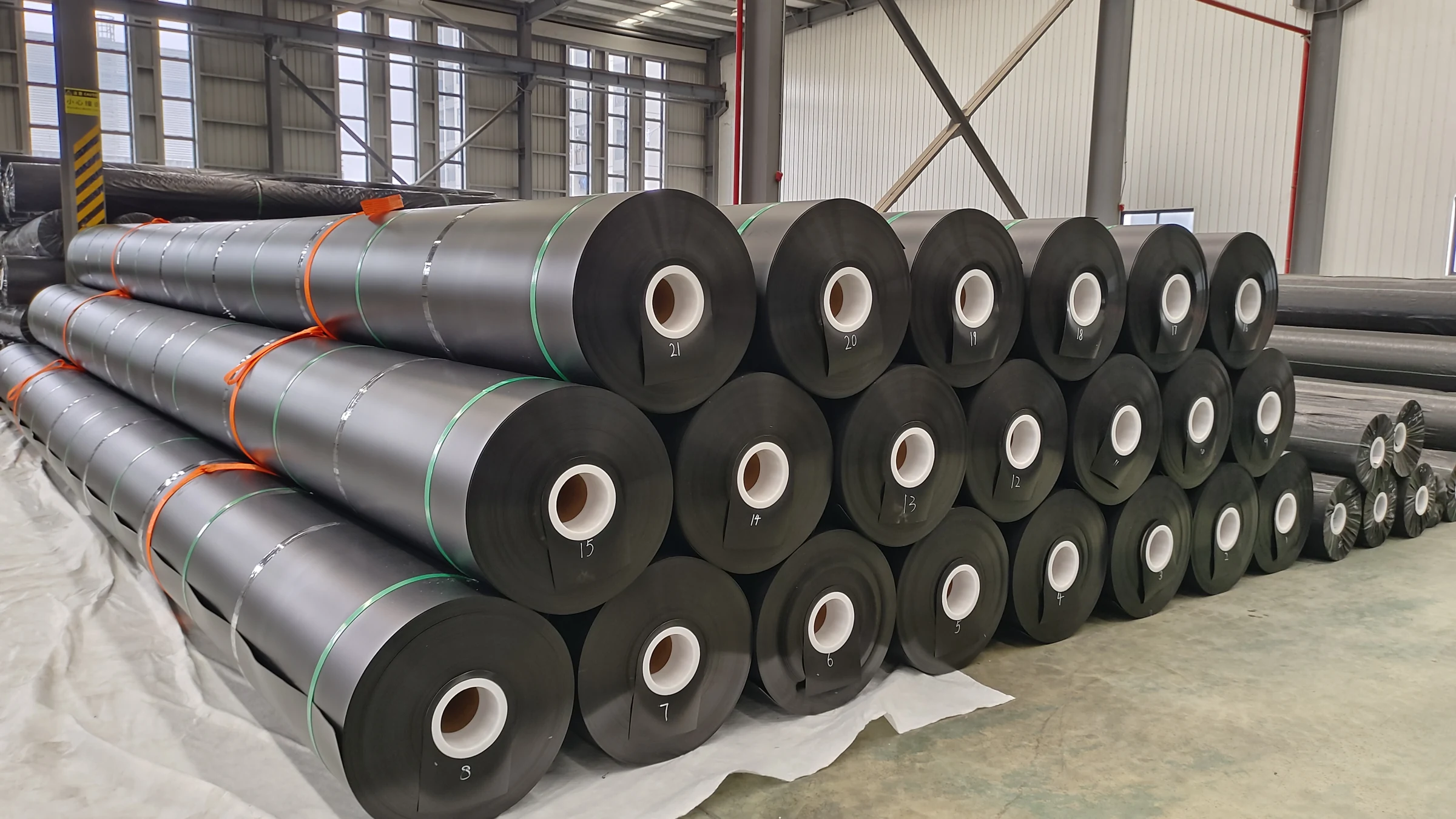

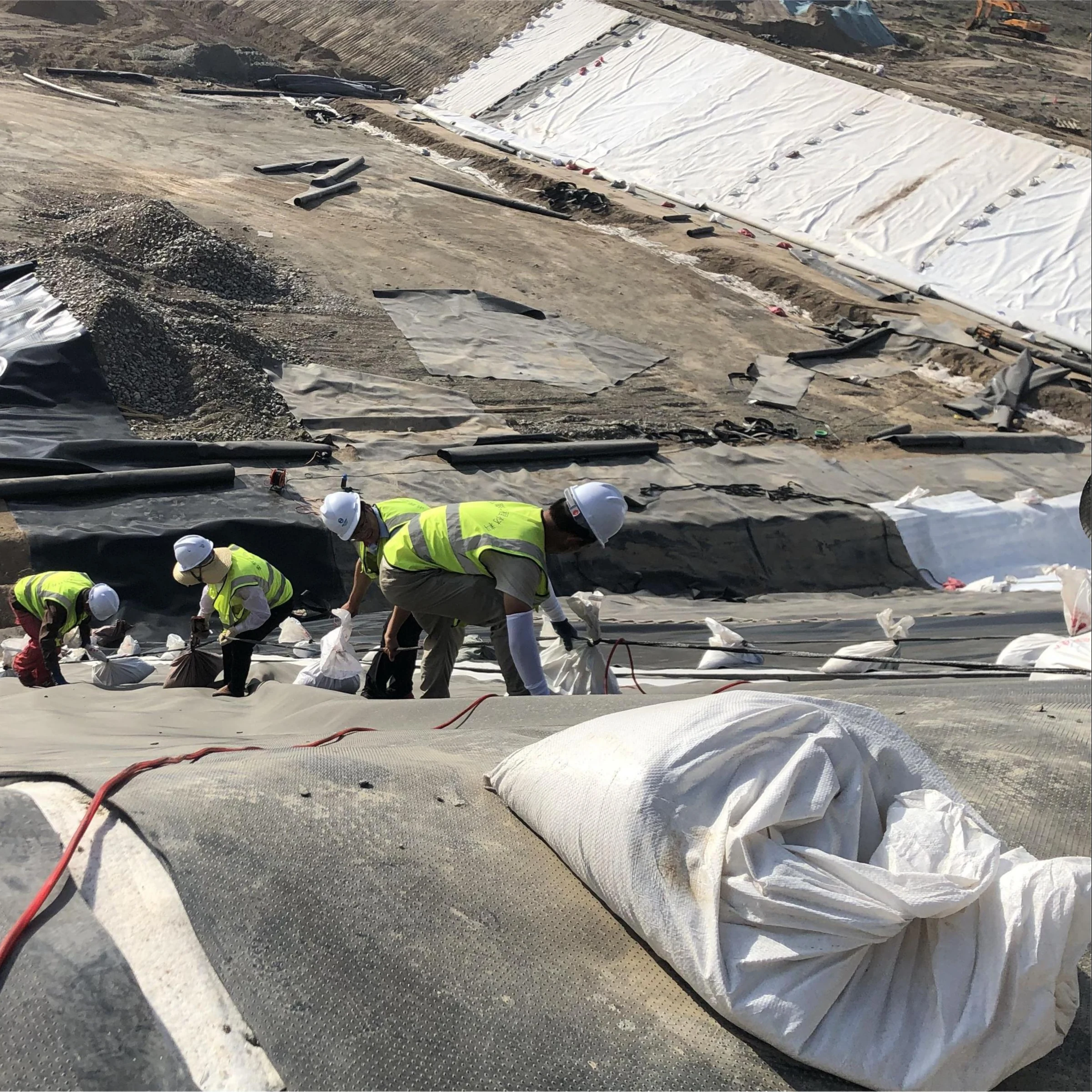
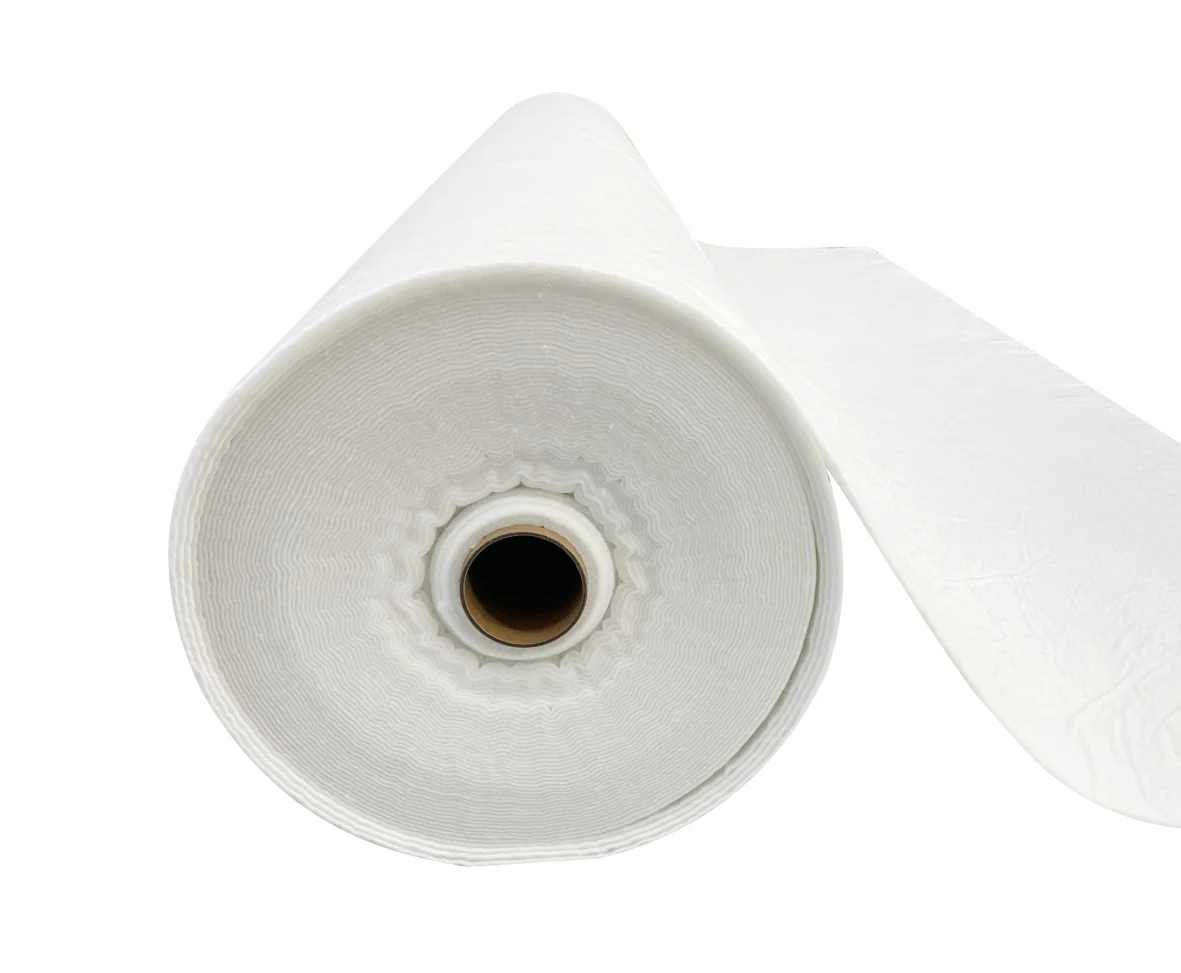

Take a 120-roll order with rolls measuring 6 m × 50 m. That is 36,000 m² of geotextile. Even a small shortage on each roll adds up quickly across an order this size.
Check the Order Requirements
Keep the purchase order, approved technical specification and packing list together during the inspection. Check that they agree on the product grade, quantity, roll size, test requirements and packaging.
| Item | What to Check |
|---|---|
| Product | Correct geotextile grade and product code |
| Material | PP, PET or other specified polymer |
| Construction | Woven or specified nonwoven construction |
| Mass per unit area | Required g/m² and the acceptance rule for that value |
| Width | Required roll width |
| Length | Required roll length |
| Quantity | Roll count and total area |
| Performance | Tensile, puncture, AOS, hydraulic or other required properties |
| Testing | Required ASTM, ISO or project test methods |
| Traceability | Roll number and production lot |
| Packaging | Core, wrapping and label requirements |
Use the order as the inspection reference, not the supplier’s standard catalogue. A supplier may normally sell a 6 × 50 m roll, while your purchase order calls for 5.8 × 100 m.
For a non-woven geotextile, GSM is only one part of the specification. Polymer, construction, roll size and engineering properties must also match the order.
Heavyweight is not a fixed technical grade. One supplier may use the term for 500 g/m² material, while another may reserve it for 800 g/m² or heavier products. Use the actual values written in the specification.
Total Order Area
For 120 rolls measuring 6 m × 50 m:
6 × 50 = 300 m² per roll
300 × 120 = 36,000 m² total
If the nominal mass is 800 g/m²:
36,000 × 0.8 kg/m² = 28,800 kg
That is about 28.8 tonnes of textile, before adding cores, wrapping and straps.
Compare these figures with the packing list, invoice, reported production quantity and shipment weight. Large differences need an explanation before loading.
Define the Specification Value
A purchase order that says only 600 g/m² leaves an important question unanswered: how will that number be used for acceptance?
It may refer to:
- a nominal product grade;
- a typical value;
- an average requirement;
- a minimum requirement;
- a Minimum Average Roll Value;
- a value with a stated tolerance.
If a sample measures 590 g/m², do not invent a tolerance and mark it as acceptable. At the same time, do not reject it just because it is below 600 g/m² if the contract never says that 600 g/m² is a minimum.
Use the same approach for width, length, tensile strength and puncture resistance. If two contract documents conflict, ask the buyer or another contract-authorized party to resolve the issue before release.
Roll Labels
Each accessible roll should be traceable back to the order and production records.

ISO 10320:2019 covers information used to identify geosynthetics on site. ISO also notes that identification information does not replace technical data and does not prove that the product meets every technical requirement.[1]
Depending on the order, verify:
- manufacturer;
- product name or grade;
- roll number;
- lot or batch number;
- nominal width;
- nominal length;
- production reference;
- PO or project reference where required.
Compare accessible labels with the packing list one by one. Watch for missing labels, duplicate roll numbers, wrong GSM, wrong dimensions, unexpected production lots, unreadable printing and labels that appear to have been replaced.
Take clear photographs of representative labels. The roll number and product information should be readable in the photo.
Lot Traceability
A roll number should lead back to a production lot and its QC record.
Example: Roll GT800-086 → Lot B260901 → production record → QC record → shipment
Suppose the packing list shows:
GT800-051
GT800-052
GT800-053
GT800-054
but the warehouse contains:
GT800-051
GT800-052
GT800-052
GT800-054
There are still four rolls, but GT800-053 is missing and GT800-052 appears twice. The quantity matches; the roll identities do not.
Do not solve this by simply printing another label. The factory must first show which production record belongs to the physical roll.
For orders made from several production lots, record each lot separately:
| Lot | Roll Range | Quantity | Share of 120 Rolls |
|---|---|---|---|
| B260901 | 001–040 | 40 | 33.3% |
| B260902 | 041–082 | 42 | 35.0% |
| B260903 | 083–120 | 38 | 31.7% |
If Lot B260902 later fails a required test, the affected material can be narrowed down to 42 rolls instead of treating all 120 rolls as one unknown batch.
Roll Width
Measure the textile, not the plastic wrapper. Use a tape long enough for the full roll width and keep it straight while measuring.

| Roll | Label Width | Measured Width |
|---|---|---|
| GT800-012 | 6.00 m | 6.01 m |
| GT800-038 | 6.00 m | 5.99 m |
| GT800-071 | 6.00 m | 6.00 m |
Judge these results against the tolerance stated in the order.
Check the roll edges while measuring. For example, suppose a 6 m × 50 m roll has 70 mm of badly damaged material along one edge.
70 mm equals 0.07 m:
0.07 × 50 = 3.5 m² of affected material per roll
The damaged strip is:
0.07 ÷ 6 × 100 = 1.17% of the roll width
If the same defect appears on 20 rolls:
3.5 × 20 = 70 m²
The overall width may still measure 6 m, but about 70 m² of usable coverage is affected. Record edge damage separately from the measured roll width.
Roll Length
Fully unwinding every 50 m or 100 m heavyweight roll is rarely practical during a normal pre-shipment inspection.
Cross-check length with:
- roll labels;
- the packing list;
- winding or length-counter records;
- production records linked to the roll number;
- selected physical measurements;
- roll weight as a supporting check.
Do not use roll diameter as proof of length. Core diameter, fabric thickness, compression and winding tension all affect the finished diameter.
Short-Roll Example
Suppose an order contains 80 rolls, each specified as 6 m × 50 m. If each roll is 0.5 m short:
6 × 0.5 = 3 m² missing per roll
3 × 80 = 240 m² missing in total
For nominal 800 g/m² material:
240 × 0.8 = 192 kg
A shortage that looks minor on one roll can therefore remove 240 m² from an 80-roll order. Do not rely only on the length printed on the label when the order requires length verification.
Roll Weight
Whole-roll weight is a good way to spot an abnormal roll. It is not a direct measurement of GSM or roll length.

For an 800 g/m² roll measuring 6 m × 50 m:
Area = 6 × 50 = 300 m²
Nominal fabric mass = 300 × 0.8 = 240 kg
If the core weighs about 6 kg and the wrapper and straps add another 2 kg, the example gross weight is:
240 + 6 + 2 = 248 kg
This is an example, not a universal acceptance weight. The real figure depends on the product tolerance, actual core, packaging and moisture condition.
| Roll | Gross Weight |
|---|---|
| GT800-021 | 247 kg |
| GT800-022 | 249 kg |
| GT800-023 | 246 kg |
| GT800-024 | 218 kg |
| GT800-025 | 248 kg |
GT800-024 is roughly 30 kg lighter than the surrounding rolls. That difference is large enough to investigate.
For 800 g/m² fabric:
30 kg ÷ 0.8 kg/m² = 37.5 m²
At 6 m width:
37.5 ÷ 6 = 6.25 m
This does not prove the roll is 6.25 m short. The difference could come from lower GSM, a different core, lighter packaging, the wrong product or a weighing error.
Weighing Method
If roll weight is part of the inspection, check how the weighing is done.
- Use a scale suitable for the expected roll weight.
- Confirm the scale reads zero before use.
- Support the whole roll on the scale.
- Make sure forklift forks or lifting straps are not carrying part of the load.
- Record whether the reading is gross or net weight.
- Compare rolls that use similar cores and packaging.
If the purchase requirement calls for calibration records, record the scale ID and the available calibration information.
GSM Testing
GSM means grams per square metre. It is the mass of a known fabric area.

ASTM D5261-10(2024) is the current ASTM method for measuring mass per unit area of geotextiles. ASTM states that the method can be used to check material against mass-per-unit-area requirements and may be used for commercial-shipment acceptance testing, subject to the limitations in the method.[2]
ISO 9864:2005 also covers determination of mass per unit area for geotextiles and geotextile-related products.[3]
The calculation is:
GSM = specimen mass ÷ specimen area
If a specimen covers 0.10 m² and weighs 82 g:
82 ÷ 0.10 = 820 g/m²
The arithmetic is straightforward. Sampling and specimen preparation need just as much attention as the final number.
Sampling
Do not use one convenient corner sample to represent a large shipment.
ASTM D4354-26 covers sampling of geosynthetics and rolled erosion control products. It includes procedures for manufacturer quality control, manufacturer quality assurance and purchaser specification-conformance testing. For purchaser testing, it covers shipment lots and lot sample size.[4]
If the order contains three production lots, the samples should cover those lots according to the agreed sampling procedure. Do not take every specimen from the same easy-to-reach roll.
Identify each cut sample immediately. For example:
PO-2609 / GT800 / Lot-B260902 / Roll-067 / Sample-A
Do not change that identification if the sample is later divided between the factory, buyer and independent laboratory.
Check the Variation
Consider two sets of GSM results.
790, 795, 802, 806, 807 g/m²
The average is 800 g/m². The range is:
807 − 790 = 17 g/m²
Now compare that with:
720, 760, 800, 840, 880 g/m²
The average is also 800 g/m², but the range is:
880 − 720 = 160 g/m²
Both sets have the same average, but their spread is very different. If the specification controls individual results, averages or roll-based values, keep the individual measurements in the inspection record.
Some geosynthetic specifications use Minimum Average Roll Value (MARV). FHWA notes that for tensile strength, MARV is commonly defined as a value two standard deviations below the mean tensile strength.[5]
Follow the MARV definition and acceptance rule written in the project specification.
Check More Than GSM
An 800 g/m² GSM result tells you the mass per unit area. It does not tell you whether the same material meets the required tensile, puncture or hydraulic performance.
Other specified properties may include:
- tensile strength;
- elongation;
- puncture resistance;
- tear strength;
- apparent opening size (AOS);
- permittivity or water flow;
- thickness;
- UV durability.
When comparing a nonwoven geotextile data sheet, check the test method and unit as well as the number. A grab tensile result in newtons cannot be compared directly with a wide-width tensile result in kN/m.
| Use | Properties That May Need Checking |
|---|---|
| Separation | Installation strength, puncture, tear and soil compatibility |
| Filtration | AOS and hydraulic properties |
| Geomembrane protection | Puncture, thickness and cushioning performance |
| Reinforcement | Tensile behavior and project design requirements |
For a geotextile cushion below an HDPE geomembrane, high GSM by itself does not prove that the liner has enough protection against the actual ground surface, stone shape and applied load.
A tunnel geotextile specification may also require puncture and hydraulic performance in addition to mass per unit area.
Test Reports
Match each test report to the material being shipped.
Check:
- product grade;
- production lot;
- sample identification;
- test method;
- measured result;
- unit;
- test date;
- machine and cross-machine direction where relevant.
A technical data sheet normally describes a product grade. It is not the same as a lot-specific test report.
If three production lots are being shipped and the order requires a report for each lot, results from one lot should not be reused for the other two.
Record the actual result when possible. For example:
Requirement: ≥45 kN/m
Measured result: 48.2 kN/m
The result is 3.2 kN/m above the stated requirement. A report that says only “Pass” does not show the actual measured value.
If independent laboratory testing is required, make sure the report identifies the sample, test method and result. Where accredited testing is required, ISO/IEC 17025:2017 sets requirements for laboratory competence, impartiality and consistent operation.[6]
Fabric Condition
Open sampled rolls far enough to inspect the textile itself.
For nonwoven material, look for:
- holes and cuts;
- thin areas;
- hard lumps;
- uneven fiber distribution;
- damaged edges;
- oil or chemical contamination;
- mud and foreign material;
- severe wrinkles;
- areas that look noticeably different from nearby fabric.
For woven geotextile, also check for broken or missing yarns, damaged tapes, unusual openings, weave distortion and damaged edges.
An industrial textile does not need to look cosmetically perfect. Focus on defects that reduce usable material or may affect the required function.
Write defects in a way that another person can understand:
“Roll GT800-044: approximately 20 mm opening in the visible outer layer, about 0.4 m from the left edge.”
That is much clearer than simply writing “hole in fabric.”
Packaging and Cores
ASTM D4873/D4873M-17(2021) covers identification, storage and handling of geosynthetic rolls and samples. ASTM states that geosynthetics should be packaged, handled and stored so that their physical properties are not degraded.[7]
Check visible rolls for:
- torn wrapping;
- holes in the wrapper;
- open roll ends;
- exposed textile;
- wet packaging;
- oil or mud;
- broken straps;
- crushed or bent cores;
- damaged roll ends;
- loose or unreadable labels.
| Condition | What to Do |
|---|---|
| Wrapper torn, fabric not exposed | Record the damage and repair the wrapper |
| Fabric exposed but clean and undamaged | Inspect the exposed area and restore the protective wrapping |
| Fabric cut or contaminated | Isolate the roll and assess the product damage |
| Core badly crushed | Check the fabric and confirm the roll can still be handled safely |
A new wrapper can fix damaged packaging. It does not fix a cut, dirty or otherwise damaged textile underneath.
Moisture and Contamination
A wet wrapper does not always mean the complete roll is unusable. Open and check the affected area before making that decision.
- Is only the outside of the wrapper wet?
- Did water reach the textile?
- How many visible layers are affected?
- Is the water clean?
- Is there mud, oil or chemical contamination?
- Does the order require dry delivery?
Water can also distort a weight check. A roll that normally weighs around 248 kg gross may still look normal or heavy after taking on several kilograms of water, even if it contains less textile than expected.
Record wet rolls separately and do not compare their gross weights directly with dry rolls.
Warehouse Storage
Look at the actual warehouse stock. Do not inspect only a few clean rolls that were moved into a separate inspection area.
Check for rolls sitting on muddy ground or near standing water, damaged wrapping left unrepaired, crushed lower rolls, mixed grades without clear identification, forklift damage and contamination.
For rolls stored outside, check whether the wrapping still protects the fabric and whether the exposed parts show visible damage.
Container Condition
Inspect the empty container before loading starts.
- Look for holes in the roof or walls.
- Check the floor for nails and other sharp projections.
- Look for water, oil, chemicals and heavy dirt.
- Check the doors and sealing area.
- Make sure the rolls will not rest against sharp surfaces.
Good material can still arrive damaged if it is loaded against a sharp edge or allowed to move too much during transport.
Product Mix During Loading
Count the rolls as they enter the container. If the shipment contains several grades, keep a separate count for each one.

| Grade | Required | Loaded |
|---|---|---|
| 400 g/m² | 24 rolls | 24 rolls |
| 600 g/m² | 38 rolls | 38 rolls |
| 800 g/m² | 20 rolls | 20 rolls |
| Total | 82 rolls | 82 rolls |
A total count can still hide the wrong product mix. For example:
- 23 rolls of 400 g/m²;
- 39 rolls of 600 g/m²;
- 20 rolls of 800 g/m².
The container still holds 82 rolls, but one 400 g/m² roll is missing and one extra 600 g/m² roll has been loaded. Count each grade separately.
Handling During Loading
Watch how the rolls are moved. Common problems include forklift forks hitting the fabric, rolls being dragged or dropped, crushed cores, wrapping caught on the container edge and exposed textile touching dirty surfaces.
OSHA identifies falling loads, lift-truck strikes and pedestrian interaction as important hazards around powered industrial trucks.[8]
Inspectors should stay outside the forklift travel path and away from unstable or suspended rolls. Heavy geotextile rolls may weigh several hundred kilograms. Do not try to stop a moving roll by hand.
Failed Checks
Not every problem needs the same response. A torn wrapper, an untraceable roll and a failed tensile test are very different issues.
| Problem | Typical Action |
|---|---|
| Torn label | Verify the roll identity before replacing the label |
| Torn wrapper | Check the fabric, then repair the packaging if the textile is sound |
| Untraceable roll | Hold the roll until valid production records are found |
| Failed required property | Hold the affected lot and follow the agreed testing and acceptance procedure |
| Crushed core | Check both the material condition and whether the roll can still be handled safely |
ASTM D4759-11(2024) provides a practice for determining whether geosynthetic properties conform to a material specification and can support acceptance or rejection decisions where it applies to the purchase requirement.[9]
Do not keep selecting fresh samples until one finally passes. If retesting is allowed, use the procedure stated in the contract or applicable specification.
If the buyer accepts a known deviation, keep the failed result in the inspection record. Record the affected rolls or lot, the actual result, the agreed action and the person who approved it.
Inspection Report
The report should show exactly what was checked and what was found.
- PO number;
- factory and inspection date;
- product grade;
- ordered and available quantity;
- production lots;
- roll-number ranges;
- width measurements;
- selected roll weights;
- GSM results where tested;
- test reports reviewed;
- fabric and packaging defects;
- repairs or corrections;
- loaded quantity;
- container number;
- seal number where required;
- open problems;
- approved deviations;
- inspection limitations.
Use specific defect descriptions:
“Roll GT800-064: outer PE wrapping torn approximately 120 mm at left roll end. Fabric exposed but no visible cut or contamination. Wrapping repaired before loading.”
That record is more useful than a note that only says “packaging damaged.”
Record What Was Not Verified
State the inspection limits clearly. Do not leave the reader guessing.
“120 rolls were included in the order. 86 rolls were accessible during the warehouse inspection. The remaining 34 rolls received label and external-condition checks during loading.”
86 ÷ 120 × 100 = 71.7%
In this case, 71.7% of the rolls were accessible for the warehouse inspection. The remaining 28.3% received only the checks stated above.
For roll length, the report might say:
“Roll length was not checked by fully unwinding each roll. Length verification used labels, production records, winding records and selected roll-weight checks.”
This wording makes the inspection boundary clear and avoids implying that every property of every roll was independently tested.
Release Checklist
- Product grade matches the order.
- Polymer and construction are correct.
- Roll quantity is correct.
- Total ordered area is reconciled.
- Roll numbers match the packing list.
- No unexplained duplicate roll numbers remain.
- Production lots are traceable.
- Required test records cover the material being shipped.
- Width checks meet the stated requirement.
- Length evidence is acceptable.
- Roll weights show no unexplained major outliers.
- Required GSM checks are complete.
- Required engineering-property results are available.
- Visible fabric condition is acceptable.
- Usable edges are acceptable.
- Packaging is intact or properly repaired.
- Cores remain suitable for handling.
- No unacceptable moisture or contamination remains.
- The container is clean and suitable.
- The correct grades and quantities were loaded.
- Container and seal numbers are recorded where required.
- Open failures have been resolved or formally held.
- Approved deviations are documented.
- Inspection limitations are recorded.
Do not judge the shipment by the number of boxes ticked. One failed material requirement or one untraceable production lot may be enough to stop release until the issue is resolved.
Finally
A good heavyweight geotextile inspection comes down to matching the paperwork with the actual rolls. Check roll identity, dimensions, production lots, test records, fabric condition, packaging and loading records. Numbers help spot problems: a 6 × 50 m roll has 300 m² of material, and at 800 g/m² its nominal textile mass is about 240 kg. Use those calculations as cross-checks, not substitutes for the engineering tests required by the order. Any item that was not checked should be stated clearly in the final report.
FAQ
How Many Rolls Should Be Weighed?
There is no single percentage that works for every shipment. Follow the purchase agreement or sampling plan and consider the number of production lots, total quantity and inspection risk. If one roll is much lighter or heavier than similar rolls, investigate the reason instead of ignoring it as an isolated result.
Should Every Geotextile Roll Be Opened?
Usually not. Opening every large roll can damage good packaging and may not be practical. Labels and external packaging can be checked across more of the shipment, while fabric inspection and destructive sampling are normally carried out on selected rolls that represent the relevant production lots.
Can Gross Roll Weight Be Used to Calculate GSM?
Use it only as a rough cross-check. Gross weight includes the textile, core, wrapping, straps and sometimes moisture. Unless those extra weights are known and removed from the calculation, the result can give a misleading GSM value. Use a proper GSM test when mass per unit area is an acceptance requirement.
What If Factory and Independent Laboratory Results Are Different?
First confirm that both sides tested material from the same lot. Then compare the sample location, conditioning, test method, units and specimen preparation. If those details are different, the results may not be directly comparable. Keep the original sample IDs and follow the dispute or retesting procedure written in the purchase specification.