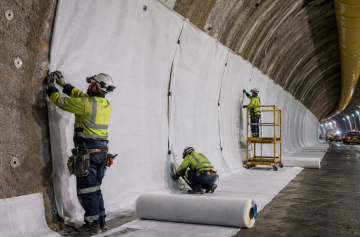
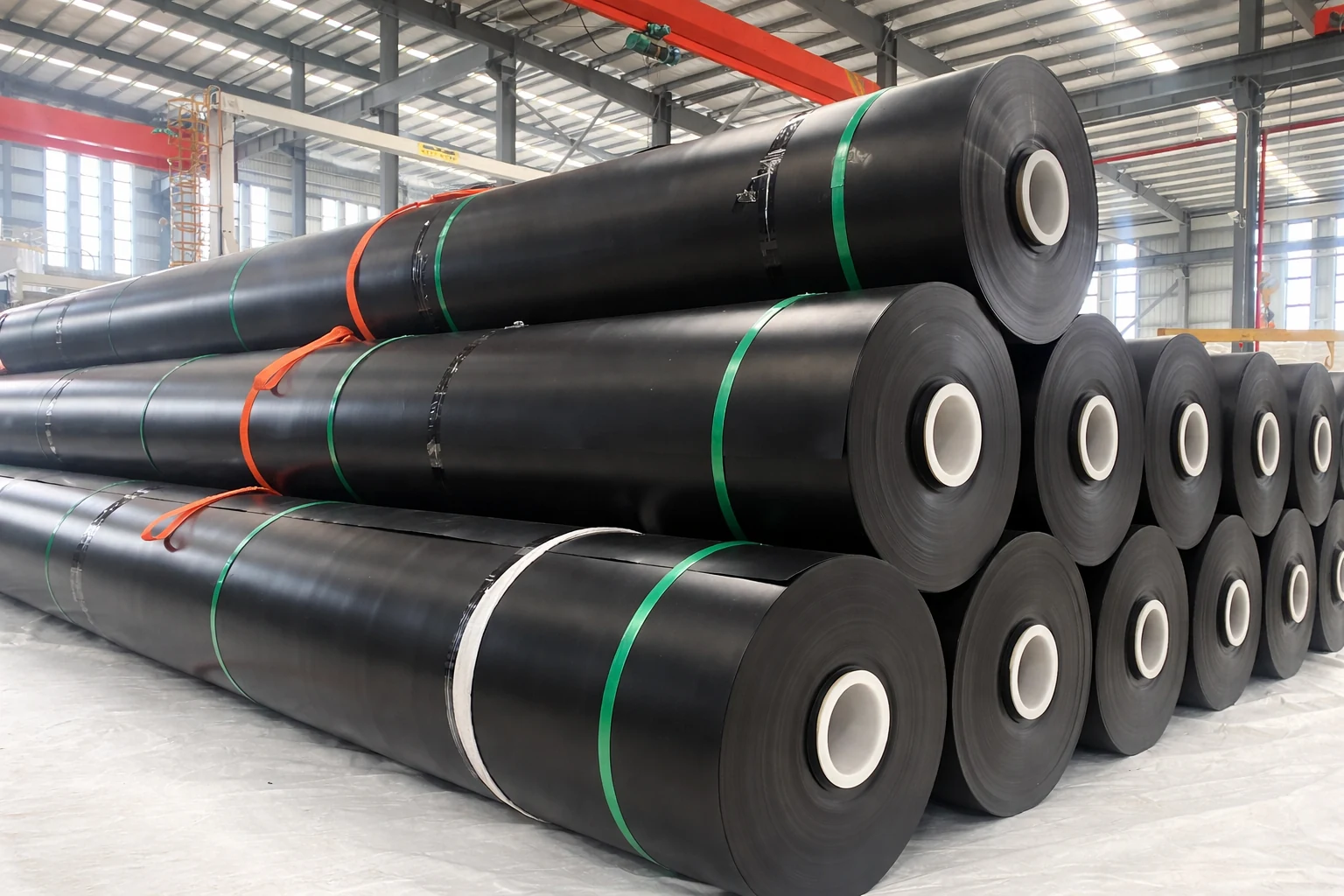
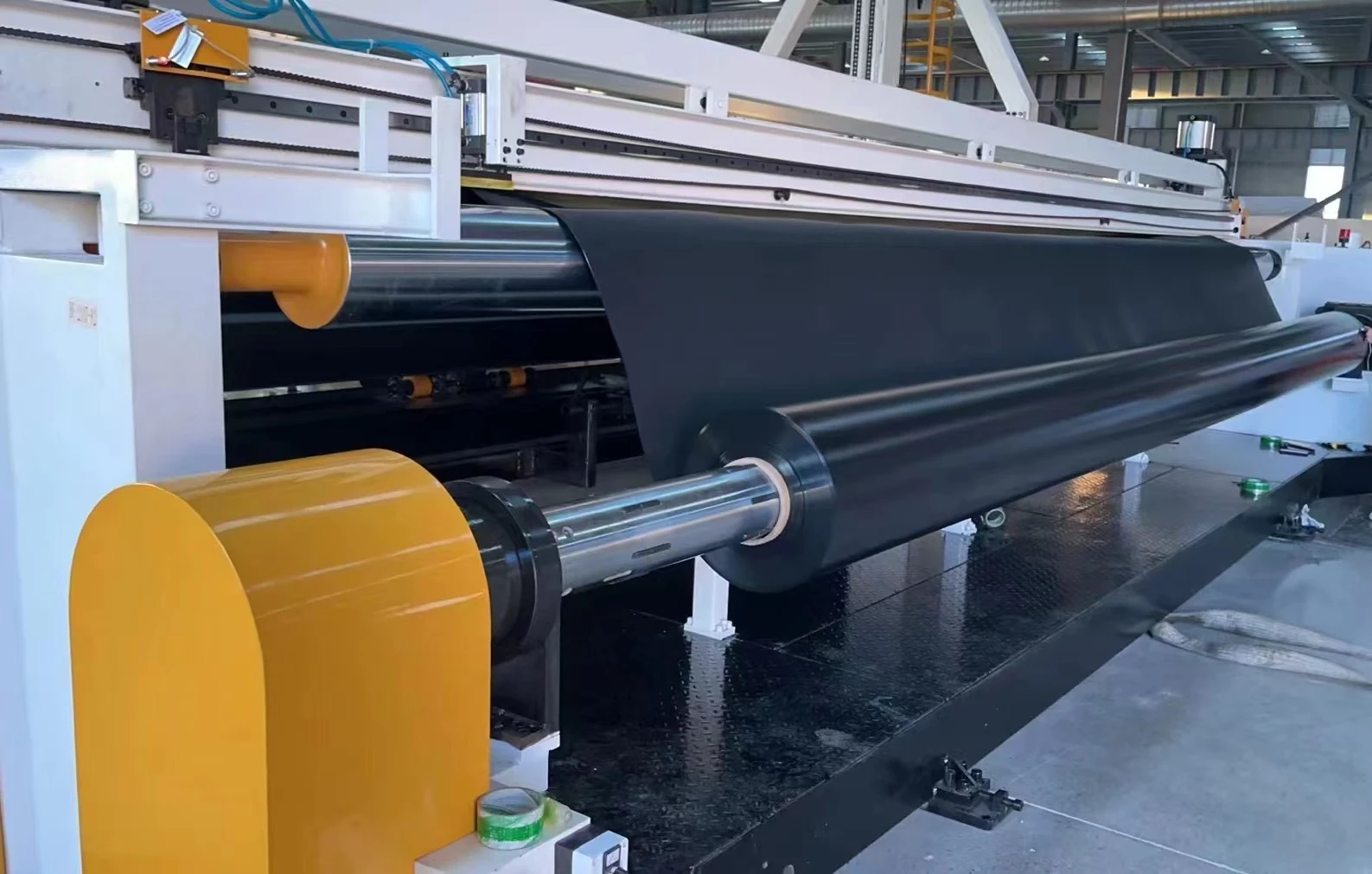
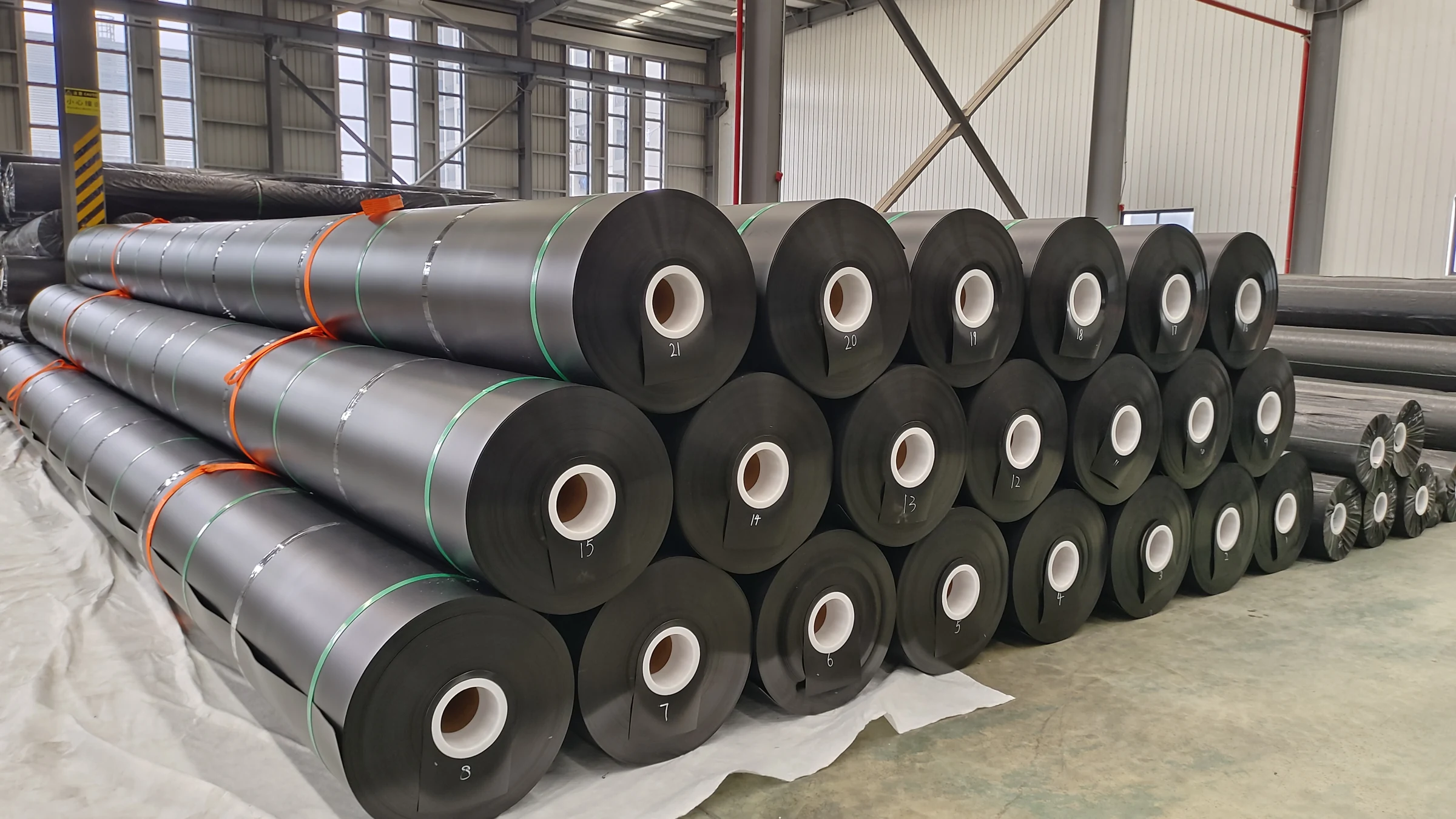

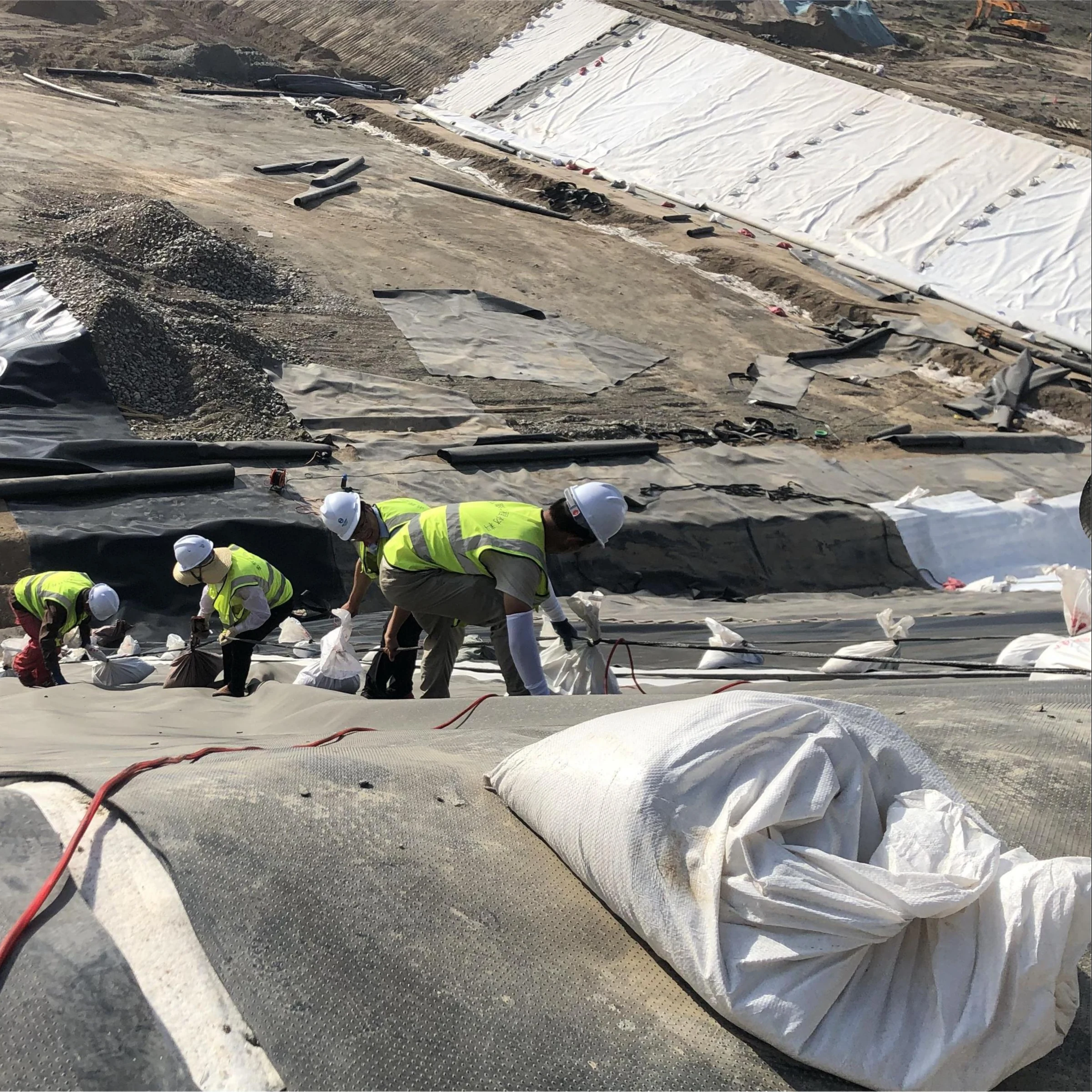
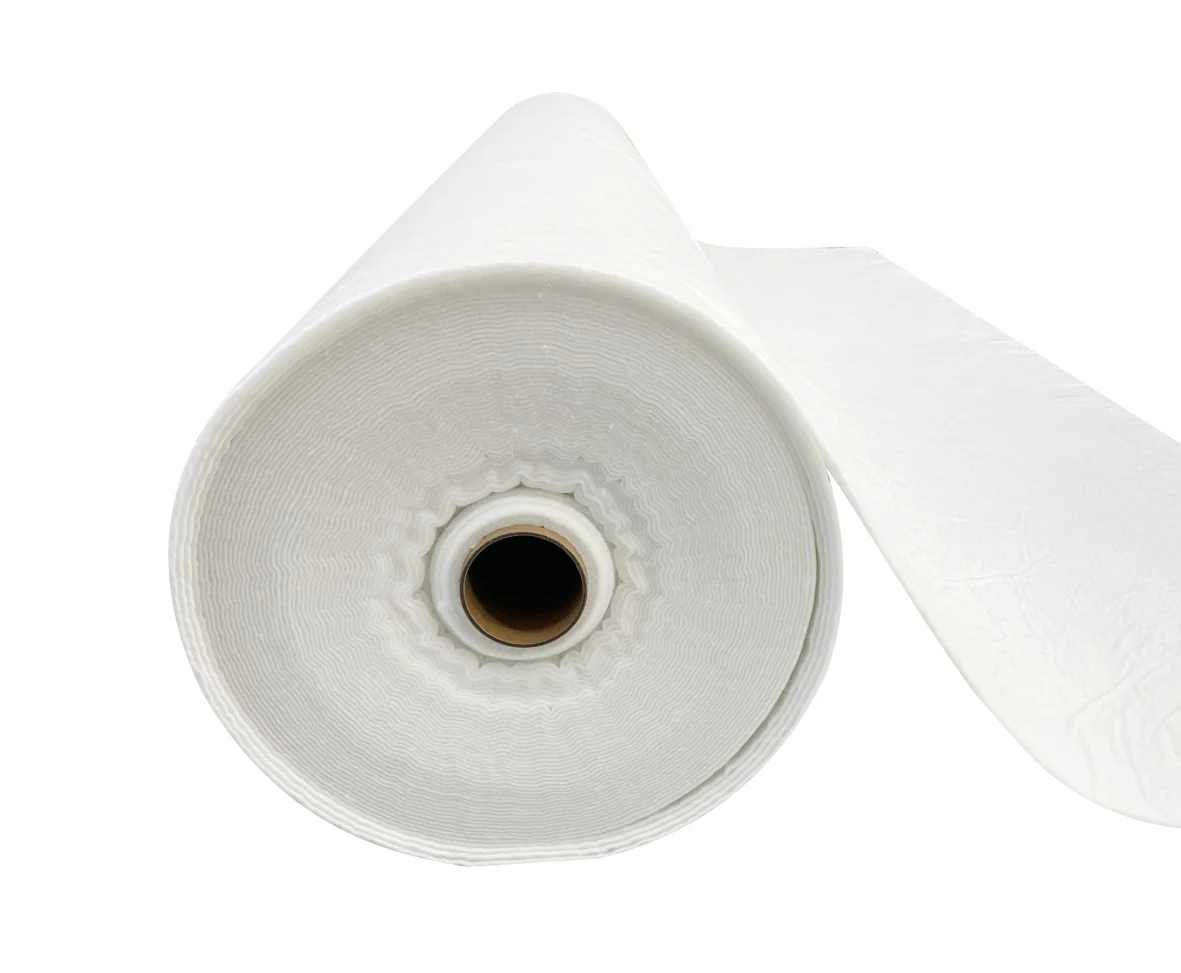

For a roll marked 5.8 m × 100 m, the nominal area is 580 m². But when you place an order, that number alone is not enough. You also need to agree on usable width, width tolerance, length tolerance, how the length will be checked, core opening, gross roll weight limit, packaging condition, roll ID, and what happens if a roll does not meet the requirement.
| Item | What the Buyer Should Define |
|---|---|
| Roll width | Nominal width and minimum usable width |
| Width tolerance | Numerical positive and negative limits |
| Roll length | Nominal or minimum length and permitted tolerance |
| Length verification | Production record, direct measurement, or agreed inspection method |
| Core | Internal diameter, minimum clear opening, and handling compatibility |
| Roll weight | Net and gross weight where handling limits apply |
| Packaging | Wrapper, roll-end protection, identification protection |
| Roll ID | Roll number linked to batch and production records |
| Acceptance | What is measured, how it is measured, and what result fails |
PET continuous-filament needle-punched nonwoven products, including customized roll widths, are shown on the PET nonwoven geotextile specification page.
Set the Roll Width
When an order says “5.8 m width,” both sides need to know exactly what that means. The number on the label, the width you measure, and the width you can actually install are not always the same.
| Width Term | Meaning |
|---|---|
| Nominal width | Value on the order, roll label, or packing list |
| Measured width | Actual width found during inspection |
| Usable width | Width remaining after permanently unusable edge material is excluded |
| Installed width | New coverage after side overlap is deducted |
Take a simple example:
- Nominal width: 5.80 m
- Measured physical width: 5.82 m
- Permanently damaged edge: 0.04 m
- Usable width: approximately 5.78 m
The roll is physically wider than 5.80 m, but the damaged edge means the usable part is smaller. If the job really needs at least 5.80 m of installable material, write that requirement directly into the order:
Minimum usable width: 5.80 m
Also keep machine capability separate from delivered product width. A line may be able to make a certain maximum width, but GSM, edge trimming, winding, and roll weight can still affect the usable width of the finished roll.
Set the Width Tolerance
The safest approach is to put the tolerance in numbers. Terms such as “standard tolerance” leave too much room for different interpretations.
Illustrative example only:
5.80 m ± 1%
This is an illustrative calculation, not an industry-wide tolerance.
The calculation is straightforward:
5.80 × 0.01 = 0.058 m
So the permitted range becomes:
5.742 m to 5.858 m
That range allows the roll to come in below 5.80 m. If the project cannot accept that, use wording that removes the negative tolerance:
Nominal width: 5.80 m; negative tolerance: 0
or:
Minimum usable width: 5.80 m
You also need one clear rule for judging the readings:
- Minimum point: every required measurement must meet the limit.
- Average: specified readings are averaged.
- Tolerance range: every required reading must stay inside the stated limits.
For example, suppose the three readings are:
5.81 m, 5.77 m, 5.82 m
The average is:
(5.81 + 5.77 + 5.82) ÷ 3 = 5.80 m
Under an average-width rule of 5.80 m, that result can pass. Under a rule that says every reading must be at least 5.80 m, it fails. The same measurements can therefore lead to different decisions if the acceptance rule is not written down first.
ASTM D4759-11(2024) covers procedures for determining conformance of geosynthetic properties to specifications and supports the need for clearly defined purchase requirements before testing.[1]
Calculate Width Loss
A width shortage that looks small on one roll can become a large area difference across a full shipment.
For 100 rolls, each 100 m long:
| Average Width Shortfall | Loss per Roll | Loss Across 100 Rolls |
|---|---|---|
| 10 mm | 1 m² | 100 m² |
| 20 mm | 2 m² | 200 m² |
| 50 mm | 5 m² | 500 m² |
| 100 mm | 10 m² | 1,000 m² |
Use:
Area loss = width shortfall × roll length × number of rolls
For a 50 mm average shortage:
0.05 × 100 × 100 = 500 m²
That is why checking width in millimeters alone can be misleading. For a large order, convert the difference into total square meters as well.
Measure the Width
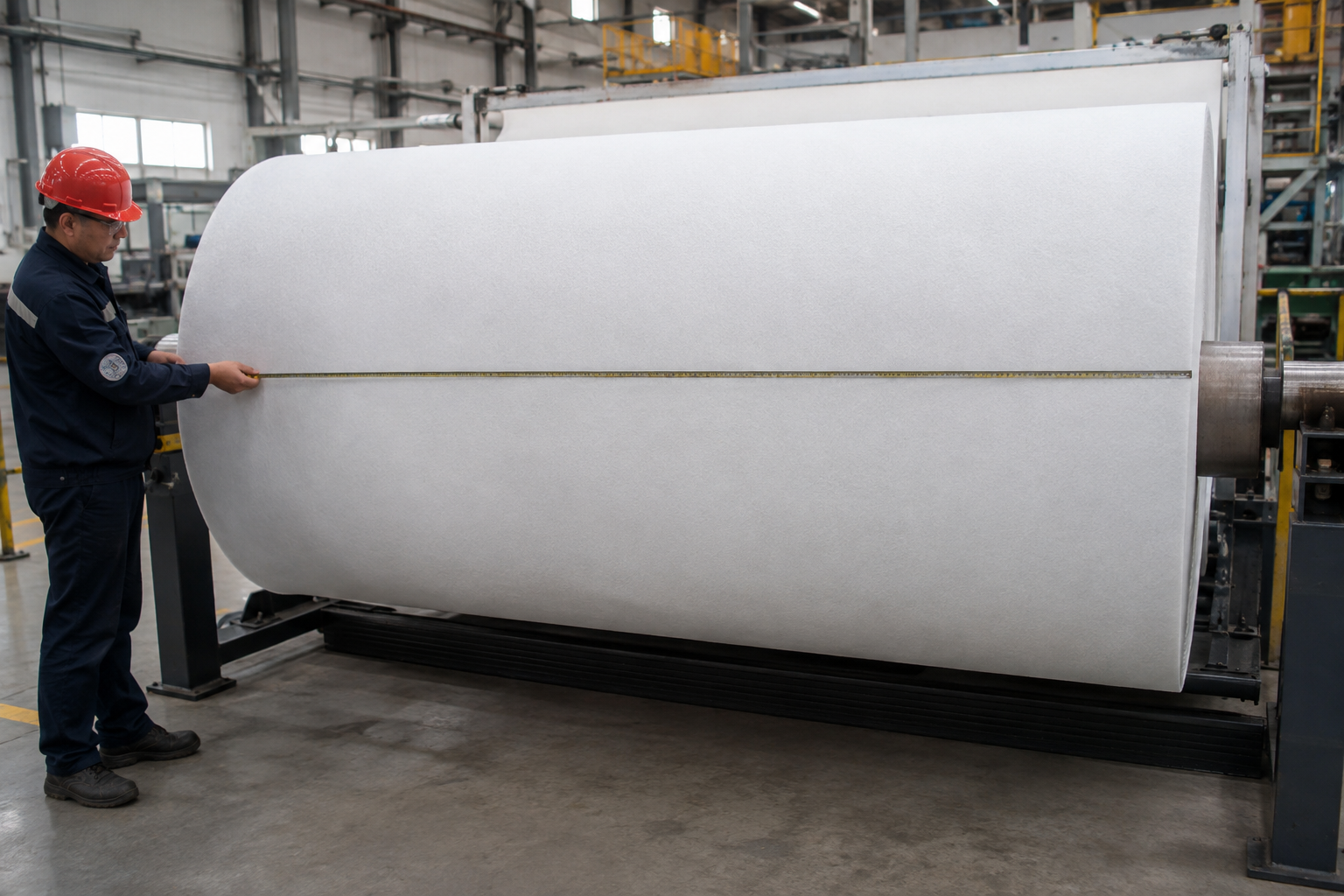
- Open enough material to remove roll-end compression.
- Lay the fabric reasonably flat.
- Remove temporary folds without stretching the fabric.
- Measure at a right angle to the roll length.
- Measure at the required positions.
- Record every reading with the roll number.
Two simple mistakes can change the result: measuring diagonally and pulling the fabric too tight. Both should be avoided.
| Roll | Reading 1 | Reading 2 | Reading 3 | Minimum |
|---|---|---|---|---|
| R001 | 5.81 m | 5.80 m | 5.82 m | 5.80 m |
| R002 | 5.79 m | 5.80 m | 5.79 m | 5.79 m |
| R003 | 5.82 m | 5.81 m | 5.81 m | 5.81 m |
Keep the individual readings. An average alone hides useful information. Three similar low readings point to a different issue from one isolated narrow spot.
If a result sits close to the acceptance limit, follow the repeat-measurement rule already written into the inspection procedure. Do not keep measuring until a passing number appears.
Check the Edges
Do not reject a roll just because the edge looks rough. Needle-punched nonwoven fabric can have loose fibers or small trimming differences without losing usable width.
| Condition | How to Treat It |
|---|---|
| Minor loose fibers | Do not treat as lost width if the material remains usable |
| Temporary folded edge | Open and relax the material before measuring again |
| Cut or abraded edge | Measure how much usable width is affected |
| Permanently torn or missing edge | Exclude the unusable section from usable width |
A practical purchase clause is:
The stated roll width shall refer to usable geotextile width. Permanently torn, missing, severely deformed, or otherwise unusable edge material shall not be counted toward minimum usable width.
Set the Roll Length
At 5.8 m wide, a 100 m roll contains:
5.8 × 100 = 580 m²
The important part is deciding what “100 m” means before production. Use one clear format:
- Nominal length: 100 m, tolerance ___
- Minimum roll length: 100 m
- Nominal length: 100 m, negative tolerance 0
The label tells you the stated roll length. It does not tell you the allowed shortage unless the purchase specification does.
Calculate Length Loss
For a 5.8 m wide roll:
| Length Shortfall | Loss per Roll | Loss Across 100 Rolls |
|---|---|---|
| 0.5 m | 2.9 m² | 290 m² |
| 1.0 m | 5.8 m² | 580 m² |
| 2.0 m | 11.6 m² | 1,160 m² |
| 5.0 m | 29.0 m² | 2,900 m² |
The calculation is:
Area loss = missing length × actual usable width
On a 5.8 m wide product, even a 2.0 m shortage means 11.6 m² less material on one roll.
Verify the Length
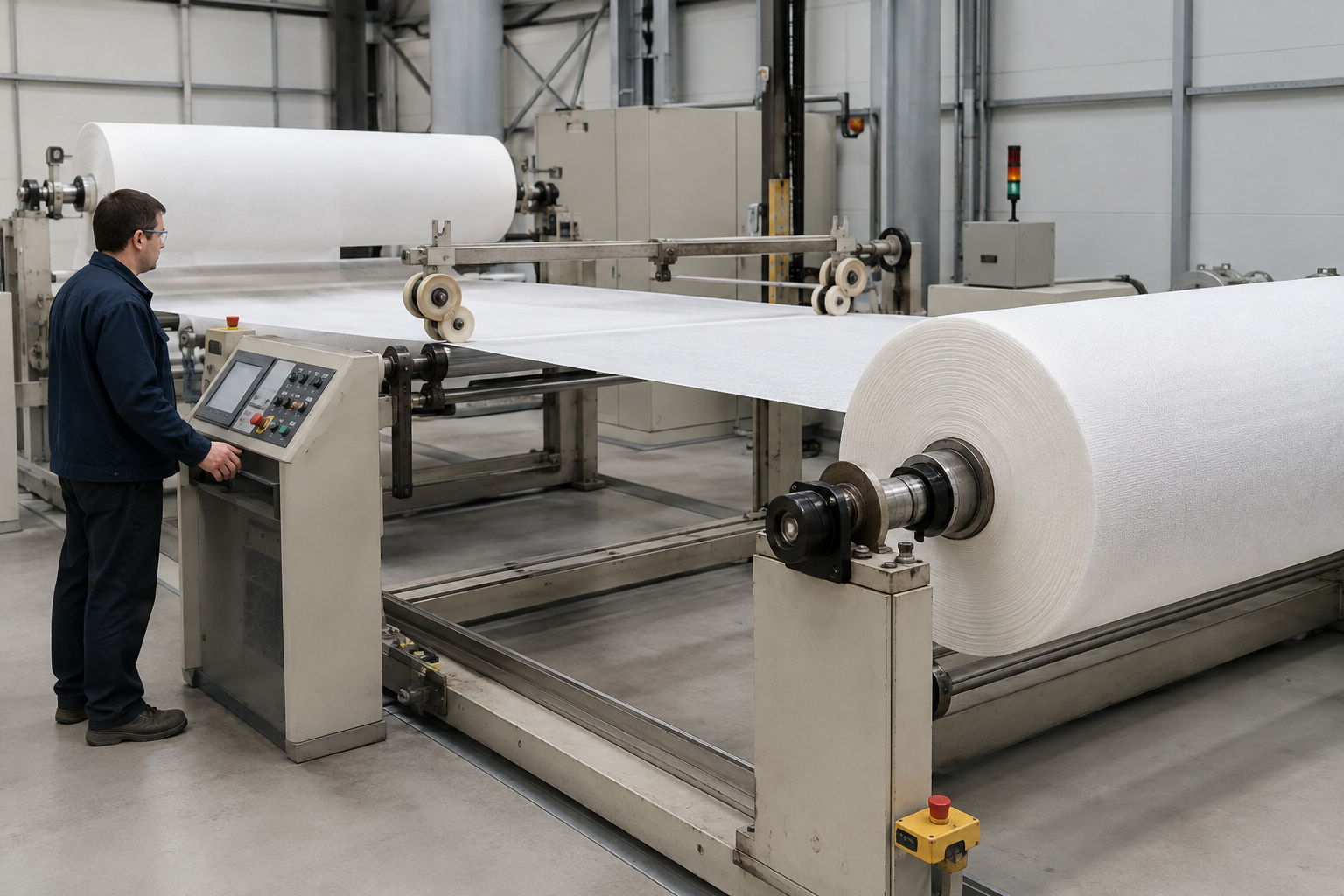
Different checks answer different questions. Do not treat them as equally strong evidence.
| Method | What It Can Show | What It Cannot Show |
|---|---|---|
| Direct unrolling | Physical measured length | Not practical for every roll in a large shipment |
| Traceable production record | Recorded production length | Reliable only if the measuring system is checked |
| Gross roll weight | Whether a roll looks unusually light or heavy | Exact roll length |
| Outside diameter | Approximate logistics size | Exact roll length |
Production records can be wrong if a measuring wheel slips, start or stop points are recorded incorrectly, damaged material is removed without correcting the total, or the measuring system has not been checked.
A machine set to stop at 100 m does not prove 100 m unless the measuring system controlling that stop is reliable.
Check Width and Length Together
Width and length shortages can happen at the same time, so area should be checked using both actual dimensions.
Nominal roll:
5.80 m × 100 m = 580 m²
Illustrative measured roll:
5.75 m × 99 m = 569.25 m²
Difference:
580 – 569.25 = 10.75 m²
Percentage difference:
10.75 ÷ 580 × 100 ≈ 1.85%
The 1.85% figure shows the area difference only. It does not decide pass or fail. Use the width tolerance and length tolerance already written into the order.
Calculate Roll Weight
Use this formula:
Fabric weight (kg) = width (m) × length (m) × GSM ÷ 1000
For a 5.8 m × 100 m roll:
| GSM | Area | Calculated Fabric Weight |
|---|---|---|
| 300 g/m² | 580 m² | 174 kg |
| 400 g/m² | 580 m² | 232 kg |
| 500 g/m² | 580 m² | 290 kg |
| 600 g/m² | 580 m² | 348 kg |
| 800 g/m² | 580 m² | 464 kg |
These values are fabric weight only. Core and packaging are not included.
The practical difference is large. The same 580 m² roll weighs 174 kg at 300 g/m² and 464 kg at 800 g/m² before the core and packaging are added. That changes transport and handling requirements even though the roll dimensions stay the same.
ASTM D5261-10(2024) covers measurement of mass per unit area of geotextiles. It is not a direct method for measuring roll length.[2]
Material properties such as GSM, tensile strength, puncture resistance, AOS, and permittivity are covered separately in the nonwoven geotextile data-sheet guide.
Separate Net, Tare, and Gross Weight
| Weight | Includes |
|---|---|
| Net fabric weight | Geotextile only |
| Tare weight | Core, wrapper, straps, other packaging |
| Gross weight | Fabric + tare |
For a 290 kg fabric roll:
| Fabric | Example Tare | Gross Weight |
|---|---|---|
| 290 kg | 10 kg | 300 kg |
| 290 kg | 15 kg | 305 kg |
| 290 kg | 20 kg | 310 kg |
The tare values are calculation examples, not standard industry weights.
This matters when someone tries to estimate roll length from gross weight. A 10 kg change in core and packaging gives a 10 kg change on the scale even though the amount of geotextile has not changed.
Actual GSM also affects the result. For the same 5.8 m × 100 m roll:
- 490 g/m² = 284.2 kg fabric weight
- 500 g/m² = 290.0 kg fabric weight
- 510 g/m² = 295.8 kg fabric weight
A 490 g/m² roll and a 510 g/m² roll can both still be 100 m long. Use roll weight to spot something unusual, not as proof of length.
Calculate Installed Coverage
Roll area and installed coverage are not the same once overlap is added.
For a 5.8 m wide roll:
| Side Overlap | New Width Covered | Roll Width Used in Overlap |
|---|---|---|
| 0.20 m | 5.60 m | 3.45% |
| 0.30 m | 5.50 m | 5.17% |
| 0.40 m | 5.40 m | 6.90% |
| 0.50 m | 5.30 m | 8.62% |
These values show geometry only. They are not recommended overlap requirements.
For project quantity calculations that include overlap and roll width, see the geotextile quantity calculation example.
Match the Core to the Equipment
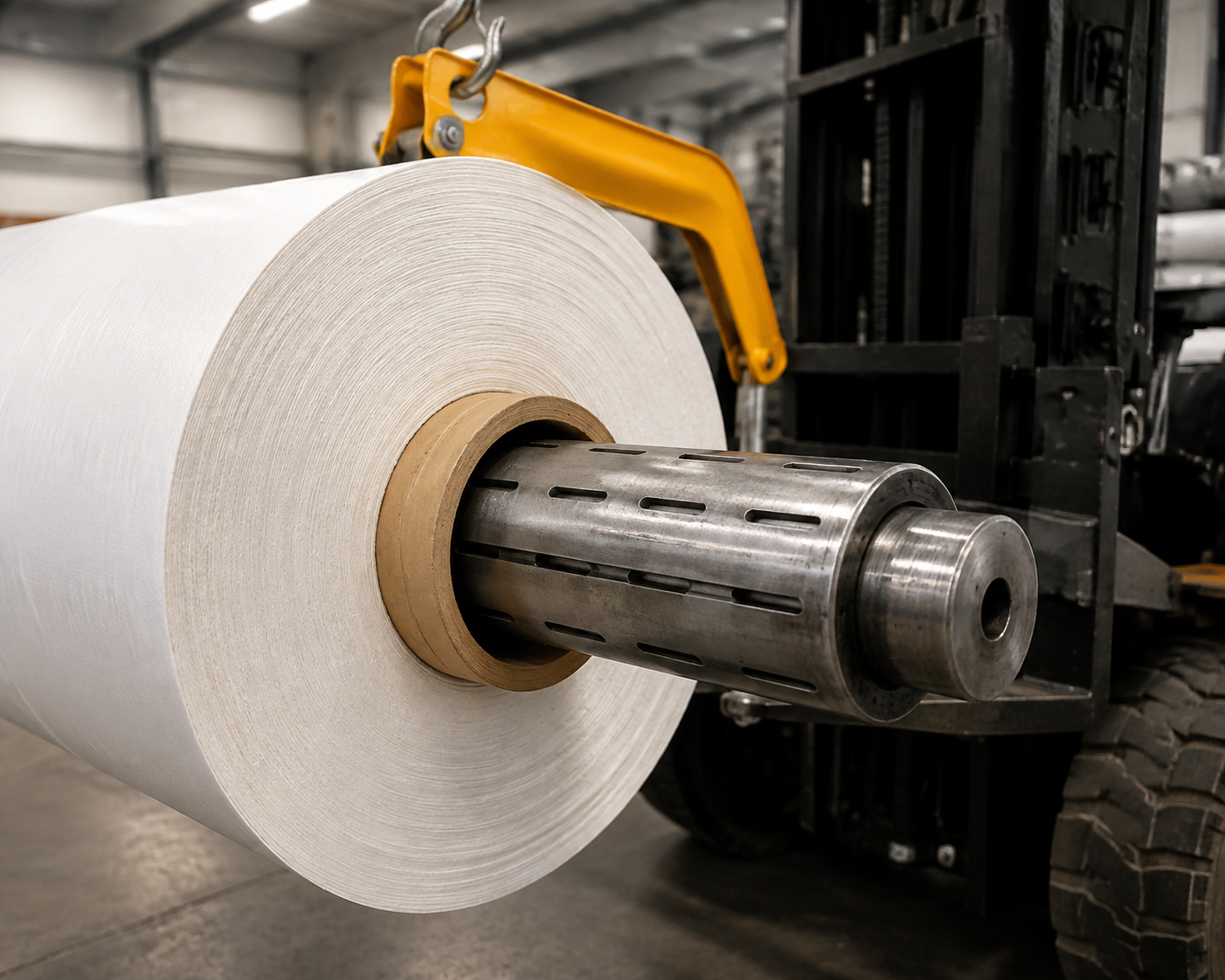
Check the core before shipment if site handling equipment has fixed dimensions.
- core internal diameter;
- minimum clear opening;
- core straightness;
- core condition;
- core length;
- approved handling method.
Example:
- Handling shaft outside diameter: 100 mm
- Clear core opening: 98 mm → shaft cannot enter
- Nominal core ID: 105 mm, but crushed to 99 mm in one direction → shaft may still not enter
Nominal core ID is not the same as minimum clear opening.
| Core Condition | Likely Problem |
|---|---|
| Oval | Shaft or mandrel may not fit |
| Crushed | Roll may be difficult to handle |
| Bent | Roll may not unwind properly |
| Wet paper core | Core may lose stiffness |
A core is not automatically designed to carry the roll weight. If the handling method loads the core, confirm that the roll and core are suitable for that method.
Record the Roll Diameter
Outside diameter is a shipping and storage number. It should not be used to prove exact roll length.
| Shipment Data | Value |
|---|---|
| Roll width | ___ m |
| Roll length | ___ m |
| Outside diameter | ___ mm |
| Net weight | ___ kg |
| Gross weight | ___ kg |
| Minimum clear core ID | ___ mm |
| Rolls per container | ___ |
Two rolls with the same nominal width and length can still have different outside diameters because GSM, fabric thickness, compression, core diameter, and winding pressure differ.
Specify the Packaging
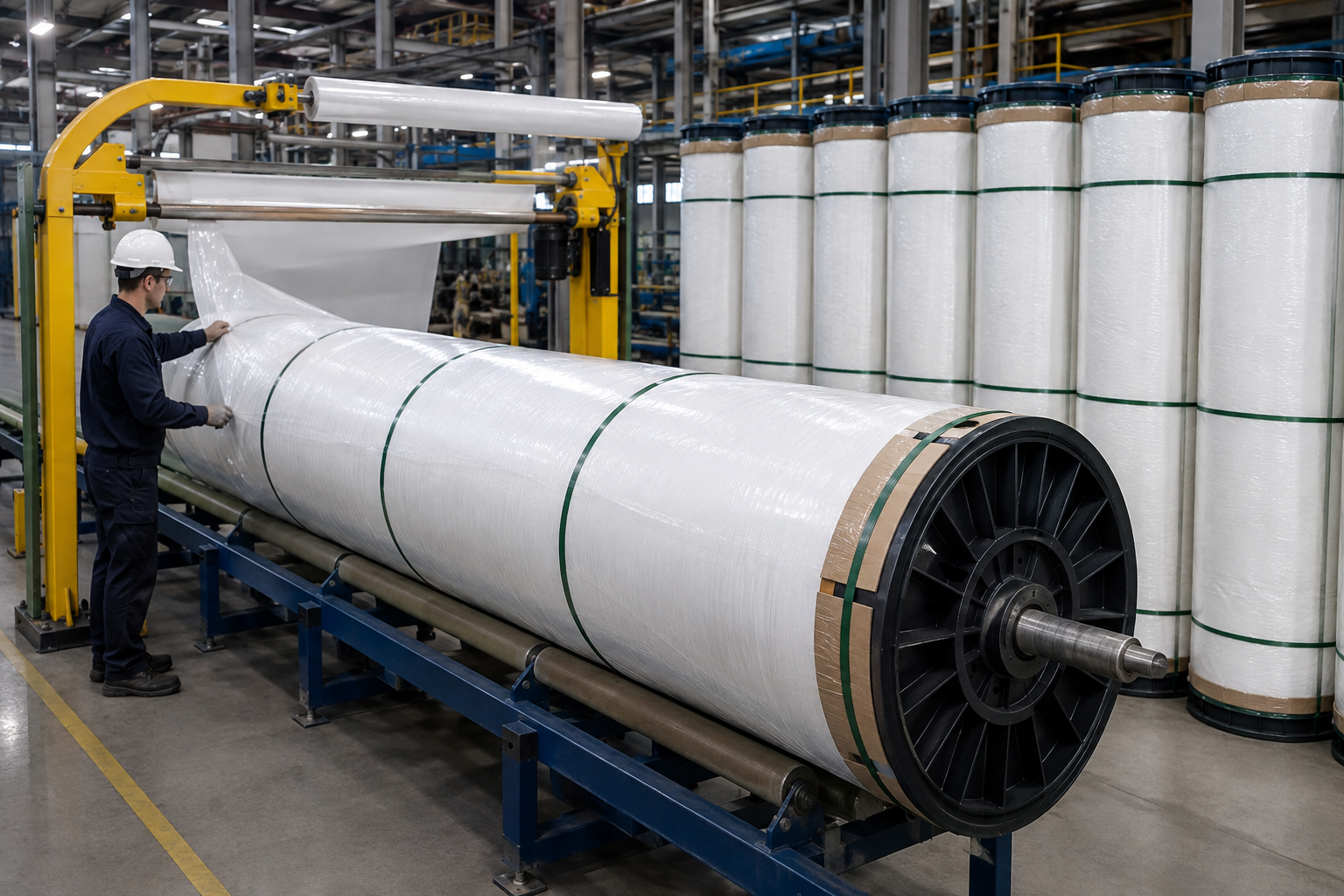
“Standard export packing” is too vague for a purchase specification.
Write down what the package needs to protect against:
- mud and dirt;
- water exposure;
- UV exposure;
- oil or chemicals;
- abrasion;
- puncture;
- roll-end impact;
- loss of the roll label.
Example:
Each roll shall be individually wrapped to protect the geotextile against normal shipping contamination, abrasion, avoidable sunlight exposure, and handling damage. Roll-end protection shall be provided where required by the agreed shipping method.
ASTM D4873/D4873M-17(2021) addresses identification and packaging of rolled geosynthetics by manufacturers and handling and storage by end users.[3]
Ordinary plastic wrapping should not be described as a tested waterproof system unless it has actually been designed and verified for that purpose.
Inspect Packaging Damage
Packaging damage and product damage are not the same thing. Check what is underneath before deciding what to do with the roll.
| Condition | Action |
|---|---|
| Wrapper torn, fabric clean | Inspect and re-protect if the roll remains in storage |
| Puncture reaches several wound layers | Hold and measure the affected material |
| Oil or unknown chemical on fabric | Hold for technical review |
| Core crushed, fabric intact | Check fabric and handling method separately |
| Roll label missing | Hold until identity is confirmed |
The number of damaged layers in an example is not an automatic rejection limit unless the project specification says so.
Control Outdoor Storage
Outdoor storage limits should come from the project requirement, not from a rule copied from another job.
FHWA FP-24 Section 207 gives one project-specific example: outdoor geosynthetic rolls must be elevated, protected with a waterproof cover, and kept within the UV exposure limit stated in that specification. Its less-than-10-day UV limit belongs to FP-24 and is not a universal PET geotextile rule.[4]
ASTM D4355/D4355M-21 evaluates geotextile deterioration using xenon-arc light, moisture, and heat. Accelerated laboratory exposure should not simply be converted into a fixed number of outdoor days without suitable correlation data.[5]
- Keep rolls out of mud and standing water.
- Do not drag rolls over rough ground.
- Do not stack rolls in a way that crushes the cores.
- Repair badly damaged wrapping.
- Keep identification visible.
Keep Every Roll Traceable
When several grades look similar, the label is what connects the physical roll to the paperwork.
| Label Item | What It Connects |
|---|---|
| Manufacturer | Product source |
| Product code | Product grade |
| Roll number | Individual physical roll |
| Batch or lot | Production records |
| Nominal width and length | Roll format |
| PO or project reference | Shipment and project |
ISO 10320:2019 covers on-site identification of geosynthetics. ISO states that identification information does not replace the technical data sheet and cannot by itself prove technical conformity.[6]
Use this traceability chain where the project requires roll-level records:
Roll → Batch → Production Record → QC Record → Shipment → Installation Location
Record the roll number before removing or discarding the outer label.
Inspect the Shipment
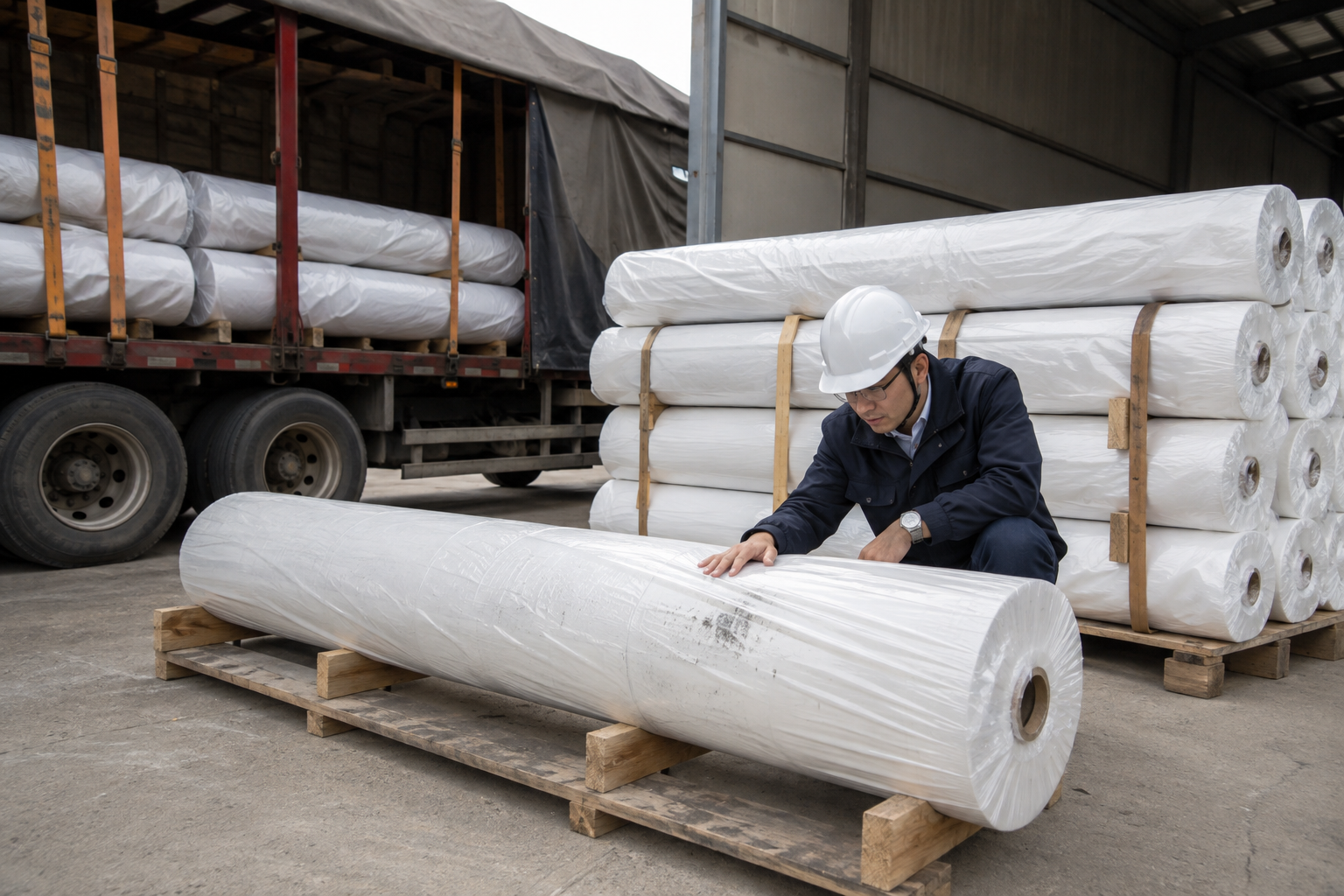
Do the basic checks before the material is cut or installed. Once a roll is used, it becomes harder to prove what condition it arrived in.
| Roll | Width 1 | Width 2 | Width 3 | Label | Wrapper | Action |
|---|---|---|---|---|---|---|
| R001 | 5.81 m | 5.80 m | 5.82 m | OK | OK | Compare with width rule |
| R002 | 5.79 m | 5.80 m | 5.79 m | OK | OK | Check dimensional acceptance |
| R003 | 5.82 m | 5.81 m | 5.81 m | OK | Torn | Inspect fabric under wrapper |
| R004 | 5.80 m | 5.80 m | 5.81 m | Missing | OK | Hold until identified |
Record:
- roll count;
- roll number;
- product grade;
- raw width readings;
- length record where required;
- core damage;
- wrapper damage;
- missing labels;
- required shipment documents.
Use actual numbers in the inspection record. “R002 measured 5.79 m, 5.80 m, and 5.79 m” is much more useful than writing only “R002 too narrow.”
Set the Sampling Rule
The sampling rule should already be in place before anyone finds a failed result.
ASTM D4354-26 covers sampling of geosynthetics and rolled erosion-control products for manufacturer and purchaser testing, including lot-based sampling for specification conformance.[7]
Record:
- lot number;
- roll number;
- sample location;
- sample ID;
- date;
- person or organization taking the sample.
The purchase or inspection plan should also state what happens after a failure:
- additional roll inspection;
- resampling;
- lot hold;
- technical review;
- rejection.
ASTM D8102-17(2024) covers manufacturing quality control of geotextiles. It does not replace purchaser acceptance or specification-conformance testing.[8]
Handle Short or Narrow Rolls
When a roll looks short or narrow, start with the numbers instead of the claim.
Example:
Ordered: 5.8 m × 100 m = 580 m²
Measured: 5.80 m × 98.7 m = 572.46 m²
Area difference:
580 – 572.46 = 7.54 m²
Percentage difference:
7.54 ÷ 580 × 100 = 1.30%
Check the roll in this order:
- Confirm the roll number.
- Confirm nominal width and length.
- Check the agreed tolerance.
- Check the measuring method.
- Review the production record.
- Verify the measurement if the inspection rule requires it.
- Record the raw data.
- Apply the existing acceptance rule.
If the contract price is stated per square meter:
Material value difference = missing area × contract price per m²
For the example above:
Value difference = 7.54 × contract price per m²
Write the Purchase Specification
The purchase order should contain numbers and checkable requirements, not broad terms that need to be interpreted later.
| Item | Value to Fill In |
|---|---|
| Product | PET continuous filament needle-punched nonwoven geotextile |
| Nominal GSM | ___ g/m² |
| Nominal roll width | ___ m |
| Minimum usable width | ___ m |
| Width tolerance | ___ |
| Width acceptance method | Minimum point / average / tolerance range |
| Roll length | ___ m |
| Length tolerance | ___ |
| Length verification | ___ |
| Nominal roll area | ___ m² |
| Core ID | ___ mm |
| Minimum clear opening | ___ mm |
| Maximum gross weight | ___ kg |
| Maximum roll diameter | ___ mm |
| Packaging | ___ |
| Roll-end protection | ___ |
| Roll identification | Roll number / batch / PO reference |
| Sampling | ___ |
| Action after failure | ___ |
| Do Not Write | Write This Instead |
|---|---|
| Standard tolerance | State the numerical width and length tolerance |
| Strong core | State core ID, clear opening, and handling requirement |
| Good export packing | State required protection against water, UV, dirt, puncture, and roll-end damage |
| 100 m as labeled | State nominal length, tolerance, and verification method |
Finally
For a 5.8 m × 100 m roll, the starting point is 580 m². From there, check the numbers that can change what the buyer actually receives. A 50 mm average width shortage across 100 rolls removes 500 m². A 2 m length shortage removes 11.6 m² from each 5.8 m wide roll. At the same size, calculated fabric weight changes from 174 kg at 300 g/m² to 464 kg at 800 g/m² before the core and packaging are added. Put the width tolerance, length tolerance, measuring method, core opening, gross-weight limit, packaging condition, roll ID, and action after failure into the purchase order before production starts.