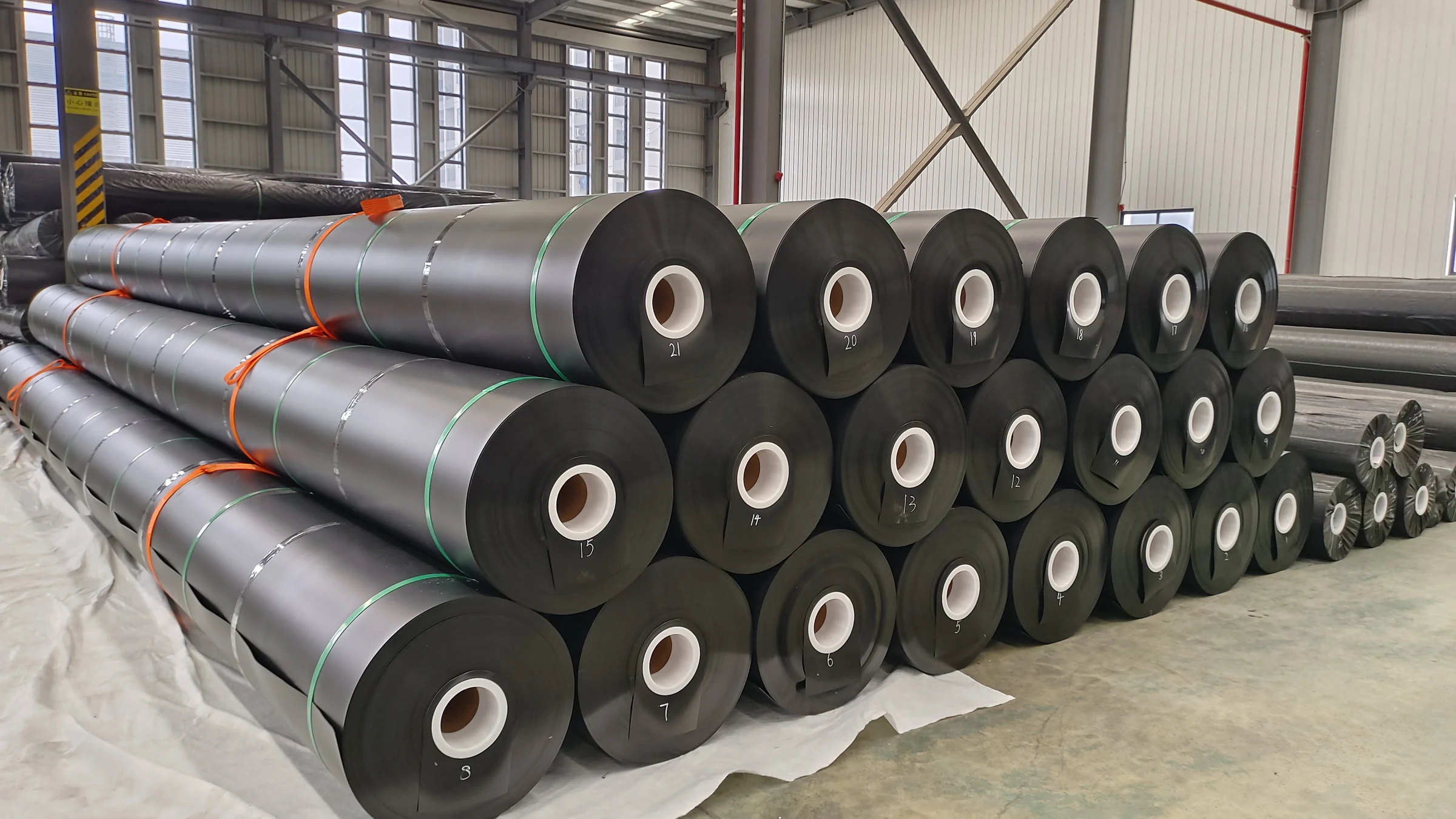


To buy a geomembrane liner, send suppliers the same project specification, compare traceable test reports, and agree on installation and acceptance requirements before comparing price. A quotation for “HDPE, 1.5 mm” alone leaves important differences unresolved: surface finish, thickness acceptance, roll dimensions, testing, delivery scope, and seam quality.
This guide focuses on the purchasing decision and the documents needed to support it. Numerical examples below are identified as either published sample results or planning calculations; they are not guarantees for every shipment.
Define the liner system before requesting prices
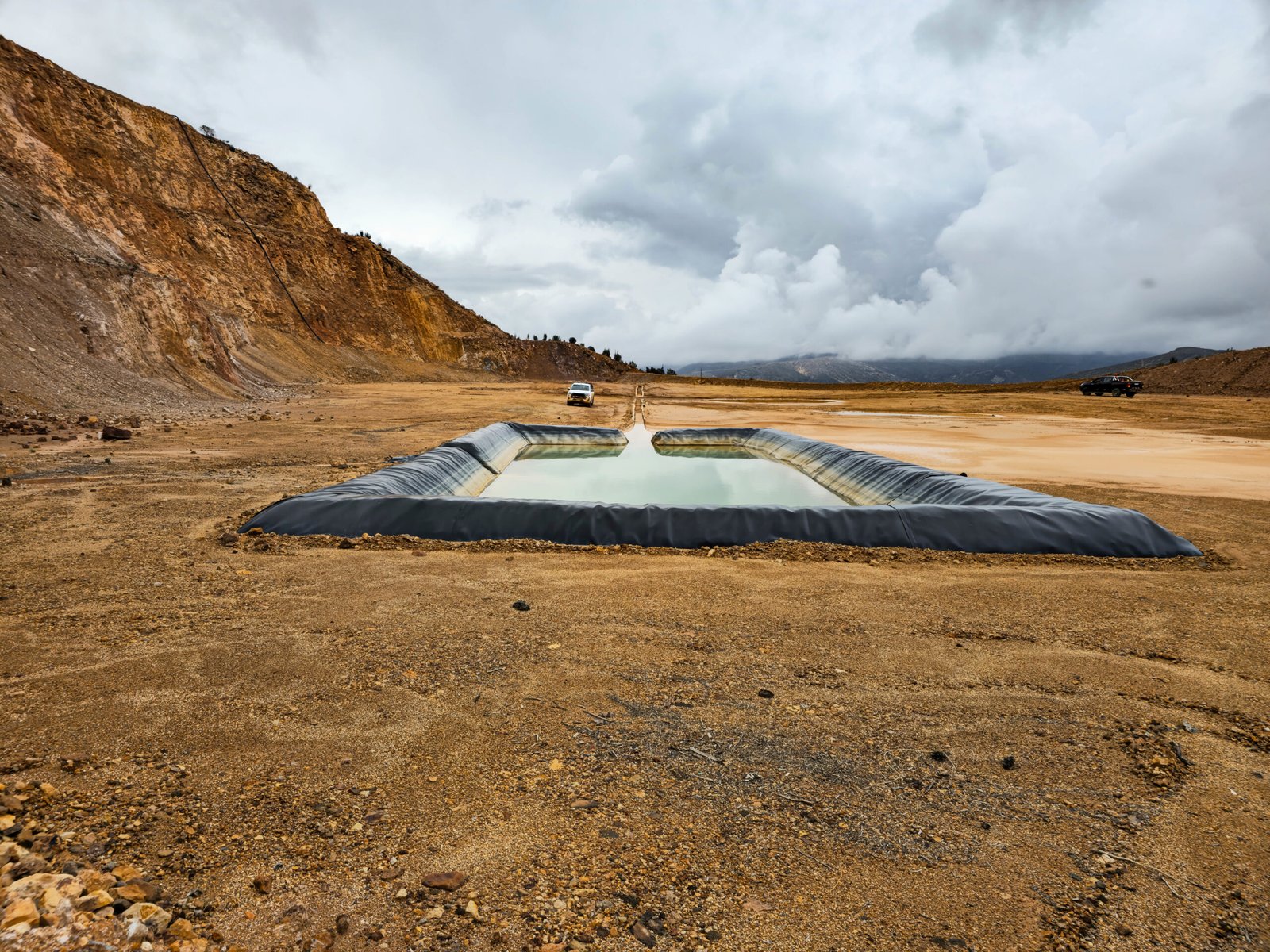
Start with the contained liquid or waste, operating temperature, expected settlement, exposed or covered service, slope geometry, and applicable project requirements. HDPE and LLDPE are different options, but a pH number or elongation-at-break value alone cannot establish suitability. Obtain compatibility information for the actual chemical mixture and temperature. For waste-containment applications, EPA Method 9090A provides a procedure for evaluating chemical effects on liner properties.
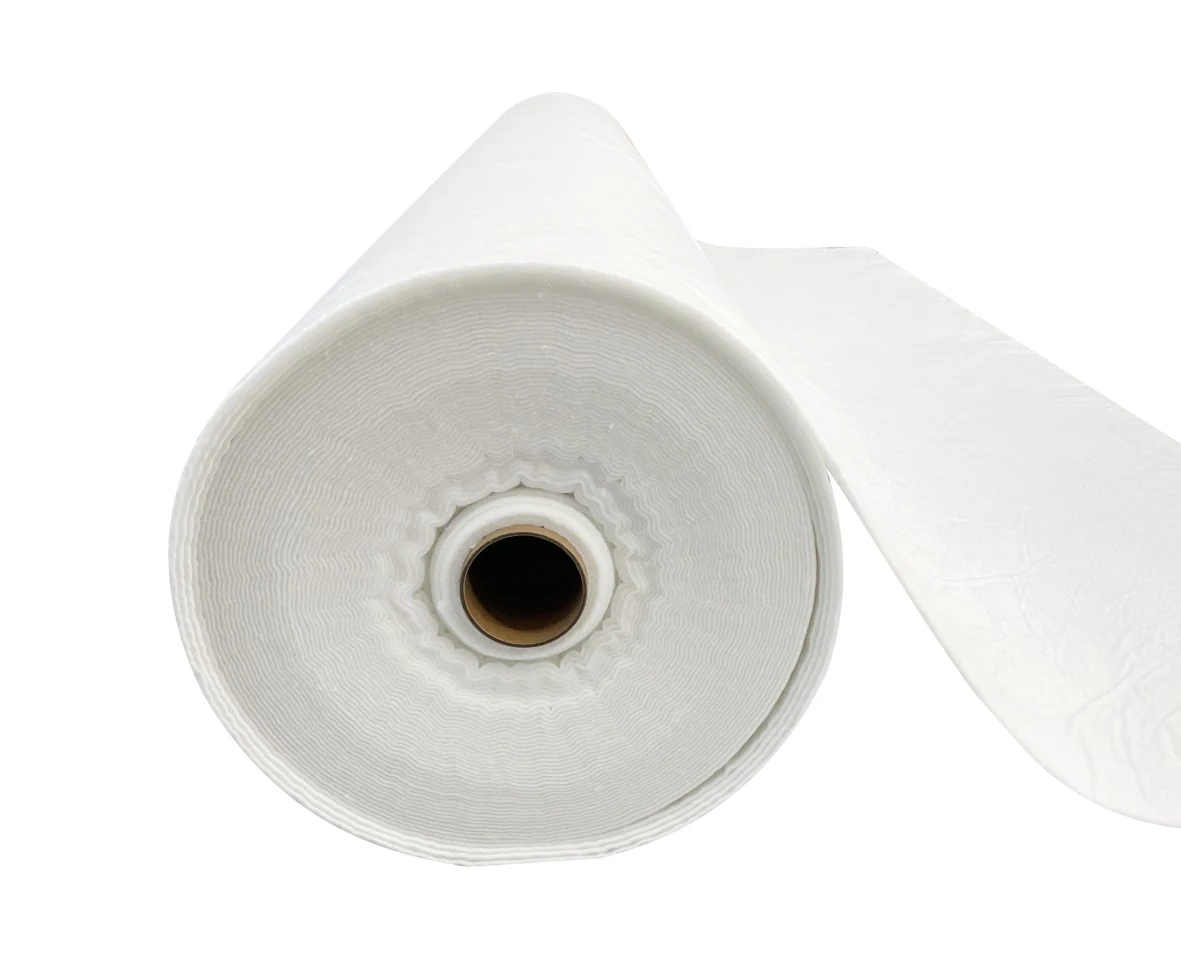
Specify the nominal thickness and surface finish approved by the designer. A thicker sheet does not remove the need for subgrade preparation, protective geotextiles, or interface stability checks. Likewise, textured sheet does not have one universal friction angle: the actual interface, normal stress, moisture condition, and displacement matter.
A quotation brief that suppliers can price consistently
| Item | Information to provide | What to confirm in the offer |
|---|---|---|
| Application | Liquid composition, temperature range, exposure, geometry, and design documents | Any exclusions, required compatibility testing, and proposed grade |
| Sheet | Polymer, nominal thickness, smooth or textured sides, and specified standard revision | Acceptance limits and test methods for the actual surface finish |
| Quantity | Panel layout, slopes, penetrations, anchor details, and spare material | Gross roll area, usable dimensions, roll count, and rounding |
| Quality records | Lot traceability, sampling requirements, and independent testing scope | Which records are included, who selects samples, and who pays for retesting |
| Installation | Installer scope, access, equipment, seam testing, and weather constraints | Supply-only versus installed price; repair and acceptance responsibilities |
| Delivery | Destination, required dates, unloading and storage conditions | Freight, packing, taxes, delivery term, and production lead time in writing |
Use the correct specification and distinguish it from certification
GRI-GM13 addresses HDPE geomembranes; GRI-GM17 addresses LLDPE geomembranes. Match the specification to the material and surface finish, and state the revision in the purchase order. Meeting an index-property table is not the same as approving a complete containment design.
For example, GM13 Revision 19 uses a formulated HDPE sheet density of at least 0.940 g/cm³ and carbon black content of 2.0–3.0%. It calls for virgin resin but permits up to 10% qualifying rework under its stated conditions; post-consumer resin is excluded. A buyer may impose a stricter no-rework requirement, but should identify it as an additional contractual condition.
ISO 9001 concerns the supplier’s management system. It is not a test report for the delivered liner. Check the certificate’s holder, manufacturing scope, issue and expiry dates, and issuing body’s verification information. A historic certificate should not be presented as proof of current certification. Potable-water projects also require the appropriate product-specific drinking-water approval; a polymer name does not establish that approval.
Check report identity before comparing results
- Match the manufacturer, product, nominal thickness, surface finish, sample identifier, and report number.
- Separate resin data from finished-sheet data and average results from individual readings.
- Record the method, units, specimen direction, and acceptance rule for each property.
- Check whether the report covers one submitted sample, routine factory production, or the actual delivery lot.
- For third-party testing, verify the laboratory’s current recognition and relevant method scope where the project requires it.
A third-party report can support a product submittal; it does not automatically establish the accreditation of the manufacturer’s own laboratory. Conversely, lack of one particular accreditation label does not by itself prove that every factory result is invalid. Decide the required evidence in the project’s quality plan.
A real Jinseed sample report: what it proves and what it does not
The complete TRI Suzhou report SCH24132, dated 28 August 2024, identifies a 2.0 mm smooth HDPE sample, control number 11379, submitted by Jinseed. Selected results are shown below.
| Reported property | Sample result | Purchasing interpretation |
|---|---|---|
| Thickness | Average 2.01 mm; minimum 1.82 mm; maximum 2.12 mm | Check individual readings as well as the average. |
| Density | Average 0.9460 g/cm³ | Finished-sheet result for this sample. |
| Carbon black content | 2.26% | Read alongside the separate dispersion result. |
| Standard OIT / high-pressure OIT | 225 min / 560.8 min | Different methods; do not combine their values. |
| SP-NCTL | >500 hours | Not evidence of >2,000 or >3,000 hours. |
| HP-OIT retention after 1,600-hour UV exposure | 68% | OIT retention, not retained tensile strength. |
These results apply to the tested sample. They do not certify every thickness, textured product, current shipment, or service life. Request the quality records that correspond to the rolls being purchased, and read the complete report for methods, conditions, and limitations.
Compare delivered cost using a panel layout
A fixed allowance such as 10% or 12% can be a preliminary budgeting assumption, but it is not a universal purchasing rule. Calculate the developed lining area, then add the actual overlaps, anchor details, trimming, test material, and agreed spares. Round up to a workable roll schedule.
Illustrative overlap calculation: ten parallel panels, each 7.0 m wide and 100 m long, with nine 0.15 m side overlaps cover a net width of 68.65 m. The purchased area is 7,000 m² and the net rectangular coverage is 6,865 m². Side overlaps consume 135 m², equivalent to about 1.97% of that net area. This excludes end laps, slopes, anchors, irregular cuts, and spares. The 0.15 m overlap is an example, not an installation instruction.
Use the pond liner quantity and slope calculation guide when developing the material take-off. Wider rolls can reduce some seams, but handling access, available equipment, transport, and waste from irregular geometry may change the economics.
Compare quotations on the same basis: liner, protection layers, freight, unloading, installation, testing, and documented repairs. A lower price per square metre may omit items included in another offer. Obtain a written delivery schedule instead of treating a general website lead time as a commitment for a particular order.
Agree on production checks and site acceptance
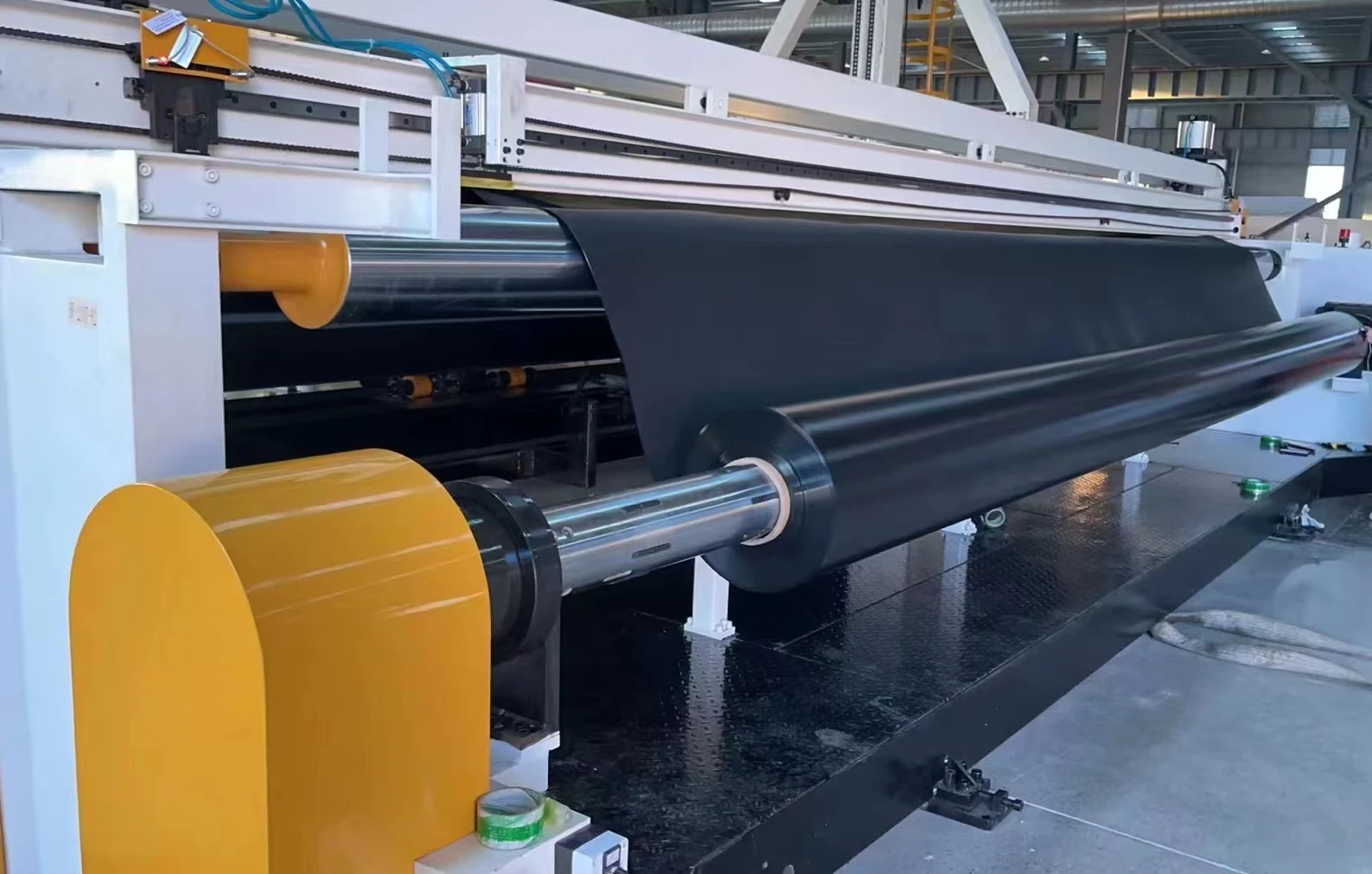
Ask the supplier to demonstrate a traceability chain from resin and production records to roll labels and shipment documents. Sampling frequency should follow the applicable specification and project quality plan; different properties may have different frequencies. One blanket “full test every 10,000 m²” rule does not establish compliance.
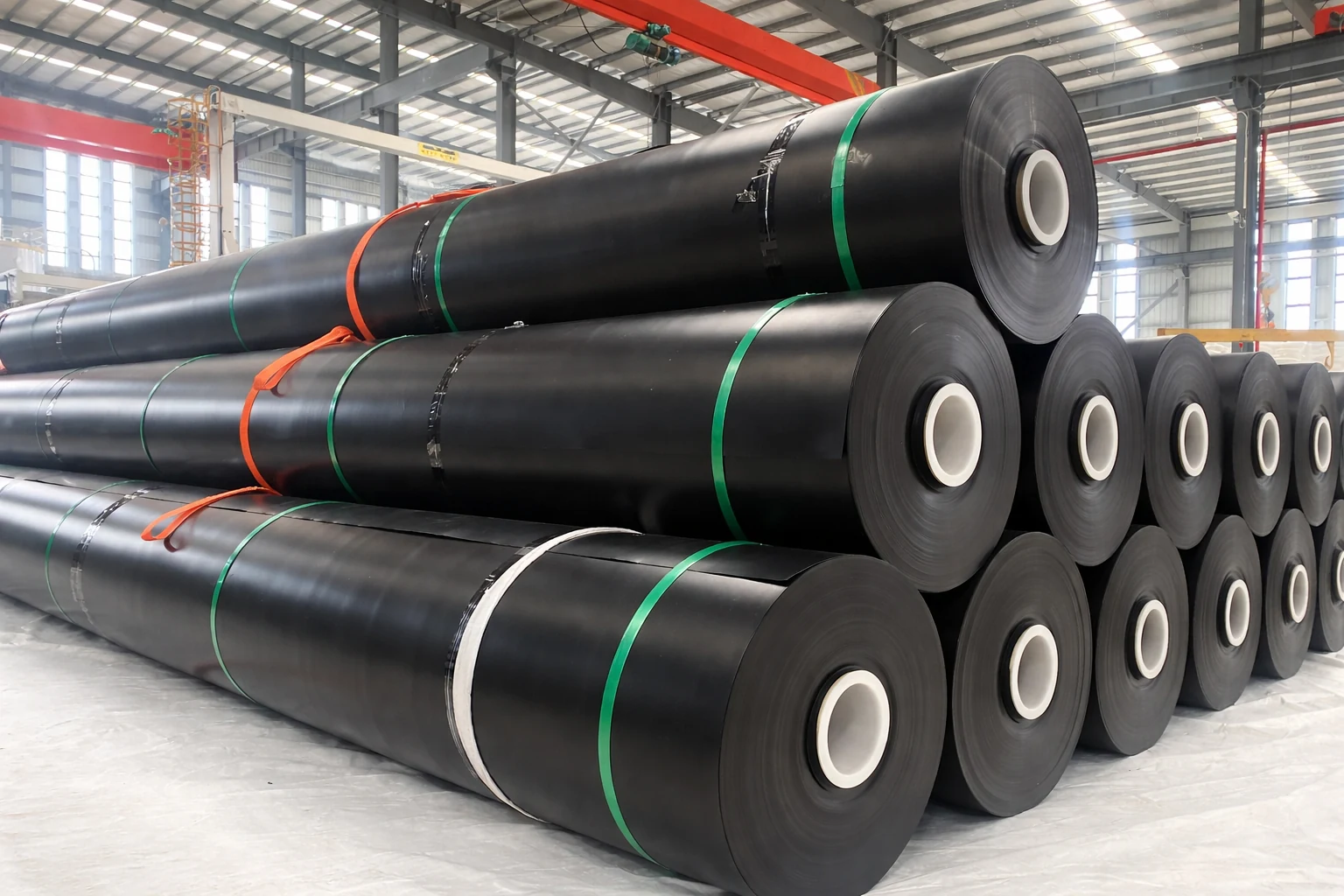
Before dispatch, agree on how nonconforming rolls are identified, isolated, replaced, or retested. At delivery, check roll identities, dimensions, packaging damage, and visible defects against the packing list. Retain the records needed to trace any installed panel back to its source roll.
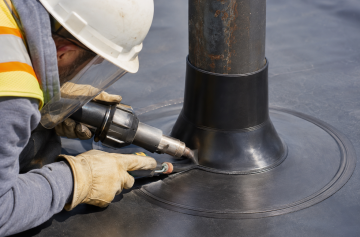
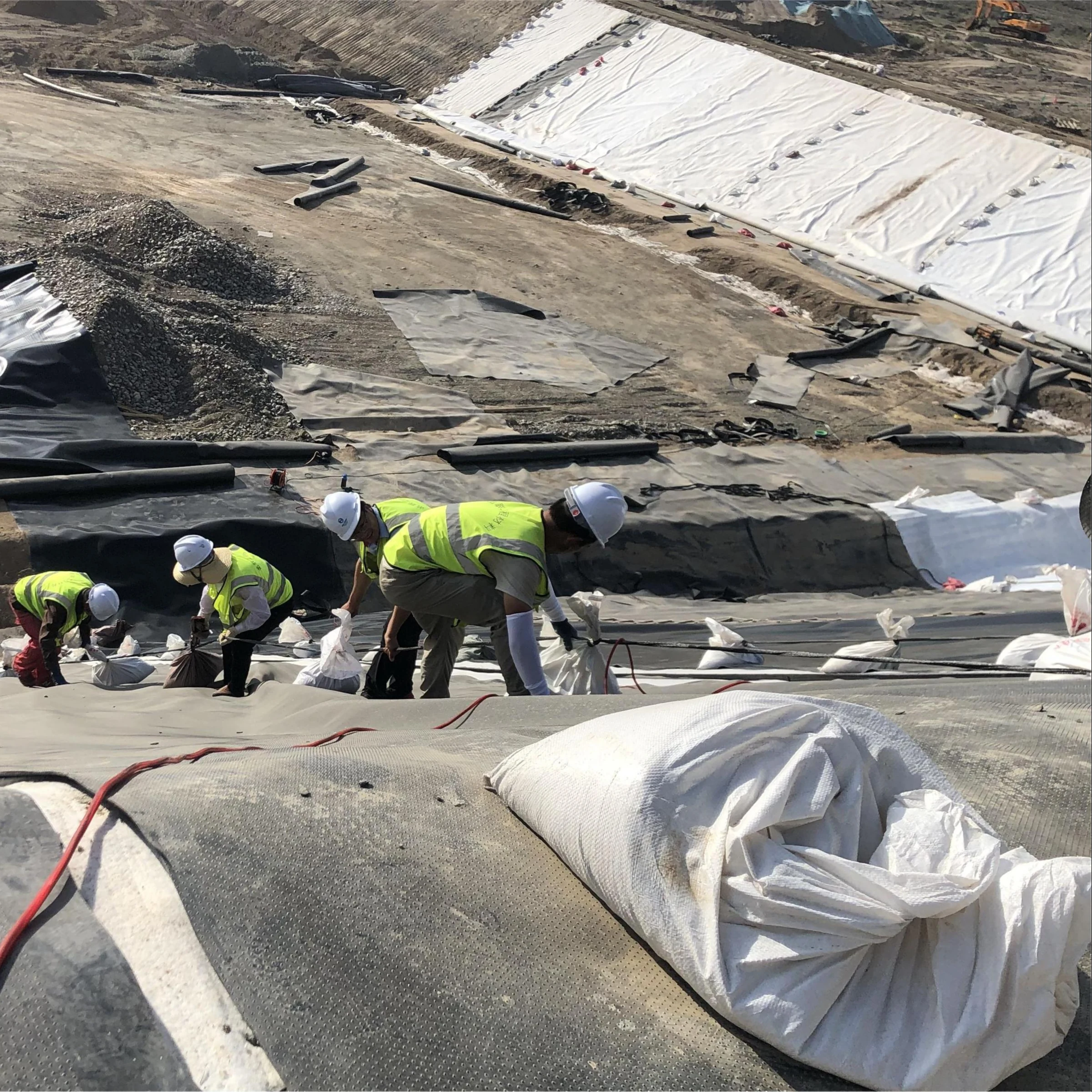
Field seams need their own qualification and acceptance process. Dual-track thermal fusion and extrusion fillet welding are distinct procedures. Require approved trial seams, suitable equipment, documented nondestructive testing, destructive samples where specified, and repair verification. A sheet report alone does not prove that installed seams are sound.
Questions to resolve before placing the order
Is a 1.5 mm liner enough?
Only if it meets the approved application requirements. Thickness selection must consider the complete system, including support, protection, stresses, chemical exposure, and the governing specification. Do not select it solely from pond depth or a generic product table.
Does a high OIT result guarantee decades of service?
No. OIT is an index of oxidative stability under a defined test. It is not a direct conversion to outdoor years. Standard and high-pressure OIT use different procedures; the report should identify which was performed. Service-life evaluation also needs the formulation, exposure conditions, aging behaviour, and design assumptions.
What should I send Jinseed for a useful quotation?
Send the approved specification, layout or dimensions, contained medium, operating conditions, destination, required delivery date, and inspection requirements. Start with the HDPE geomembrane product information, then request the grade-specific datasheet and relevant production records. For interpreting individual test parameters, use the GM13 report-reading guide.
Sources and evidence
- GSI: GRI-GM13, HDPE geomembrane specification — material and manufacturing quality-control requirements.
- GSI: GRI-GM17, LLDPE geomembrane specification — a separate material specification.
- US EPA: Method 9090A — chemical compatibility test context.
- TRI Suzhou report SCH24132, 28 August 2024 — sample-specific test evidence, available as the complete five-page report.