
A shrimp pond liner budget equals sheet price per m2 multiplied by purchased liner area, plus delivery, ground preparation, underlay, drain details, installation, and testing. There is no single price that answers every project: a sheet-only quotation and an installed-lining quotation cover different work. For the 50 × 30 m pond calculated below, the rectangular sheet envelope is about 1724 m2—roughly 15% more than the 1500 m2 water surface, before overlaps, sump lining, and cutting waste.
Weight-based quotations convert through price per m2 = price per kg x sheet mass in kg/m2. A nominal 1.5 mm smooth HDPE sheet at the specification minimum density of 0.940 g/cm3 weighs about 1.41 kg/m2, so the sheet-only amount equals about 1.41 times the quoted price per kg. GRI-GM13 defines that density as a minimum-average formulated value, separate from measurements on individual rolls [1].
The examples here are transparent budget calculations, not current market quotations or completed-project records. They show how to compare quantities and specifications without assuming that the lowest sheet price produces the lowest installed cost.
Have qualified personnel determine the lining design, material suitability, installation procedures, and acceptance requirements under local rules and the project specification.
What does price per m2 cover?
Start by asking whether “price per m2” means sheet only, delivered material, or installed lining. Use the following scope checklist, and ask each supplier to list inclusions and exclusions in writing. An installation quotation may exclude earthworks or underlay; its label alone does not establish what is covered.
| Price basis | What to confirm |
|---|---|
| Sheet only | Material, nominal thickness, surface, specification, roll dimensions, quantity, currency, and quotation validity. |
| Delivered material | Sheet price plus agreed freight, unloading, duties, and taxes; list any exclusions. |
| Installed lining | Material plus ground preparation, underlay, deployment, welding, testing, anchor and drain details, and supervision; define the payable area. |
How do thickness and material change sheet cost?
At the same price per kg, thicker sheet costs more per m2 because it contains more material. GRI-GM13 covers HDPE geomembranes with a formulated density of 0.940 g/cc or higher, from 0.75 to 3.0 mm, in smooth and textured surfaces [1]. Using that minimum density as a calculation assumption, smooth-sheet mass in kg/m2 = thickness in mm × density in g/cm3:
| Nominal thickness | Mass calculation | Approximate smooth-sheet mass |
|---|---|---|
| 0.75 mm | 0.75 x 0.940 | about 0.71 kg/m2 |
| 1.00 mm | 1.00 x 0.940 | about 0.94 kg/m2 |
| 1.50 mm | 1.50 x 0.940 | about 1.41 kg/m2 |
| 2.00 mm | 2.00 x 0.940 | about 1.88 kg/m2 |
These are calculated masses, not guaranteed roll weights. Actual thickness, density, and texture affect mass per m2; overlaps, anchorage, and waste affect purchased area. With the same hypothetical price Q per kg and the same area, 1.0 mm sheet costs about 0.94 × Q per m2 and 1.5 mm sheet about 1.41 × Q per m2—a 50% increase in sheet cost. If all other costs stay fixed, the delivered or installed total also rises, but by less than 50% when those other costs are positive. In practice, the price per kg and other cost items may also differ between offers.
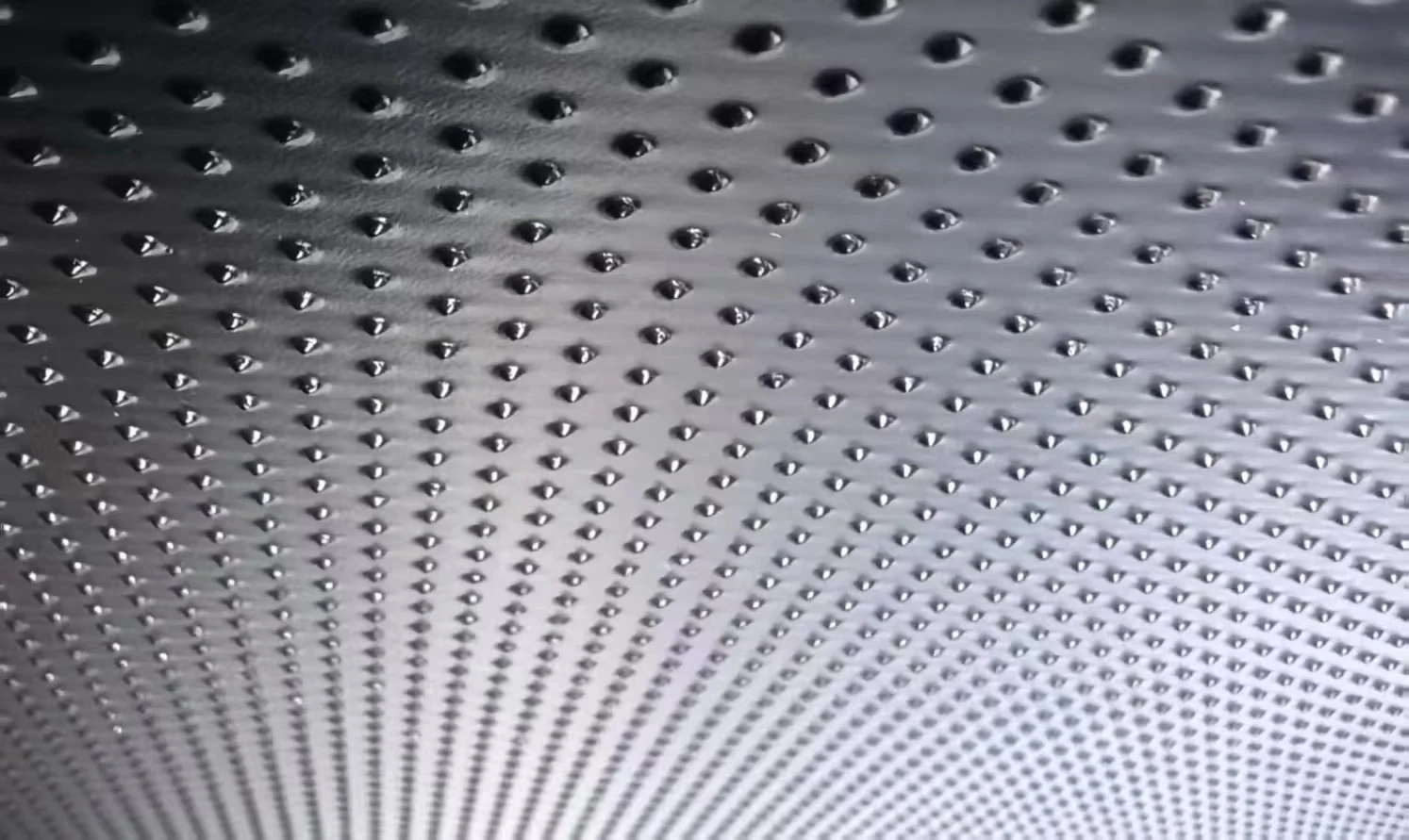
A material enquiry can distinguish smooth HDPE liner, LLDPE liner, and single- or double-sided textured HDPE liner. LLDPE smooth and textured geomembranes fall under GRI-GM17 [2]. Where slope stability depends on interface friction, the designer must specify the surface and assess the interfaces rather than assume that any textured sheet is suitable. EPDM and PVC are alternative pond-liner materials, not Jinseed products offered in this guide. Thickness, surface, and protection should follow the project design, not the lowest unit price.
What specification checks make sheet prices comparable?
Ask suppliers to identify the quoted thickness, surface, applicable specification, and supporting test reports. The following selected values come from GRI-GM13 Table 1(a) for smooth HDPE, not its textured-sheet tables [1]. The metric thickness labels are approximate nominal equivalents, not exact conversions. ASTM D5199 addresses nominal thickness measurement for smooth geomembranes [3]. GRI-GM13 specifies minimum-average properties and a five-specimen basis in each machine and cross-machine direction for the relevant mechanical tests; the stress-crack resistance requirement shown is a minimum of 500 hours [1].
| Property and test method | 40 mil, approximately 1.0 mm | 60 mil, approximately 1.5 mm | 80 mil, approximately 2.0 mm |
|---|---|---|---|
| Tensile yield strength, ASTM D6693 Type IV | 84 lb/in. | 126 lb/in. | 168 lb/in. |
| Tensile break strength, ASTM D6693 Type IV | 152 lb/in. | 228 lb/in. | 304 lb/in. |
| Tear resistance, ASTM D1004 | 28 lb | 42 lb | 56 lb |
| Puncture resistance, ASTM D4833 | 72 lb | 108 lb | 144 lb |
| Stress-crack resistance, ASTM D5397 Appendix | 500 hr | 500 hr | 500 hr |
Durability requirements are laboratory acceptance criteria, not a warranty of pond service life. GRI-GM13 specifies 2.0–3.0% carbon black under ASTM D4218. Its ASTM D5596 dispersion criterion for near-spherical agglomerates uses ten views: nine in Categories 1 or 2 and one in Category 3. Initial minimum-average oxidative induction time (OIT) is 100 minutes under ASTM D8117 or 400 minutes under ASTM D5885, with the manufacturer choosing the method [1].
After 90 days of oven aging at 85°C, the minimum OIT retention is 55% for standard OIT or 80% for high-pressure OIT. The UV requirement is at least 50% high-pressure OIT retention after 1600 hours under ASTM D7238, using 20 hours of UV at 75°C followed by four hours of condensation at 60°C [1]. These requirements do not by themselves establish suitability for a particular disinfectant, water chemistry, or cleaning method.
For a document check, ask the HDPE geomembrane manufacturer to link the offered product to batch or roll identifiers, test methods, results, and test dates. Separate routine roll-quality records from longer-duration qualification tests; do not assume that every listed test was performed on every roll. Have the project’s qualified reviewer resolve missing evidence before treating offers as technically equivalent.
Which shrimp-pond features raise the total lining cost?
For an aquaculture pond, identify which of the following features actually appear in the design. They are scope checks, not costs that every shrimp pond necessarily incurs.
- Intensive geometry. Rectangular ponds with uniform slopes and a level bottom still require additional sheet at slopes, corners, and access ramps.
- Central drain or harvest sump. Ponds designed for rapid drawdown or central sludge collection include a recessed sump, outlet pipe, concrete or prefabricated connections, and sealed boots through the liner. Each penetration increases material, welding, and testing quantities.
- Aerators and equipment loads. Paddlewheels, aspirators, walkways, and feeding stations impose point loads, vibration, and foot traffic. Supports, protection, and fixings for those items form part of the installation scope rather than the sheet price.
- Brackish water and disinfection. The enquiry states salinity range, water-treatment chemicals, disinfectants, and cleaning equipment. Thickness alone does not determine chemical compatibility; qualified personnel assess the proposed formulation against stated operating conditions.
- Cleaning between cycles. Dried sludge removal by scraping, washing, and hauling stresses the sheet. The stated cleaning method allows the designer to select surface and protection accordingly.
- Sun and heat exposure. Shallow tropical ponds with wide exposed freeboard expose the liner to sustained UV and heat.
What project costs sit outside the sheet price?
Request a separate line or an explicit inclusion for each applicable item. This prevents an apparently cheaper sheet-only offer from being compared with a broader installation package.
- Ground preparation. Price grading, removal of stones, roots, and soft spots, and formation of the specified support surface as civil engineering groundworks. FAO pond-construction guidance links topography to earth-moving volume and construction cost [4]. Its aquaculture site-selection guidance also calls for soil investigation before site procurement [5]. Those general site-planning principles do not replace a geomembrane-specific subgrade design.
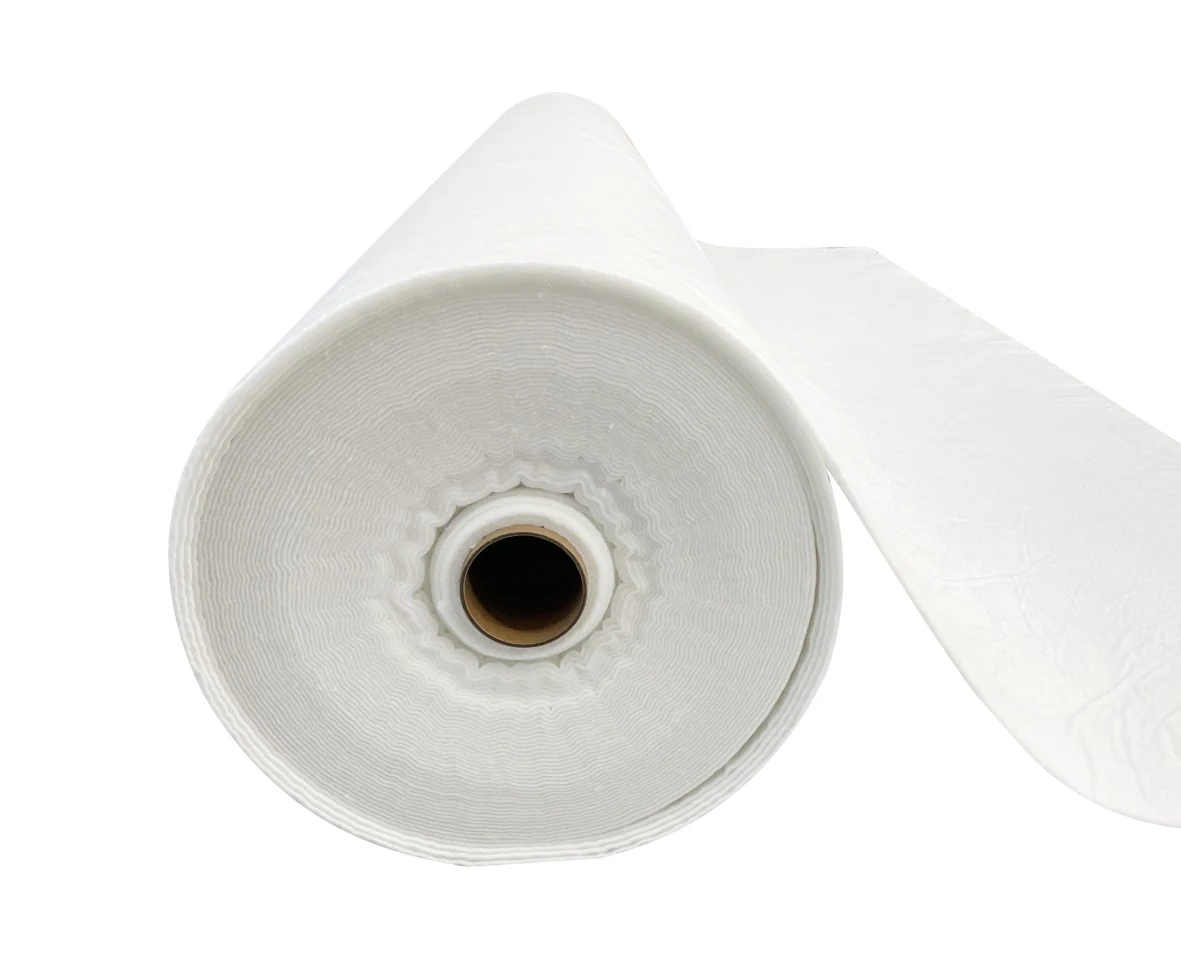
- Protective underlay. Where angular particles threaten puncture from below, the PET continuous-filament nonwoven geotextile and geomembrane protection layer require separate pricing with defined performance and coverage; grade documents from the non-woven geotextile manufacturer support selection.
- Anchorage, drains, and penetrations. Material and labour cover anchor trenches, sump lining, pipe boots, outlets, aerator footings, and concrete connections.
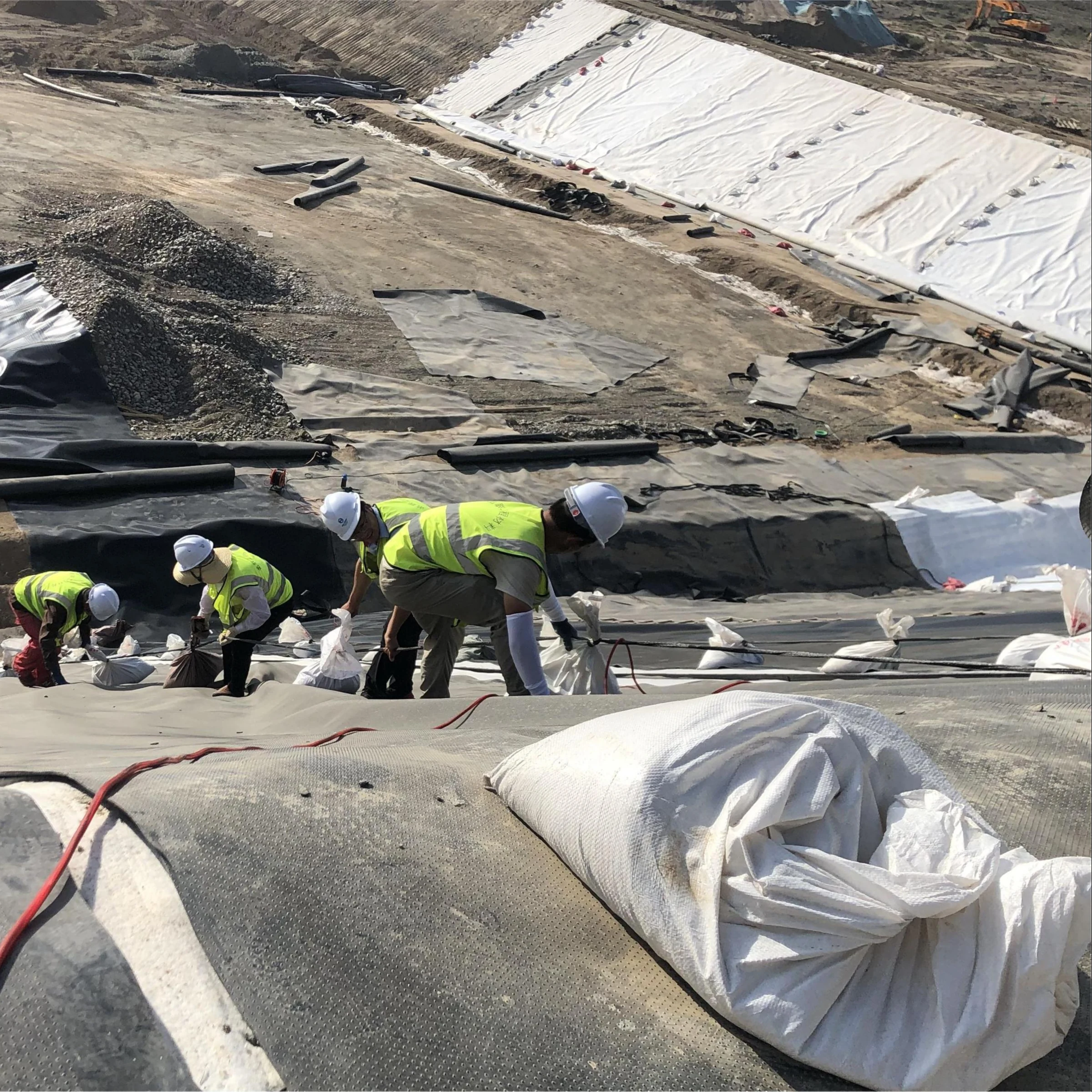
- Deployment, welding, and testing. A priced installation and quality plan defines deployment, welding, and testing responsibilities. ASTM D6392-25 specifies destructive peel and shear testing of sampled thermo-fusion seams in nonreinforced geomembranes, without provision for nondestructive examination of full seam length. Qualified quality personnel on the project define sampling, acceptance, separate continuity testing where required, repairs, and retesting [6]. Related containment scopes such as a landfill liner system address the same welding and testing topics, although acceptance criteria remain project-specific.
- Delivery and site logistics. Shipping terms, unloading, storage, site access, taxes, and responsibility for each item require confirmation.
How much liner area must the budget include?
The purchase quantity behind the cost answer exceeds the visible water area and reflects pond profile, approved anchorage and sump details, panel layout, overlaps, and cutting waste. Dimension definitions — waterline, pond crest, or excavation — require agreement before calculation. Jinseed’s pond liner coverage guide itemises the allowances a complete quotation contains.
This illustrative calculation assumes a 50 × 30 m water surface (1500 m2), 1.5 m depth, uniform 2H:1V sides, a flat bottom, and no shelves. FAO’s cited shrimp-pond guidance describes a minimum rearing-pond depth of 1.0 m in its design context [7]; it does not establish the depth or slope for this project. The assumed side slope extends 3.0 m horizontally, giving a 44 × 24 m bottom. Each slope length is √(3.0² + 1.5²), about 3.354 m.
With 1 m of sheet beyond each waterline edge for anchorage and no extra freeboard, the rectangular purchase dimensions calculate as:
- Length: 44 + (2 x 3.354) + (2 x 1) = about 52.71 m.
- Width: 24 + (2 x 3.354) + (2 x 1) = about 32.71 m.
- Rectangular sheet envelope: about 1724 m2.
The resulting envelope totals about 1724 m2, roughly 1.15 times the water surface, before seam overlaps, sump lining, and cutting waste. This is a rectangular arithmetic envelope, not the exact wetted surface, an optimised panel order, or an anchor design. The 1 m allowance is an arithmetic assumption, not a construction recommendation. Actual freeboard, anchorage, roll widths, and panel layout must be incorporated into the approved quantity calculation; 15% is not a universal waste allowance.
Why does the priced area change the quoted total?
One quotation may price the 1500 m2 water surface while another prices the approximately 1724 m2 rectangle above. At identical material and unit price P, the two answers still yield different sheet quantities, which is why the priced area must match before prices can be compared.
| Quotation | Area priced | Sheet subtotal at P per m2 | Cost per m2 of water surface |
|---|---|---|---|
| Offer A (water surface only) | 1500 m2 | 1500 x P | 1.00 x P |
| Offer B (rectangular envelope) | about 1724 m2 | about 1724 x P | about 1.15 x P |
Offer B includes about 15% more sheet at the same unit price; Offer A leaves that quantity unpriced. Before choosing either offer, ask both suppliers to return a quantity breakdown showing the base area, anchorage, overlaps, sump details, and cutting allowance. Compare the revised material subtotals first, then add the same delivery and installation scope. This is an illustrative comparison, not a market quotation or project case study. The related HDPE geomembrane cost-per-m2 guide explains the weight-to-area quotation basis.
What should buyers send so suppliers quote the same cost scope?
Send these eight items with every enquiry so each figure prices the same scope:
- Pond dimensions, depth, side slopes, sump or drain layout, and a sketch or drawing.
- Liner material, nominal thickness, and surface (smooth or textured), or the performance the liner must meet.
- Operating conditions: salinity range, temperature range, disinfectants, aeration type, and cleaning method.
- Whether a protective geotextile underlay is required, and its grade.
- Required area in m2 plus the allowance method, or ask the supplier to state the allowance used.
- Delivery terms: site address, unloading, duties, and taxes.
- Whether installation, welding, and testing are included or excluded, and the payable-area rule.
- Quotation currency and validity period.
How can you build a comparable shrimp pond liner budget?
Use one comparison sheet with columns for specification, purchased area, sheet subtotal, delivery, earthworks, protection, drain details, installation, and testing. Mark every item as included, excluded, or awaiting a price; an unpriced item is not a zero-cost item. Align currency, quotation validity, and payable-area rules before comparing totals.
Keep the approved drawing, quantity calculation, quotation revision, and supporting product records together so later changes can be traced. Qualified personnel must confirm design and suitability under local rules. For a material quotation, contact Jinseed with the pond dimensions and specification, and state whether delivery or installation pricing is also required.
Need a comparable shrimp-pond lining budget?
Send your pond dimensions, depth, side slopes, and specification for a project-specific HDPE or LLDPE quotation.
References
- Geosynthetic Institute, GRI-GM13 Rev. 19 (11 June 2025), Standard Specification for Test Methods, Test Properties and Testing Frequency for HDPE Smooth and Textured Geomembranes. https://geosynthetic-institute.org/grispecs/gm13r.pdf (accessed 5 Nov 2026).
- Geosynthetic Institute, GRI-GM17, Standard Specification for Test Methods, Test Properties and Testing Frequency for Linear Low Density Polyethylene (LLDPE) Smooth and Textured Geomembranes. https://geosynthetic-institute.org/grispecs/gm17.pdf (accessed 5 Nov 2026).
- ASTM International, D5199 Standard Test Method for Measuring the Nominal Thickness of Geosynthetics. https://store.astm.org/d5199-12.html (accessed 5 Nov 2026).
- FAO, Fish culture in undrainable ponds — site selection and pond construction. https://www.fao.org/4/t0555E/T0555E06.htm (accessed 5 Nov 2026).
- FAO, Considerations in the Selection of Sites for Aquaculture. https://www.fao.org/4/x5744e/x5744e02.htm (accessed 5 Nov 2026).
- ASTM International, D6392-25 Standard Test Method for Determining the Integrity of Nonreinforced Geomembrane Seams Produced Using Thermo-Fusion Methods. https://store.astm.org/d6392-25.html (accessed 5 Nov 2026).
- FAO, Pond Design and Construction (shrimp culture), Section 5. https://www.fao.org/4/ac210e/AC210E05.htm (accessed 5 Nov 2026).