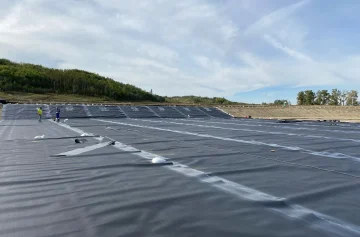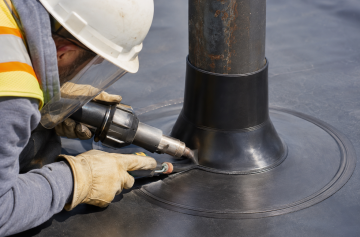
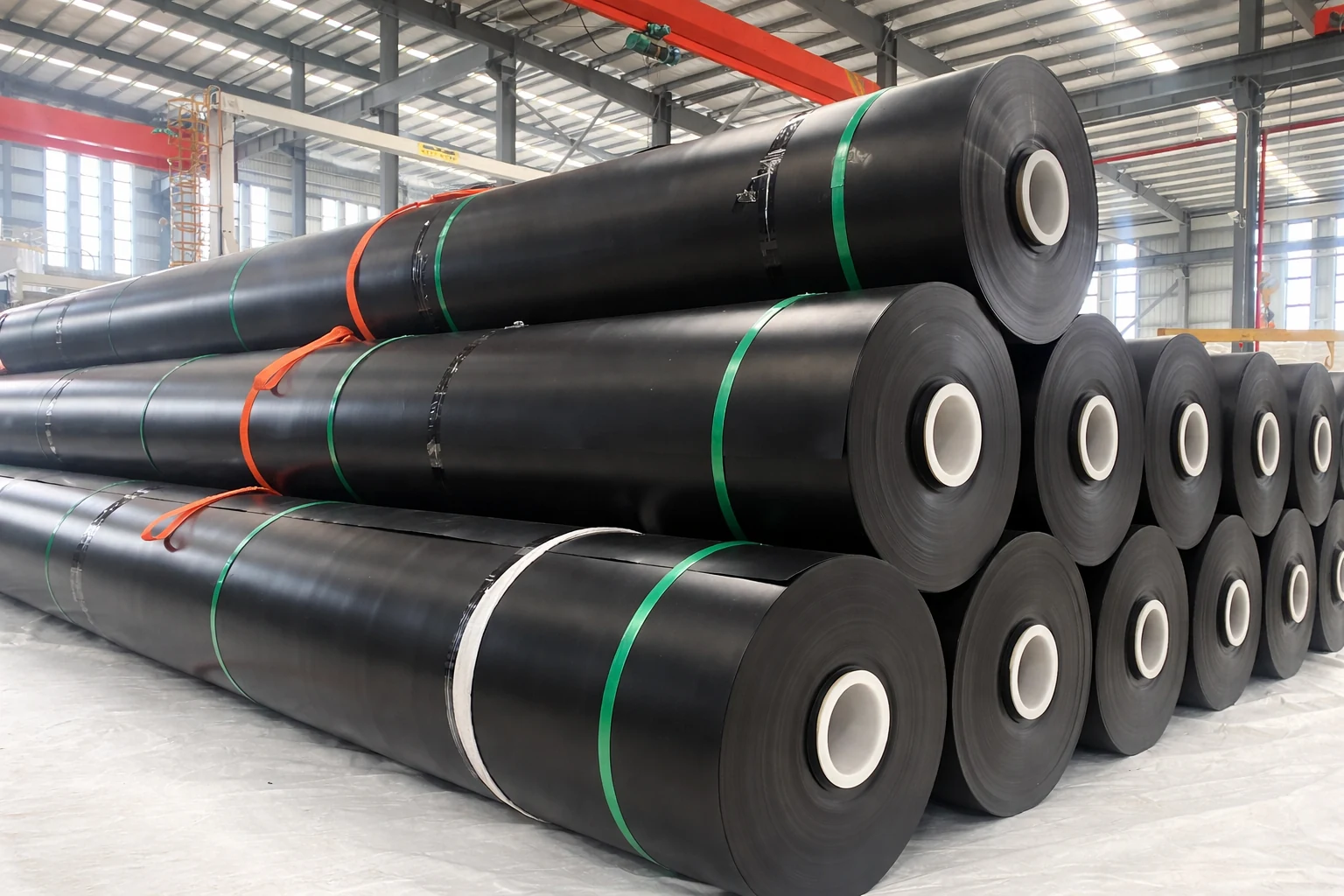
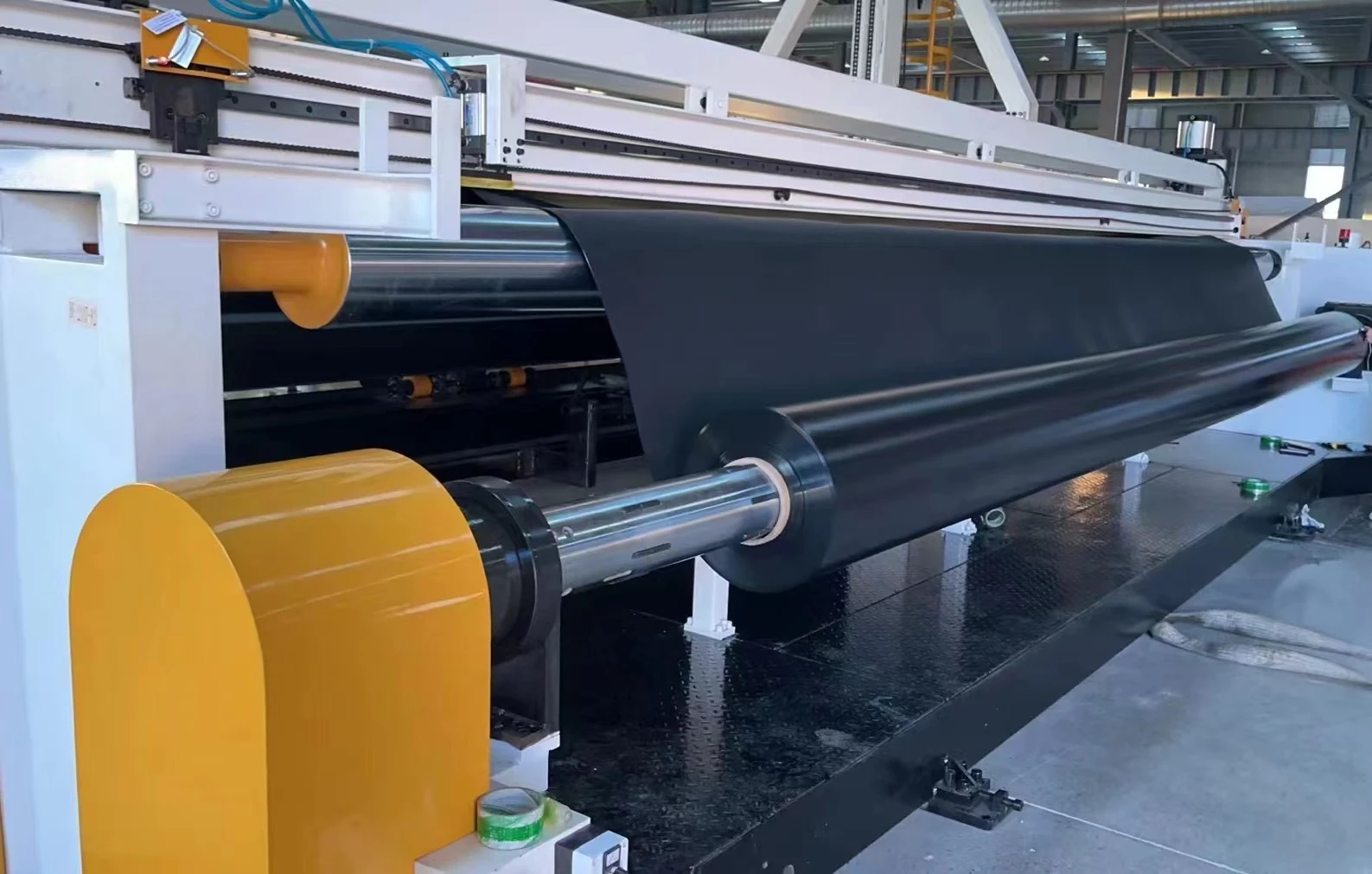
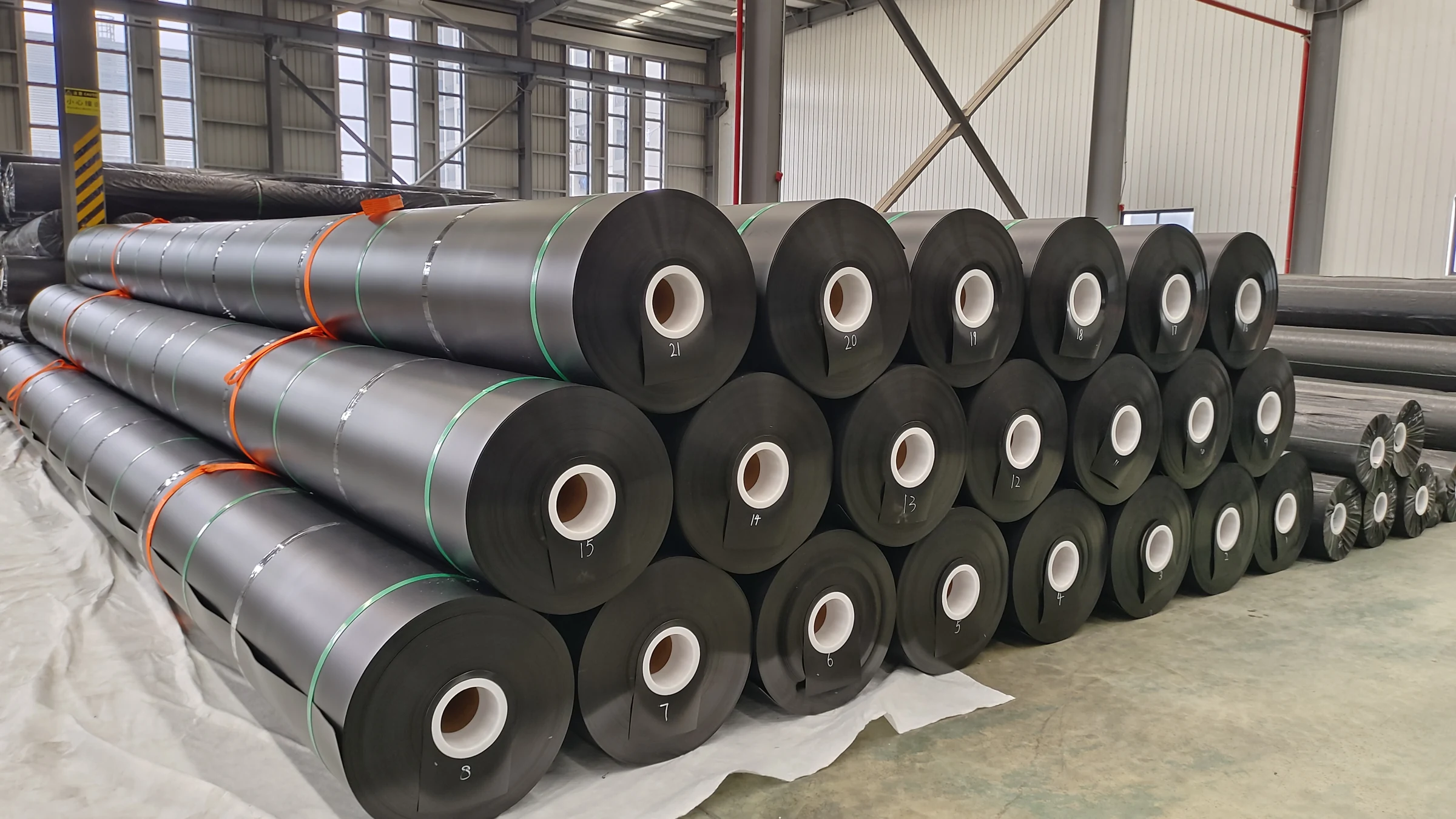

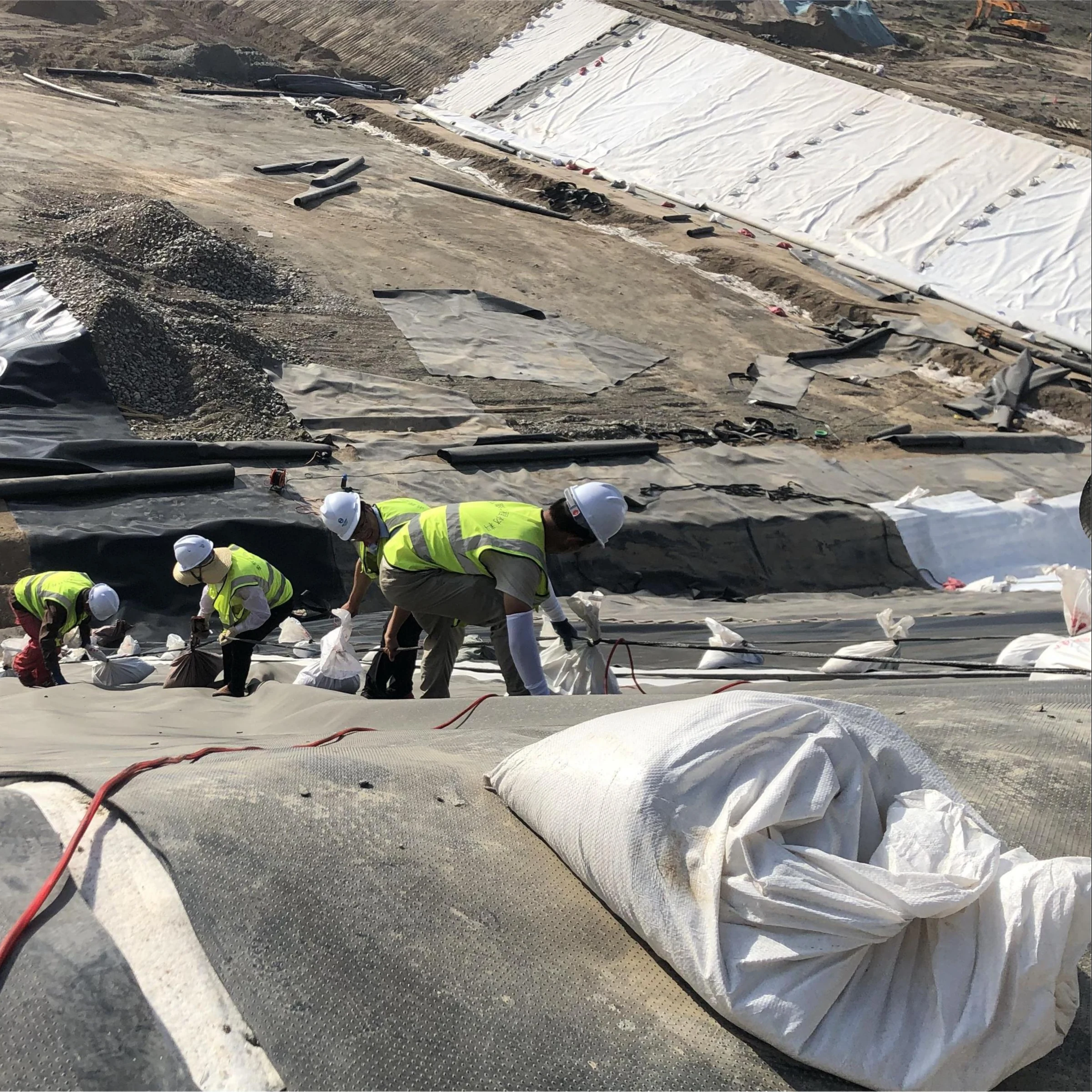
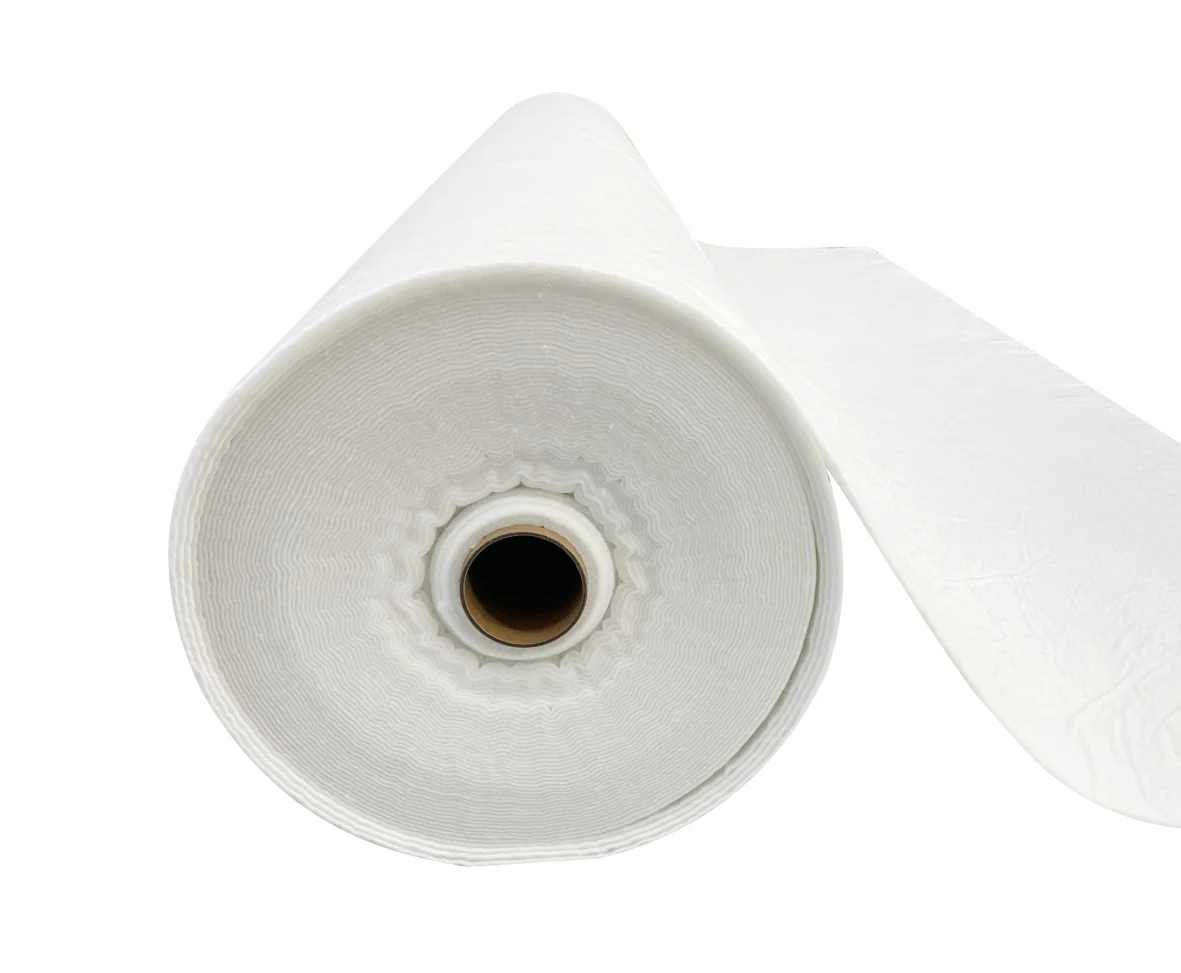
Over the past 3 years, our team has visited 12 PET non-woven geotextile factories across China and tested over 180 batches of samples.
These samples covered three application scenarios: mining yards, landfill closures, and hydraulic slope protection.
Fewer than 5 suppliers were able to consistently deliver quality-assured products.
Behind this result is a repeatable screening method with 10 key checkpoints, covering raw material sourcing, production control, inspection, traceability, and documentation systems[1].
Source
PET non-woven geotextile performance begins with polymer and fiber quality, but raw material is not the only factor.
Fiber or filament design, web formation, needling, thermal stabilization, and process control also affect the finished product.
Zhejiang Jiaren New Materials and Jiangsu Huading Fibers are two PET material suppliers used in China.
For staple-fiber needle-punched geotextiles, fiber fineness and cut length may fall within ranges such as 3.3–8.8 dtex and 50–70 mm. Continuous-filament geotextiles are manufactured and specified differently.
In a Shandong iron mine project, project records showed that one supplier used 30% recycled PET without disclosure.
The longitudinal tensile strength was 18% below the contractual requirement, and the shipment was held[2].
Jinseed PET Non-Woven Geotextile is stated to use 100% virgin PET resin.
A specification such as 6.6 dtex × 65 mm applies only to a staple-fiber product and should not be used to describe a continuous-filament grade.
Tensile strength values such as 12–15 kN/m are meaningful only when the product mass, test method, machine direction, cross-machine direction, and reporting basis are clearly stated.
There is no universal industry average of 9–11 kN/m that applies to every PET non-woven geotextile[3].
The practical verification method is to request a resin or fiber certificate of analysis that identifies:
- Raw material supplier
- Material grade or product name
- Production batch
- Country or plant of origin
- Relevant material properties
The certificate should be cross-checked against purchase records, warehouse labels, and incoming inspection results.
A generic “GRI-certified Resin Certificate” is not a universal requirement for PET geotextiles[4].
During one contract negotiation, we requested a source declaration and found that the stated supplier did not match the actual material supplier.
This was clear evidence of weak supply-chain control.

Further reading: Jinseed Homepage.
Recycled content is not completely prohibited in the geotextile industry, but it must be controlled according to the intended application and project specification.
In a Fujian landfill project, a supplier mixed 15% recycled material into an HDPE geomembrane used for the base liner without disclosure.
The batch was returned because the material did not comply with the agreed project specification. ASTM D792 is a density and specific-gravity test method and does not itself prohibit recycled content[5].
Using recycled PET requires two basic controls:
- Disclosure: State the recycled percentage, material source, and intended application during bidding.
- Durability verification: Provide tests that match the expected exposure conditions and project specification.
For geotextiles exposed to sunlight, ASTM D4355 may be used to evaluate deterioration from light, moisture, and heat.
The exposure duration and acceptance criteria must come from the applicable project specification rather than a universal requirement for 1,000-hour oxidative aging or 500-hour UV exposure[6].
ISO 9001:2015 Clause 8.4.2 requires an organization to define the type and extent of controls applied to externally provided materials and services.
It does not prescribe a fixed aging-test duration.
Recycled feedstock may show wider variation in intrinsic viscosity, moisture, contamination, color, and thermal history.
The actual variation must be measured for each supply source instead of assuming that recycled PET always has three to five times the variation of virgin PET[7].
Jinseed Quality Certification provides incoming inspection records.
Acceptance limits for intrinsic viscosity, moisture, contamination, or other melt properties should follow the agreed material specification. A universal ±10% MFR rejection limit is not established for every PET geotextile product.
Further reading: Jinseed Textured Liner.
PET non-woven geotextile grades are commonly classified by mass per unit area and mechanical performance.
Common product weights range from approximately 100 g/m² to 800 g/m², although some manufacturers offer grades up to 1,000 g/m².
The 150–400 g/m² range is frequently used in mining, drainage, separation, and hydraulic engineering, but weight alone does not determine suitability.
In a Yunnan tailings dam project, the design specification required a 200 g/m² geotextile to achieve at least 2.5 kN of CBR puncture strength.
This was a project-specific requirement and should not be treated as a universal value created by a puncture pressure of 0.5 MPa[8].
An internal comparison associated with Jinseed Mining Applications evaluated two 300 g/m² fabrics:
| Product Configuration | Needling Density | Recorded CBR Puncture Strength |
|---|---|---|
| 6.6 dtex × 65 mm staple-fiber configuration | 120 punches/cm² | 3.8 kN |
| 3.3 dtex × 50 mm staple-fiber configuration | 80 punches/cm² | 2.6 kN |
In this comparison, the 3.8 kN result was approximately 46% higher than the 2.6 kN result[9].
Grade selection cannot rely on mass per unit area alone.
Fiber properties, needling conditions, polymer quality, and production uniformity can create substantial performance differences between products with the same g/m² value.
A port yard project comparing three suppliers found that the better-controlled product remained serviceable about 40% longer during the recorded monitoring period.
This project result should not be treated as a universal service-life increase for every geotextile.
Further reading: Jinseed Oil-Gas Containment.
Traceability is the mechanism that connects test reports to the material actually delivered.
An international mining project required reverse traceability to the polymer or fiber supplier and every internal production step. According to the project screening records, only three Chinese suppliers met the full requirement[10].
Jinseed Landfill Systems use a traceability chain that can be organized as follows:
- Raw material supplier and batch identification
- Web-production records, including mass, line speed, and process temperature
- Finished-roll identification, such as the JSD-2024-XXXX format
- Finished-product QC report
- Shipping and customer documentation
This chain connects the raw material batch to the finished roll and its test results[11].
Jinseed’s stated service target is to retrieve the relevant QC records within 4 hours after receiving a valid roll number.
The original comparison with an industry response time of 2–3 days should be treated as an internal observation rather than a verified industry-wide average[12].
ISO 9001:2015 Clause 8.5.2 addresses identification and traceability when traceability is a requirement.
Clause 7.5.3 controls documented information but does not independently require every geotextile roll to carry a unique number.
For project traceability, each roll should still be linked to its production date, raw material batch, QC records, and shipping documents.
We once found a supplier that tested “Sample A” but delivered “Sample B.” The supervisor rejected the shipment because the tested and delivered materials could not be matched.
Further reading: Jinseed Methane Barrier Systems.
Control
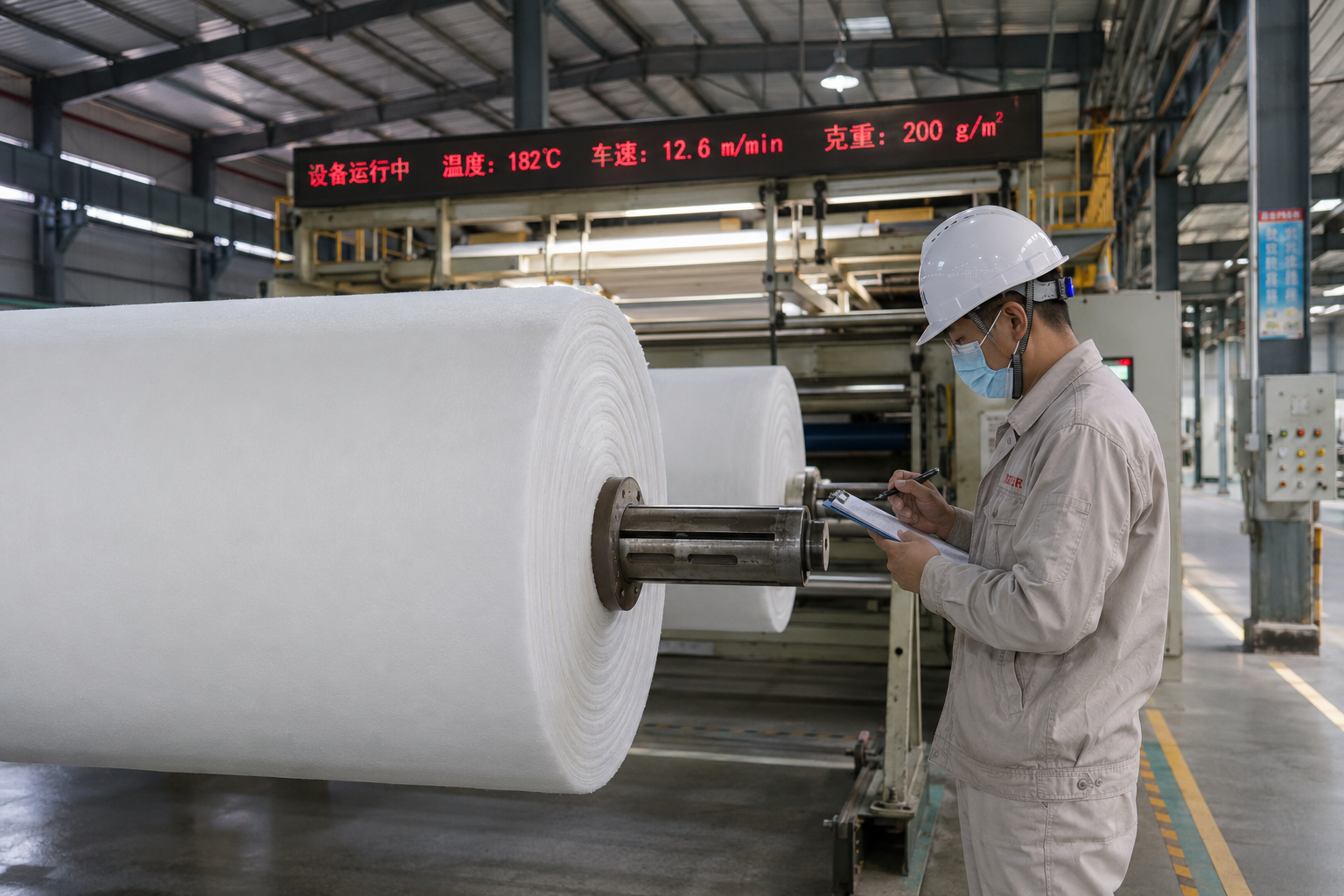
Production-line setup directly affects product uniformity and basic performance.
It should therefore be one of the first checkpoints during an on-site factory review.
During an audit at a Jiangsu factory, two production lines made the same nominal 200 g/m² geotextile.
One line recorded a mass deviation of ±3%, while the other recorded ±9%. The second result would exceed a contractual limit of ±5% where that limit had been specified[13].
Jinseed Civil Engineering projects require consistent material properties because excessive variation can affect separation, filtration, protection, and installation performance.
According to Jinseed’s 2024 internal production records, its closed-loop mass-control system achieved a stated control range of ±2.5%, with a typical result of ±1.8%.
The company records also state that all 48 reviewed batches remained within ±3%[14].
| Setup Parameter | Control Requirement | Reason for Verification |
|---|---|---|
| Needling density | Use the validated setting for the specific product instead of assuming a universal minimum of 80 punches/cm². | Affects bonding, thickness, pore structure, and mechanical performance. |
| Thermal stabilization | Use the validated temperature window for the polymer, line, and product. A fixed 180–210°C range is not universal. | Excessive or insufficient heat can change shrinkage, strength, and dimensional stability. |
| Mass monitoring | Use continuous or closed-loop feedback rather than relying only on occasional manual samples. | Helps detect cross-width and machine-direction variation during production. |
Further reading: Jinseed Industrial Evaporation Ponds.
Process control means monitoring important parameters throughout production rather than depending only on a final inspection.
In a Guangdong aquaculture project, the supplier’s report showed strong permeability results, but an on-site retest was 60% lower.
The investigation found that the material prepared for testing did not match the material delivered to the project[15].
Jinseed Environmental Engineering projects require hydraulic properties that match the surrounding soil and drainage design.
A geotextile is not an impermeable barrier. Water flow that is too low can restrict drainage or increase clogging risk, while an opening structure that is too large for the retained soil can allow particle migration.
Jinseed identifies four mandatory internal control checkpoints:
- Incoming material inspection: Check moisture, intrinsic viscosity or the agreed melt-property measure, and visible contamination.
- Web-mass recording: Record production data every 30 seconds in the MES system and retain the records for 5 years.
- Temperature records: Archive the continuous production-temperature curve for 5 years.
- Finished-product sampling: Sample every 500 rolls under the internal plan and retain samples for 2 years, or test more frequently when the contract or product standard requires it.
ISO 9001:2015 Clause 10.2 requires the organization to retain documented information about nonconformities, actions taken, and the results of corrective action.
Review signatures and photographs can be useful company controls, but they are not mandatory requirements stated for every case by Clause 10.2[16].
Further reading: Jinseed Filter Cloth Guide.
Inspection is the final step used to verify whether the finished product meets the project specification.
It also provides the formal basis for accepting or rejecting quality claims.
In a hydraulic slope-protection project, samples from three suppliers were independently tested at a geosynthetic materials testing center.
One supplier’s CBR puncture result was 22% below the value shown in its own report. The later investigation found that the equipment calibration was six months overdue[17].
Jinseed Aquaculture Applications include river-slope protection and artificial-lake systems that require verified tensile, puncture, filtration, and permeability properties.
Jinseed states that its laboratory has 12 testing instruments, including:
- A 50 kN universal testing machine
- A CBR puncture tester with a 50 mm probe
- A water-permeability tester
- A thickness gauge with 0.01 mm instrument resolution
The equipment should be controlled under a documented calibration and verification schedule.
A 12-month calibration interval may be used as the company’s planned interval, but ISO/IEC 17025:2017 Clause 6.4 does not require the same fixed interval for every instrument[18].
Inspection terms should be written into the contract and should cover:
- Required laboratory or third-party qualification
- Applicable product and test standards
- Batch or lot definition
- Sampling method and sample frequency
- Required test items
- Acceptance criteria
- Retesting and dispute-resolution procedures
One test group per 5,000 m² may be used when it is written into the project specification.
It is not a universal sampling frequency for every geotextile contract.
Further reading: Jinseed Railway Geotextiles.
Documentation
The method list identifies the standards and procedures used to evaluate the product.
It is one of the first documents that should be reviewed during a manufacturer audit.
During one supplier audit, we found that the factory referenced GB/T 15788-2005.
That edition has been replaced, and the current Chinese standard is GB/T 15788-2017. The factory had registered in 2018 but had copied an outdated document template without checking its status[19].
The method list associated with Jinseed Hydraulic Engineering should distinguish the following standards and their scopes:
| Standard | Correct Current Reference | Application |
|---|---|---|
| GB/T 15788 | GB/T 15788-2017 | Wide-width tensile testing of geosynthetics |
| ISO 10319 | ISO 10319:2024 | Wide-width tensile testing of geosynthetics |
| ISO 11058 | ISO 11058:2019 | Water permeability normal to the plane without load |
| GB/T 14800 | GB/T 14800-2010 | Static puncture testing by the CBR method |
| ASTM D6241 | ASTM D6241-22a | Static puncture strength using a 50 mm probe |
| GB/T 13762 | GB/T 13762-2009 | Mass per unit area of geotextiles and related products |
| GB/T 17643 | GB/T 17643-2025 | Polyethylene geomembrane requirements; not a PET geotextile test method |
The original list referred to eight standards but named only seven.
It also incorrectly listed GB/T 15788-2011, GB/T 14800-2022, GB/T 13762-2022, ISO 10319-1996, and GB/T 17643-2011[20].
Buyers should verify the current edition, scope, specimen preparation, test speed, conditioning requirements, calculation method, and reporting rules for every standard.
A copied method list is not useful when the supplier cannot explain how ASTM D6241 or ISO 11058 is performed and when each method is applicable.
Further reading: Jinseed Tailings Dam Lining.
The test report is the core document in the quality evidence chain.
It is often the first technical document reviewed by project supervisors, consultants, and owners.
In one landfill project, a supplier’s report did not include a testing-standard column.
When the supplier added the missing information, the ASTM reference was found to contain an incomplete standard number. The document had to be corrected, and the project was delayed by 3 weeks[21].
Jinseed LLDPE Geomembrane test reports use the format JSD-TR-YYYYMM-XXXX.
Each report should contain:
- Client or project name
- Product description and specification
- Production batch and roll identification
- Sampling date and test date
- Applicable test method and edition
- Equipment identification
- Calibration or verification status
- Individual measured results
- Units and method-required rounding precision
- Specified acceptance criteria
- PASS or FAIL determination where applicable
- Authorized report approval
- Accreditation mark only when permitted and within the laboratory’s accredited scope
Measured values should use the precision required by the applicable test method and equipment capability.
They should not automatically be reported to 0.01 for every property[22].
Batch traceability remains important because production variation can change tensile and puncture results.
An internal historical range of 5–8% may be useful for process review, but it should not be presented as a universal variation for all manufacturers or products.
Jinseed reports should accompany the goods in physical or digital form and remain permanently linked to the relevant batch and roll numbers.
Further reading: About Jinseed.
Verification is the final stage in which the buyer reviews the supplier’s actual quality system through a factory audit or document review.
For an international mining company’s supplier screening, we developed a 23-point checklist covering the raw material warehouse, production line, laboratory, finished-product storage, and packaging area.
Field-audit experience shows that factory size and certificate count are less important than evidence that the system is operating consistently.
The audit should check:
- Whether equipment inspection and maintenance records follow the planned schedule
- Whether unexplained record gaps exist
- Whether raw materials are separated and identified by batch
- Whether mixed storage could cause loss of traceability
- Whether nonconforming products are physically segregated
- Whether the reason and disposition of each nonconforming batch are recorded
An unexplained gap should be evaluated against the company’s planned inspection frequency.
A gap of more than 30 days is not automatically a violation unless the approved procedure requires checks at shorter intervals[23].
Jinseed HDPE Geomembrane audits cover six modules:
- Raw material management, including zoned storage and FIFO controls
- MES and production-process records
- Equipment inspection and maintenance records covering the defined review period
- Valid laboratory calibration and verification records
- Controlled technical and quality documentation
- Nonconforming-product control and corrective action
A 12-month record-review period can provide useful evidence of continuity.
It should not be confused with a universal rule requiring every item of equipment to be maintained or calibrated only once every 12 months[24].
Further reading: Contact Jinseed.
We have applied this 10-point verification method across 12 projects during the past 3 years.
Compared with our previous screening approach, the internal records showed approximately three to four fewer quality-dispute events per project.
The supplier default rate also fell from an internal baseline of 23% to below 5%.
This method does not depend on factory size, certificate count, or sales claims. It uses production data, traceability, test evidence, and field records to support the supplier decision.
These results are based on our own project records and should not be described as verified industry-wide averages[25].</p