Geomembrane Liners
Containment systems for demanding engineering projects.
Geomembrane Liners
HDPE Geomembrane Liner
Primary containment liner
HDPE Geomembrane
Smooth and textured HDPE
LLDPE Geomembrane
Flexible lining applications
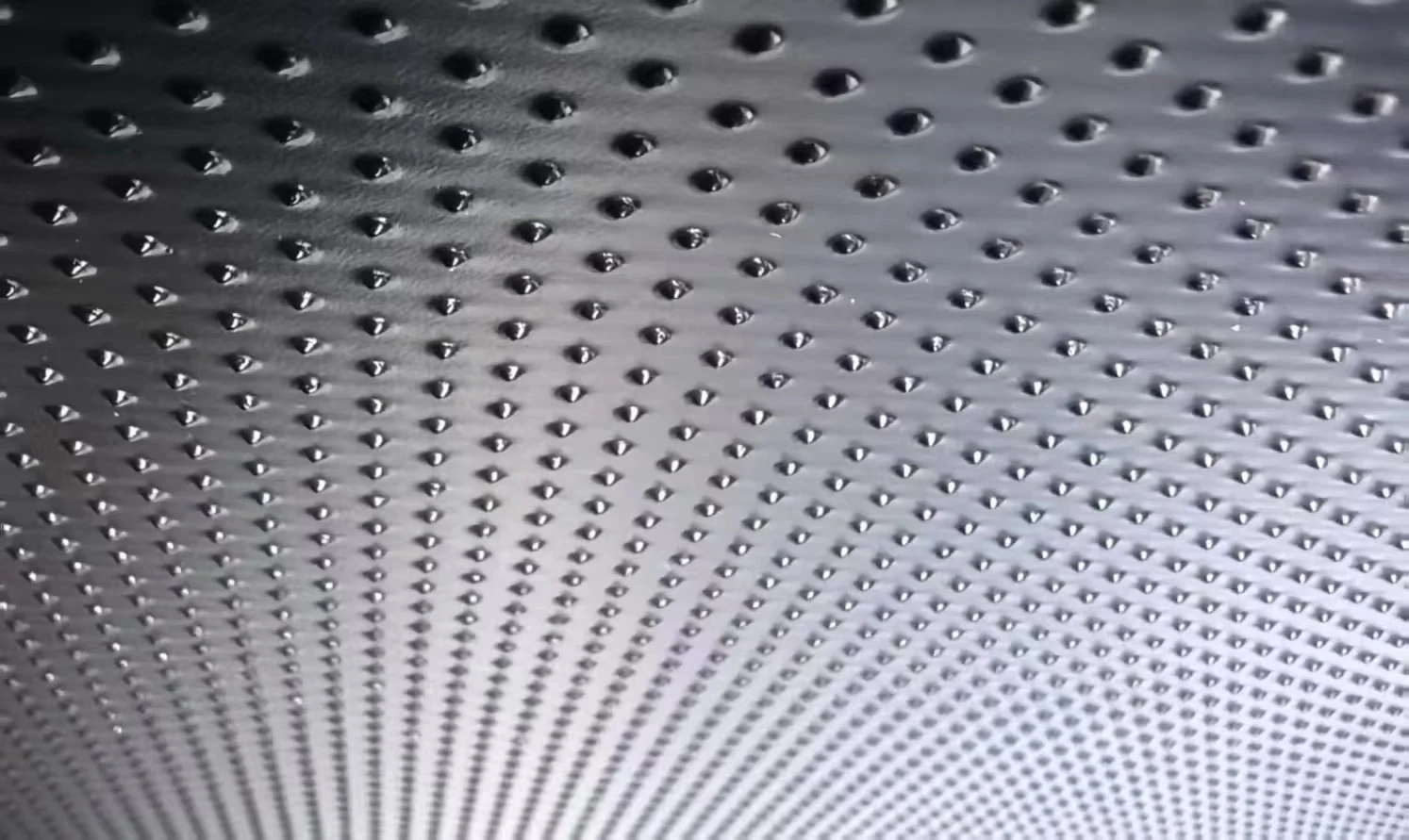
Textured Geomembrane
Higher friction for slopes
Landfill Liner System
Landfill containment materials
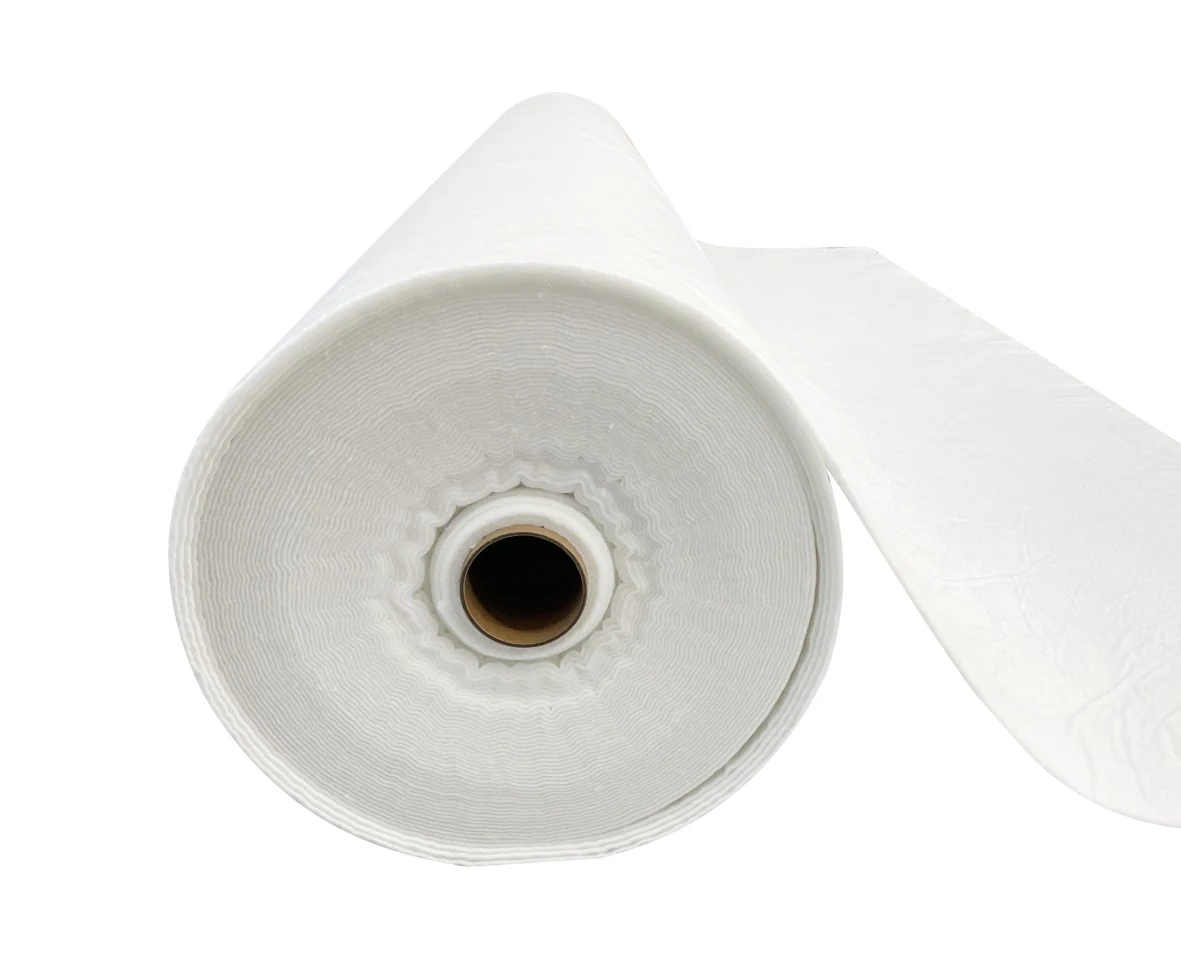
Geotextile
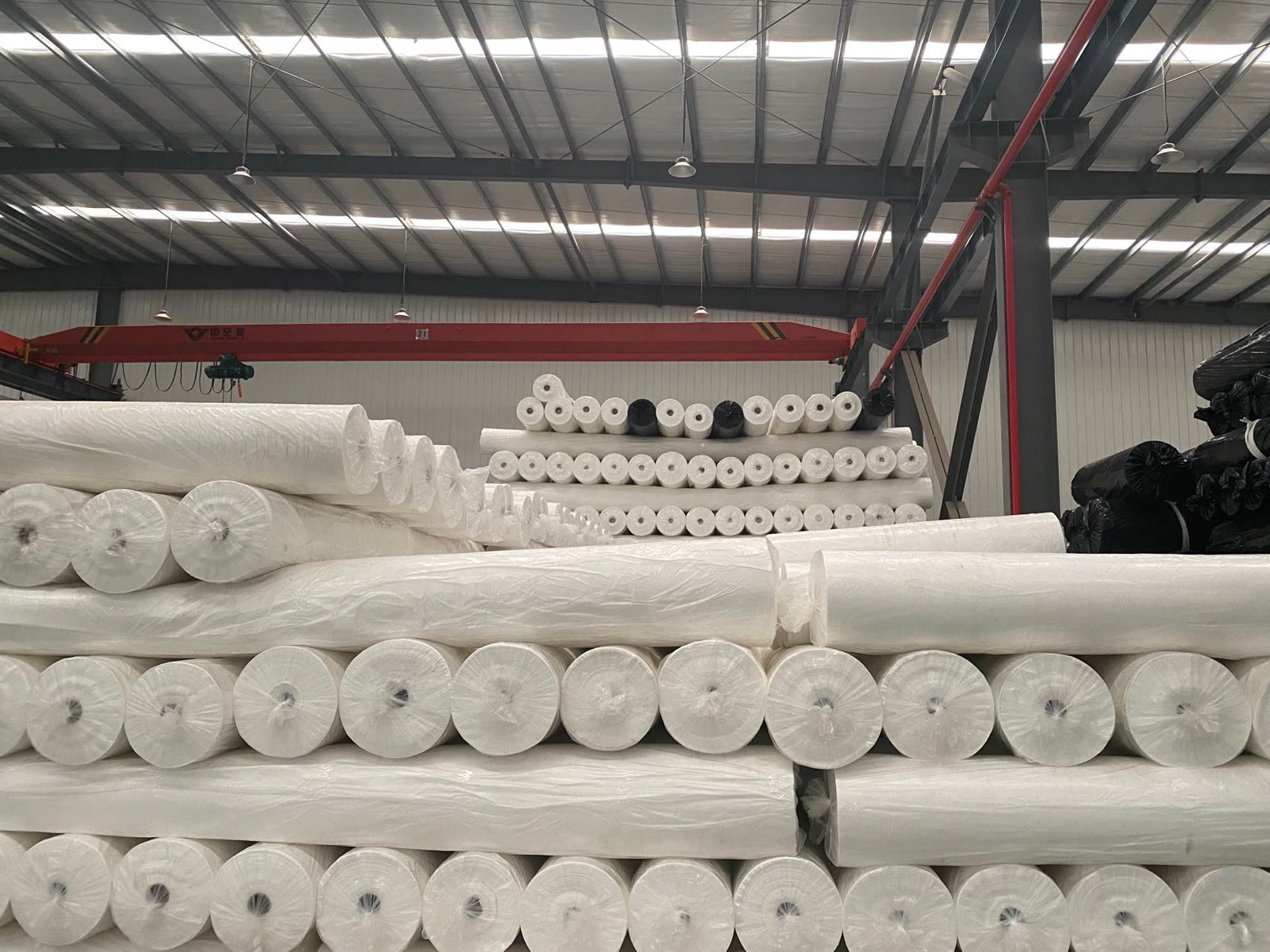
PET Non-Woven Geotextile
Protection and filtration
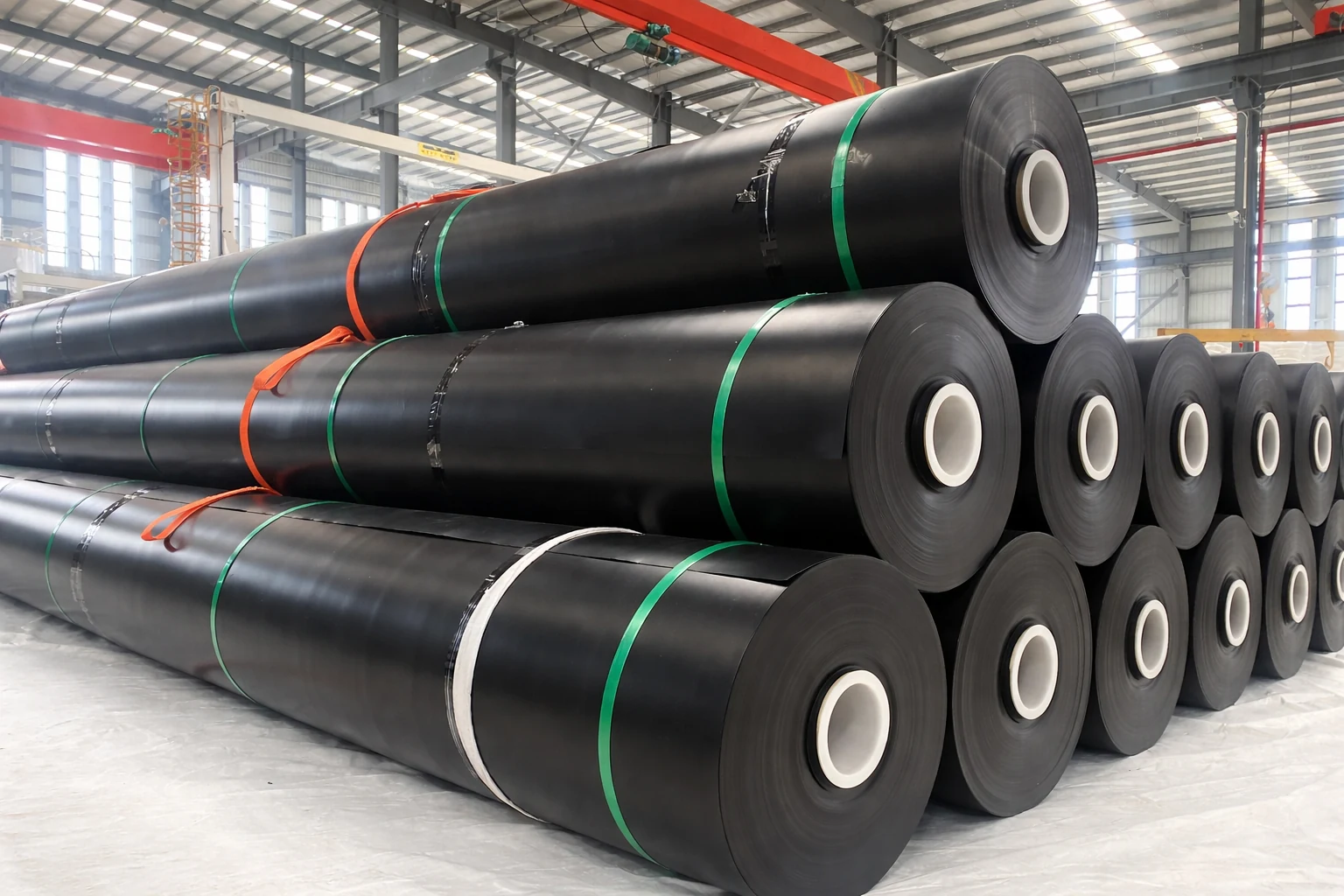
Geotextile ManufacturerSmooth and textured liners from 1.0 to 3.0 mm, in rolls up to 8 m wide. Made from 100% virgin resin in our own plant, tested to GRI-GM13, and already working under roads, tunnels and reservoirs in more than 50 countries.
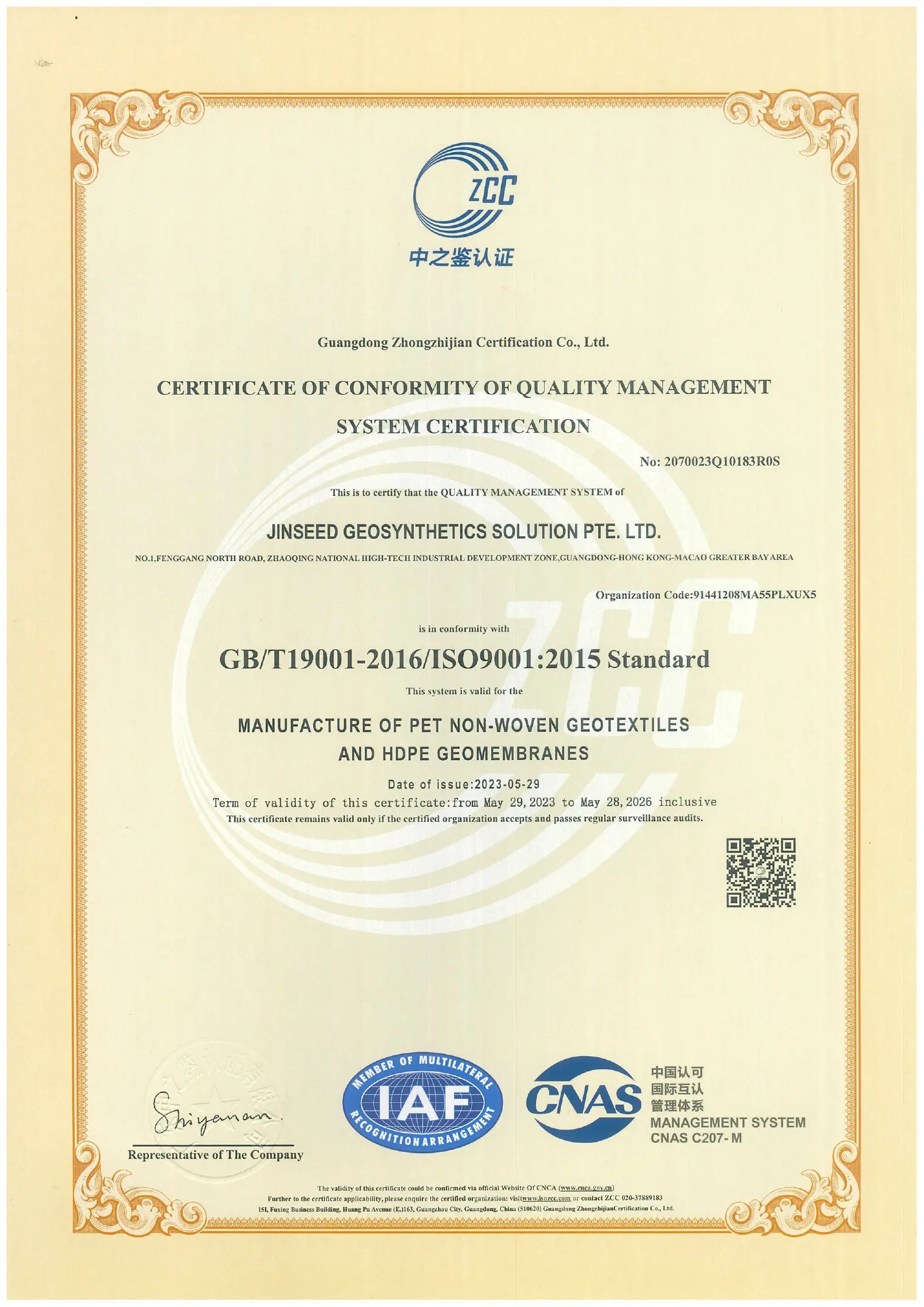
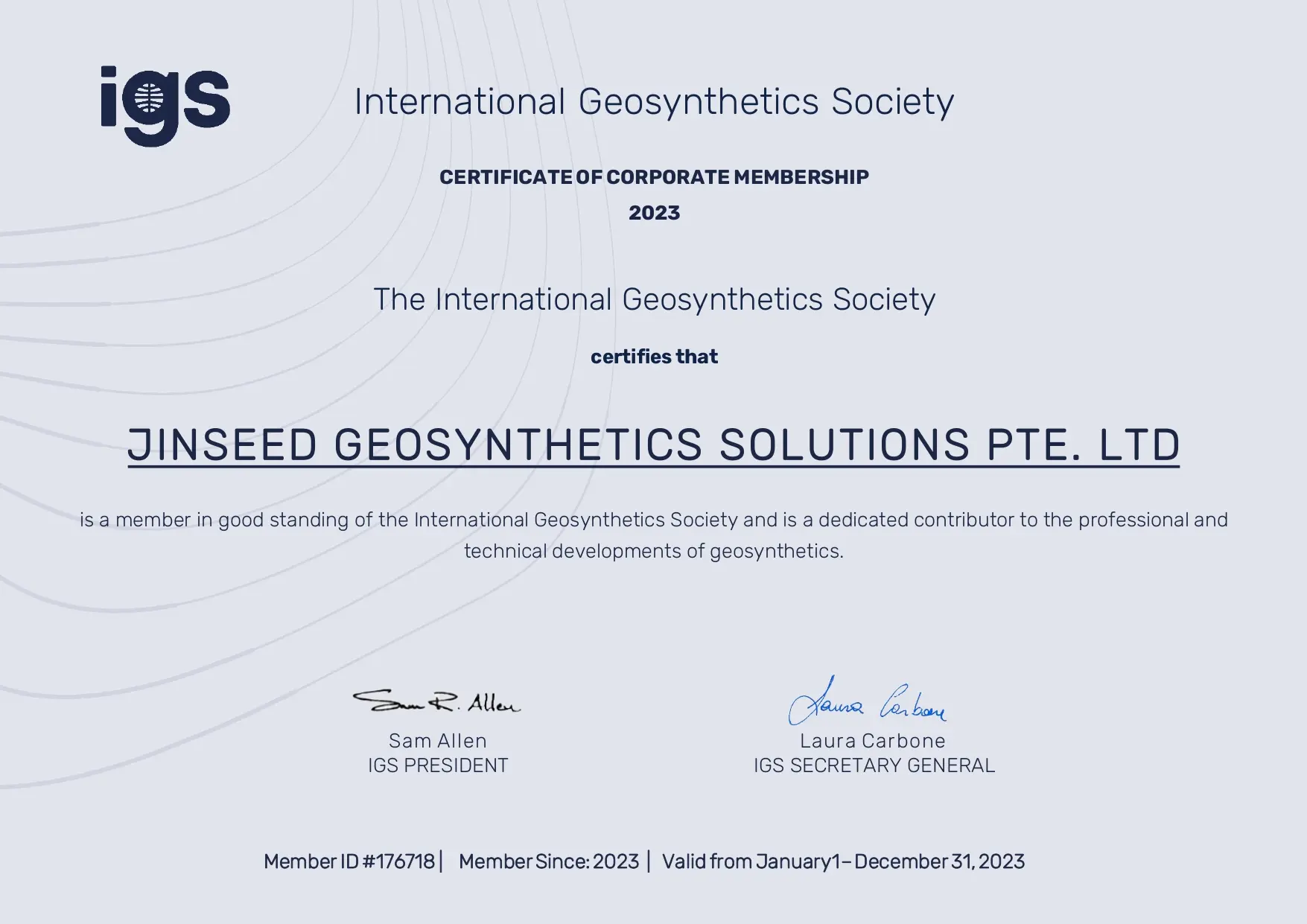
Request current management-system certificates, membership documentation and product-specific test reports.
Four everyday jobs for our liners and geotextiles. Each links to a page or guide with the full details.

A geotextile cushion goes against the shotcrete, the membrane against the water. Fixed, hung and welded in place.
Tunnel installation guide
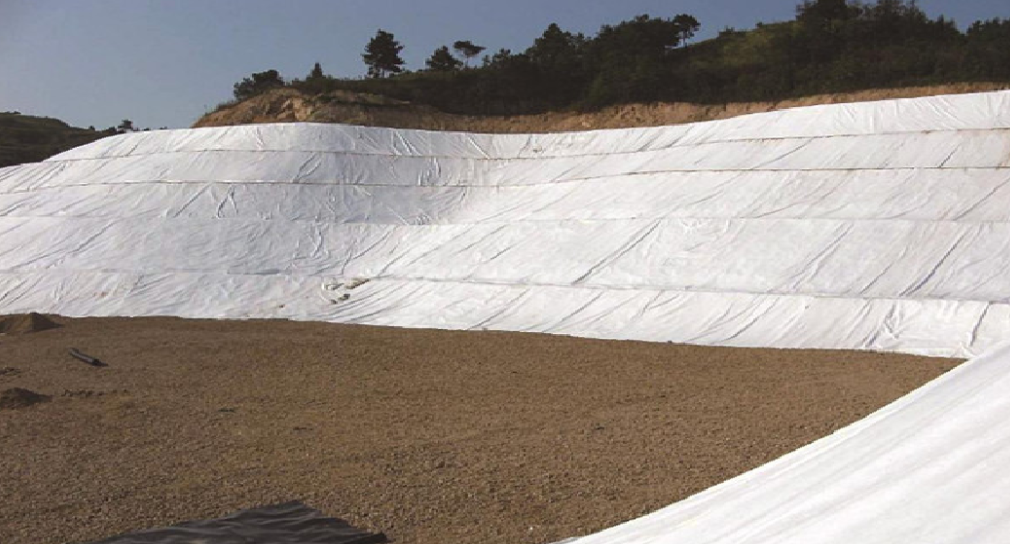
Geocells and geotextiles hold cover soil on the slope; a textured membrane underneath keeps water out.
Erosion control methods
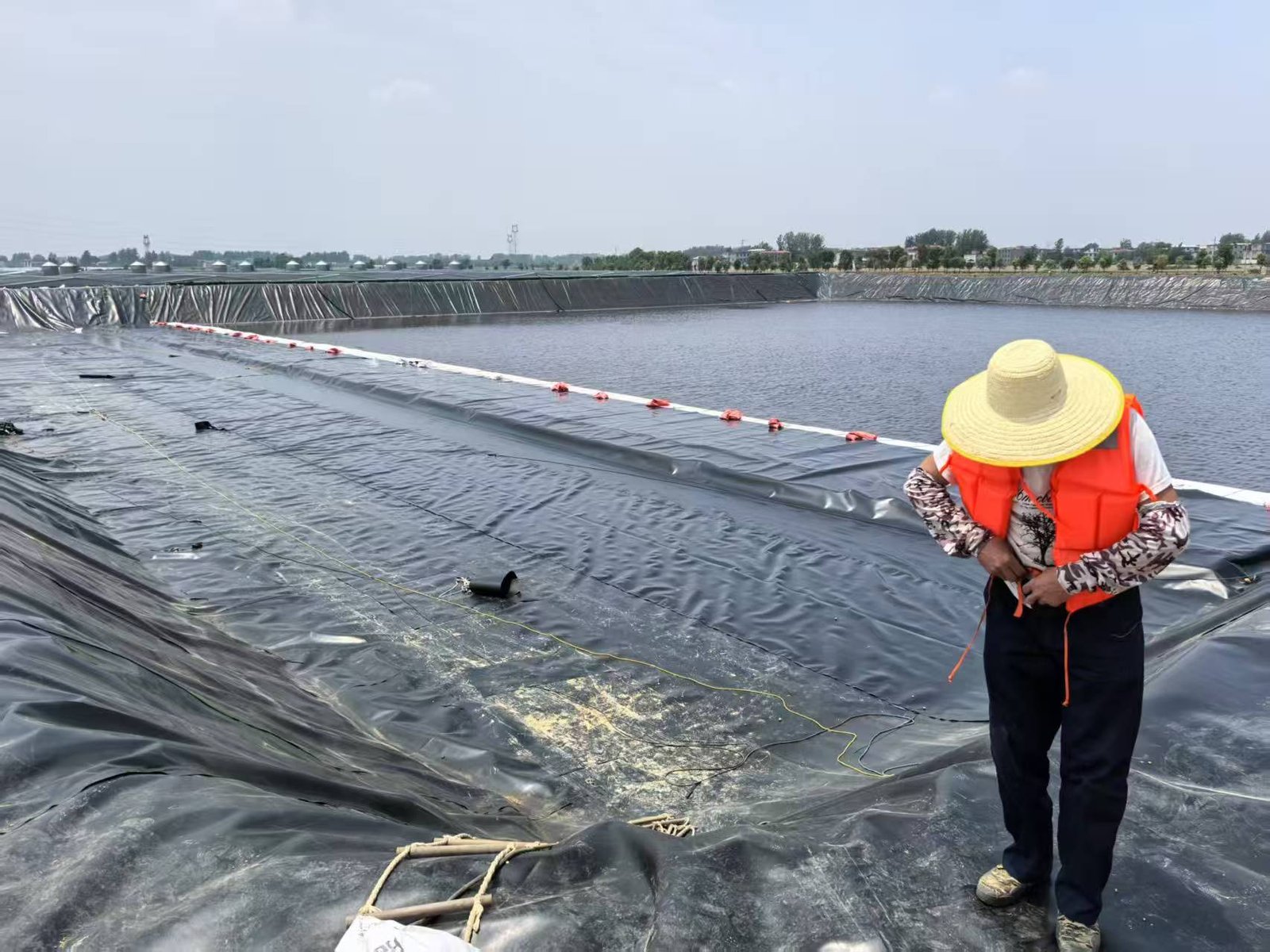
Tank farms and chemical stores: the liner is sized to the stored volume, with every penetration detailed before production.
What to put in the RFQ
Reinforced-soil walls require designed reinforcement. Where a liner is included, assess interface shear strength and slope stability for the actual layer combination; texture alone does not establish a safe slope.
Smooth vs textured
The geotextile keeps soft subgrade and crushed stone from mixing, so the base keeps its strength under traffic.
A fabric layer under the ballast stops pumping and keeps fines out of the drainage path.
An HDPE membrane seals the formation against water and frost on cuttings and working platforms.
Road builds commonly specify AASHTO M288-17 for the geotextile and GRI-GM13 for the membrane — both covered by our standard test sets.
The membrane blocks water. The textiles around it carry loads, filter fines and drain seepage. Most civil specs combine them.
Stops subgrade soil and base aggregate from mixing under repeated loading.
Less base stone for the same strength
Lets water pass at a high flow rate while holding back fine soil particles.
AOS 0.05–0.5 mm · permittivity ≥ 1.5 s⁻¹
Spreads concentrated loads over a wider area of soft ground.
Up to 200 kN/m woven · 40 kN/m biaxial geogrid
A low-permeability barrier that limits liquid migration. Gas transmission, chemical compatibility and system leakage require separate assessment.
K ≤ 1×10⁻¹³ cm/s · stress-crack resistance > 500 h
A properly designed and installed liner reduces seepage through the canal bed. Joints, penetrations, erosion and groundwater uplift still require design and inspection.
Test the proposed interfaces under representative normal stress, moisture and displacement conditions. Use the results in the slope stability analysis; a textured surface does not guarantee that a 1:2.5 slope is stable.
Select liner thickness from the project design. Potable-water use requires applicable evidence for the exact formulation and intended contact conditions; polymer type or a GRI specification alone is not drinking-water approval.

100% virgin HDPE from Sabic, Chevron Phillips or Borealis, with a certificate of analysis on every batch.
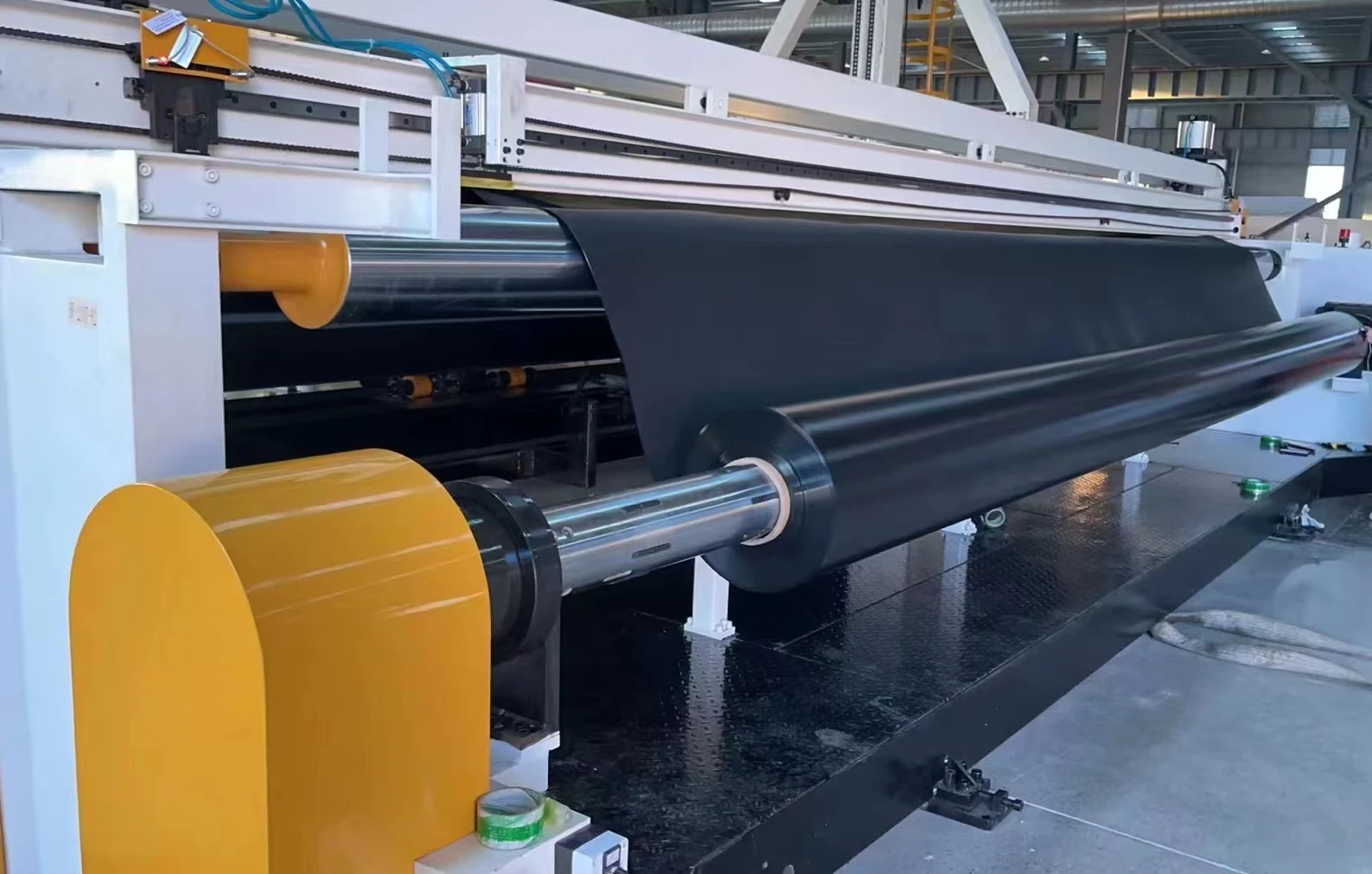
Ultrasonic scanning holds thickness within ±3%, and every meter passes a spark pinhole test.
Specify the applicable material standard and property-specific test frequencies. GRI-GM13 applies to HDPE; GRI-GM17 applies to LLDPE. One sampling frequency does not cover every property.
A unique ID ties every roll to its test data. Records stay on file for more than 15 years.

Compare available widths against the site drawing to reduce waste and seam length. The saving depends on panel layout, handling and access constraints.
Temperature, speed and pressure settings matched to site conditions, for wedge and extrusion welding.
Request installation procedures and training scope. Accept seams against the project peel, shear and continuity requirements, rather than one generic efficiency percentage.
TDS, mill test reports and TRI Environmental results — ready for the engineer of record.
Published reference values are shown below. Confirm the offered grade, test method, standard edition and batch report against the project specification; these figures are not site-design limits.
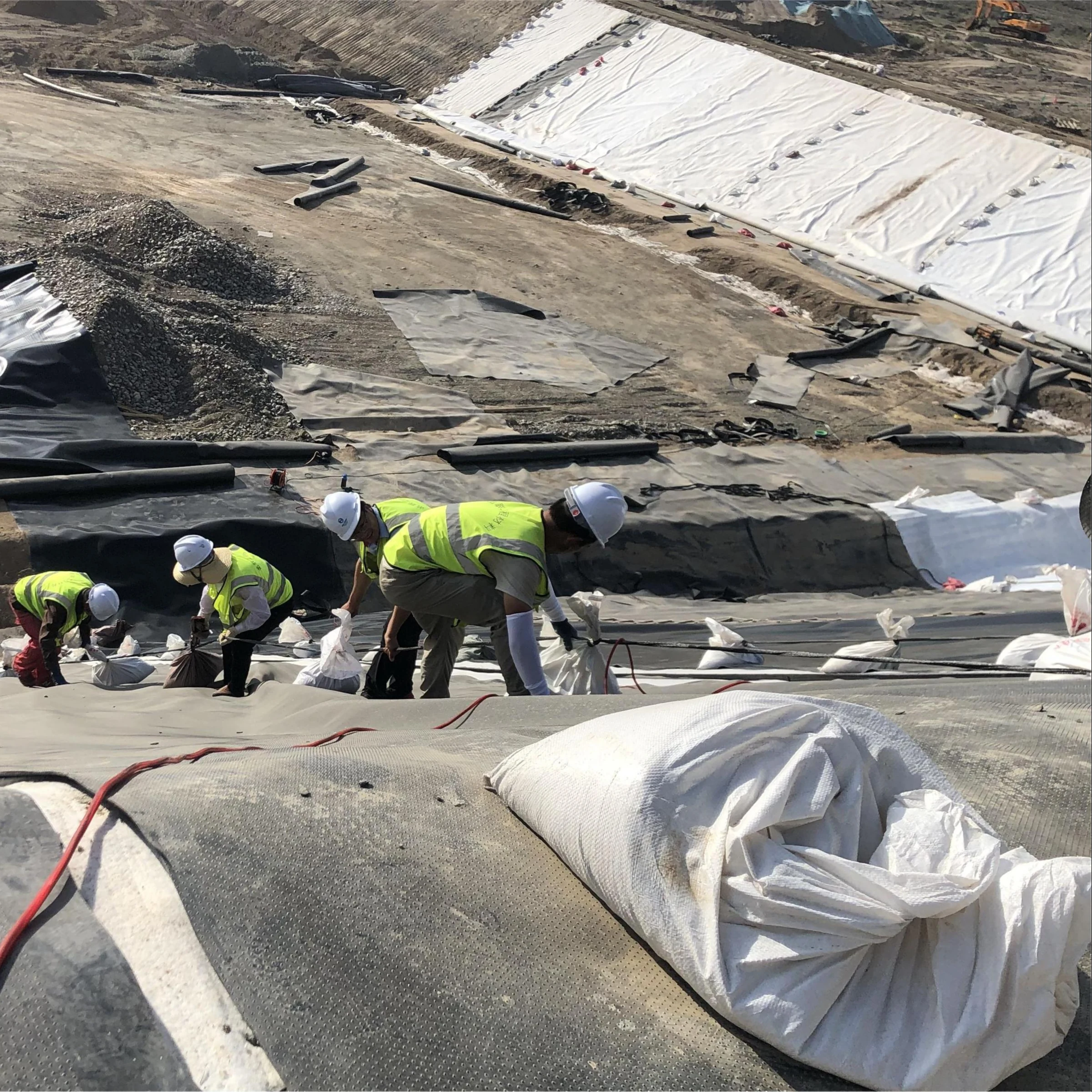
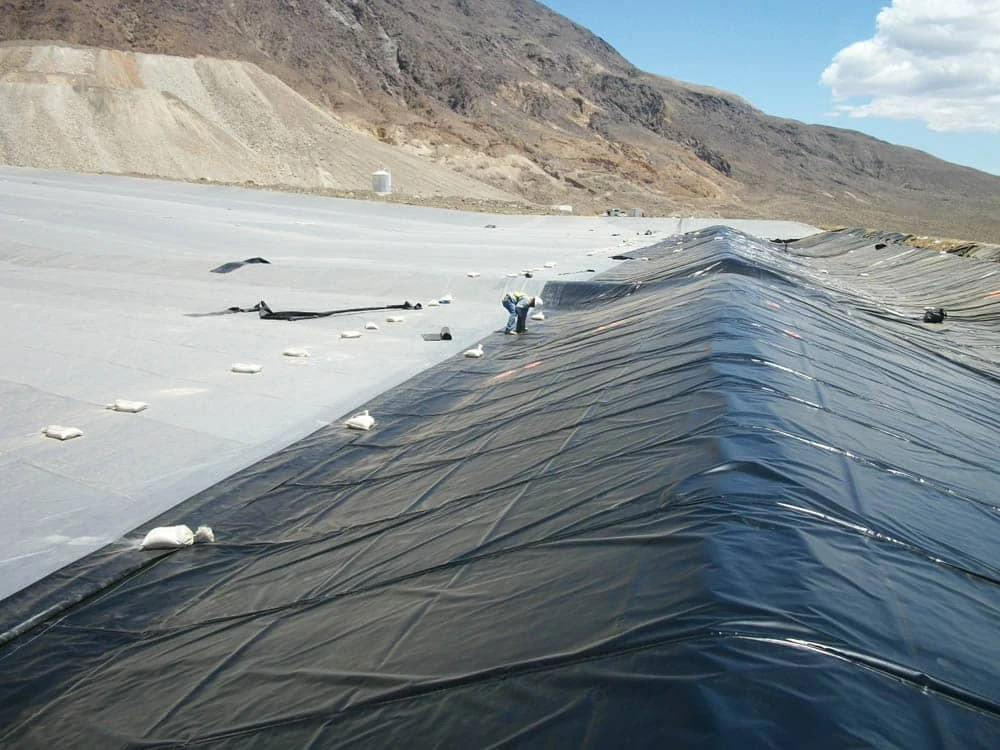
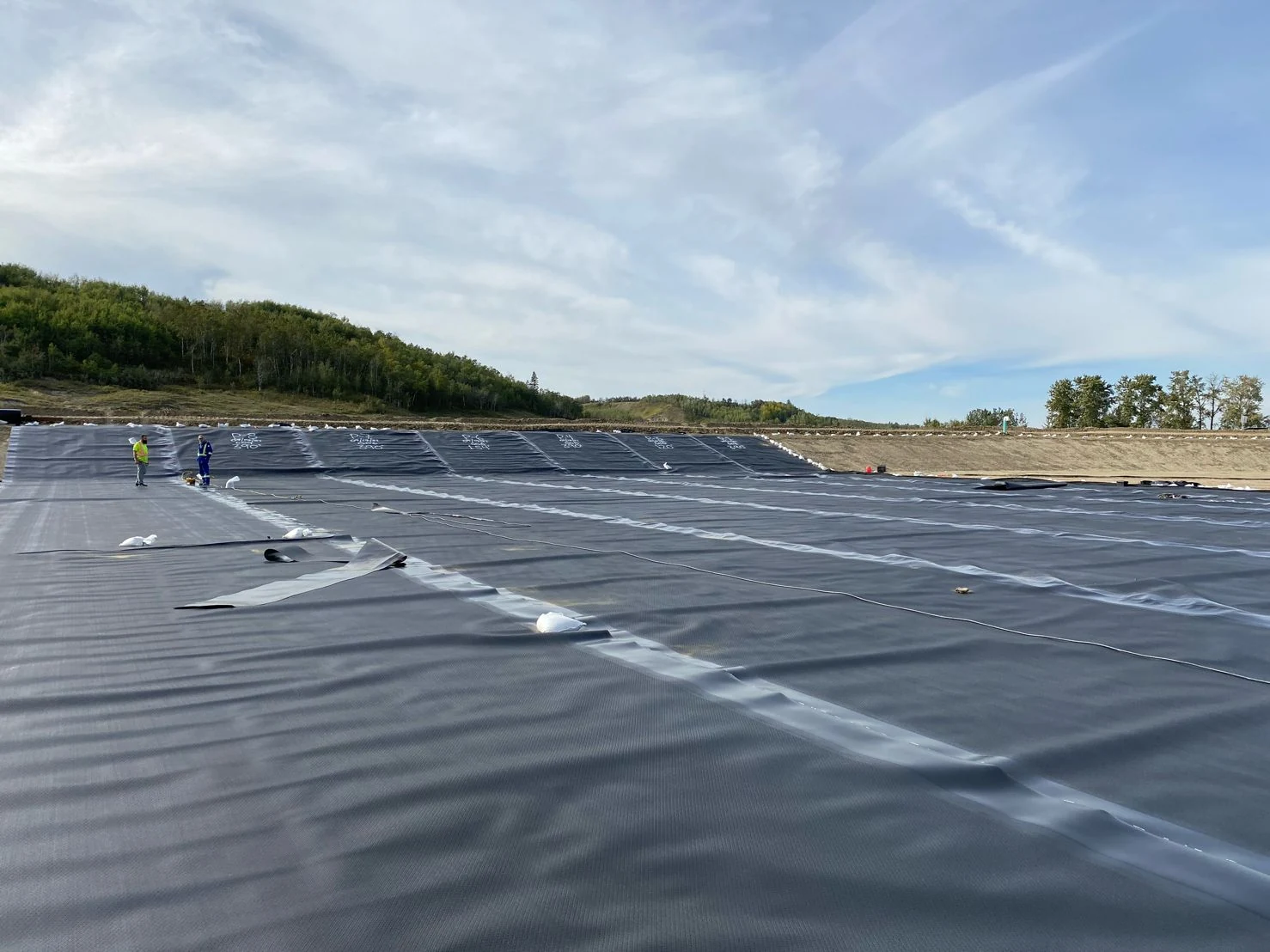
The application examples below show what an engineer should verify. Photographs illustrate materials and site work; they do not substantiate a named project, quantity, schedule saving or performance improvement.

Review soil strength, aggregate grading, filtration requirements, installation survivability and the specified tensile test. A geotextile does not justify reducing aggregate thickness without a revised pavement design.
Specify the material grade and applicable regulatory design requirements. Confirm interface shear testing, protection-layer assessment, seam acceptance and an appropriate electrical leak location method.

Specify reinforcement stiffness, strength, durability and installation requirements from the pavement design. Review the proposed reinforcement separately from the liner and nonwoven fabric.
Assess settlement, strain, interface stability, drainage and erosion protection. Material manufacturing quality compliance alone does not establish cap performance.
Match filtration opening size to the retained soil and verify survivability under the actual rock placement. Select the fabric using relevant performance tests, not GSM alone.

Provide an accepted, stable subgrade without sharp projections, soft spots or unsupported voids. A designed geotextile cushion does not make an unsuitable foundation acceptable.
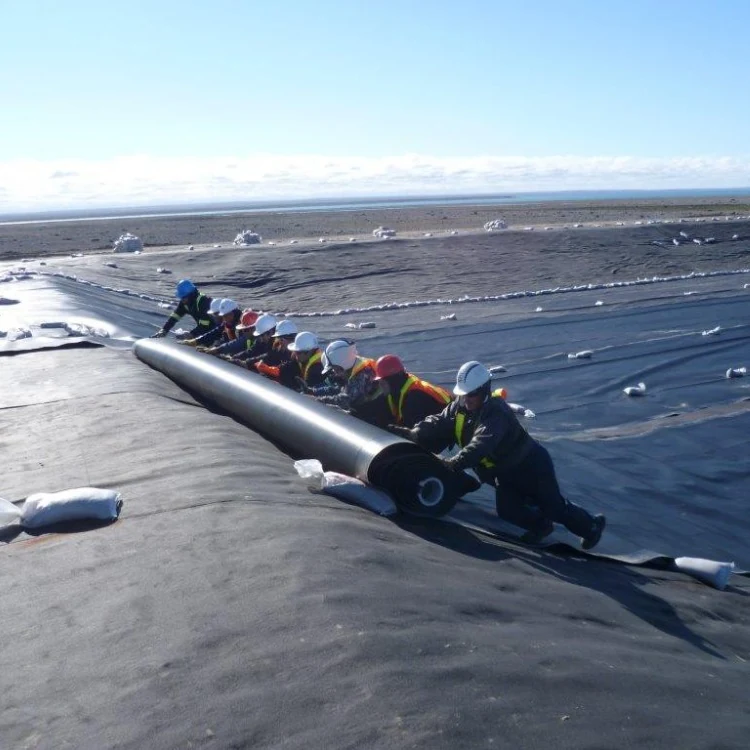
Use the approved overlap, equipment and trial-weld procedure. Dual-track wedge seams suit long runs; extrusion welding is used for compatible details and repairs.
Use the approved air-channel or other continuity test, with documented pressure, stabilization, duration and acceptance criteria. Continuity testing does not establish seam strength or prove the entire liner is leak-free.
Anchor trenches sized to the slope and wind uplift, backfilled and compacted the same day.
Downloads: HDPE data sheet (PDF) · Installation guide (PDF) · Product brochure (PDF)


Request the offered grade data sheet, batch-linked mill test report and any required independent laboratory report. Confirm the laboratory, sample identity, test scope and availability in the order; a historic third-party report does not cover every shipment.
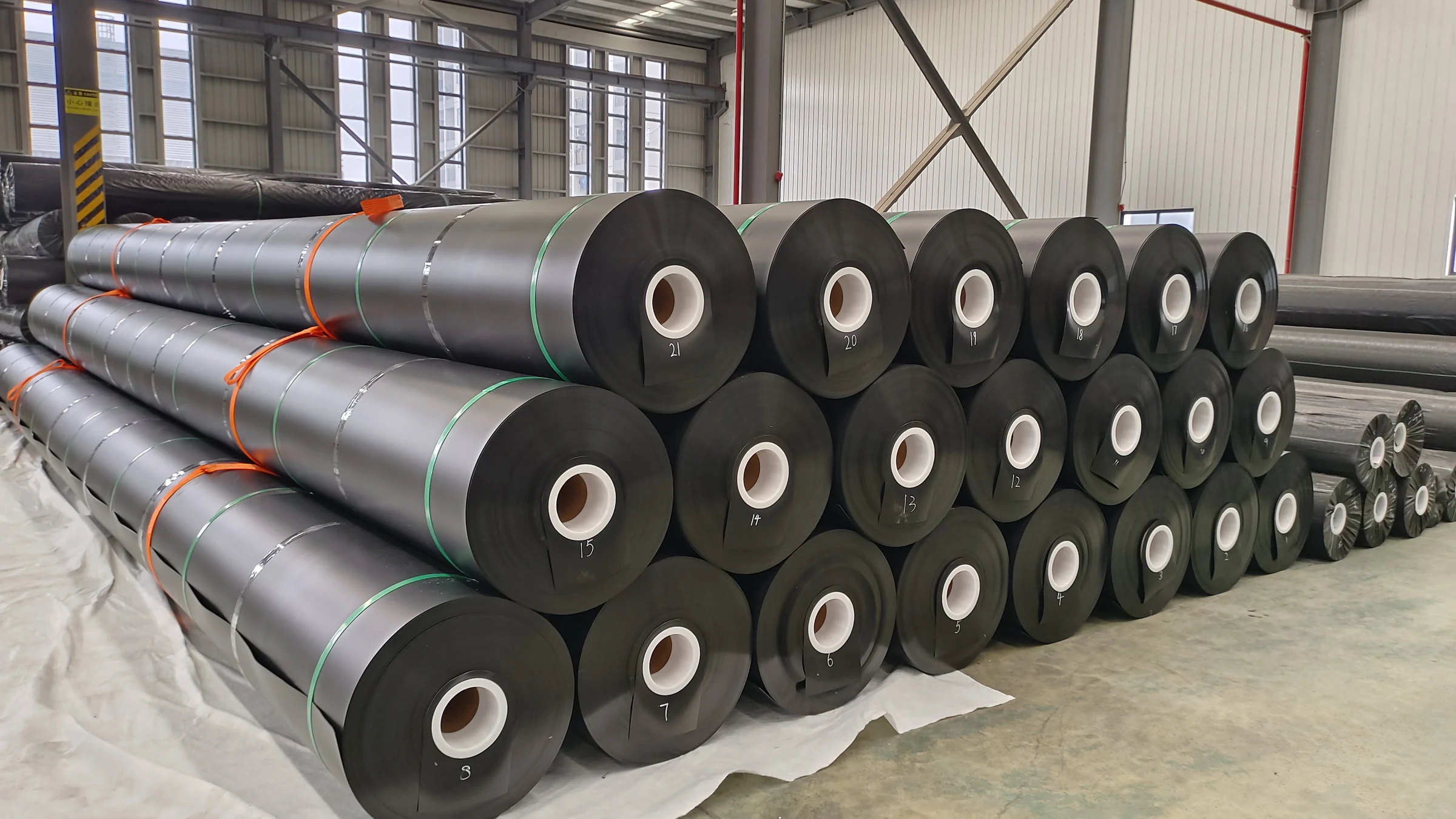
Published roll widths are up to 8 meters. Confirm the available width and length for the grade and order. Compare seam length, access and handling in the panel layout; wider rolls do not guarantee a fixed percentage saving.
Standard production takes 7 to 14 days depending on order volume. Custom thicknesses or colors need a resin transition, so allow a few extra days. We handle export packing and ship to major ports worldwide.
Stock specifications start from 2,000 m². If you want to test our material first, trial orders of 1 to 3 tonnes are welcome — enough for a trial section on your site.
Independent testing can be requested as part of the agreed supply scope. Confirm the laboratory, test methods, sampling witness, schedule and report requirements. TRI Environmental and BTTG are external laboratories, not Jinseed in-house laboratories.
Service life depends on formulation, temperature, chemical exposure, stress, installation damage and operating conditions. GRI-GM13 concerns HDPE manufacturing quality; GRI-GM17 concerns LLDPE. OIT is not a stand-alone service-life prediction. Request a project-specific durability assessment and confirm written warranty terms separately.
Technical references: GRI-GM13: HDPE manufacturing quality; GRI-GM17: LLDPE manufacturing quality; ASTM D5820: seam continuity testing. Confirm the contract edition and project-specific acceptance criteria.
Tell us the application, thickness, surface finish, quantity and destination port. You get a full-scope quote back — with the data sheet, mill reports and a suggested panel layout.
HQ: 182 Cecil Street, Frasers Tower Level 17, Singapore 069547
Plant: No 1 Fenggang North Road, Zhaoqing High-tech Industrial Development Zone, Guangdong, China