

HDPE geomembrane welding needs a project-specific quote: this guide has no verified market price range to offer. For your budget, divide the agreed welding-package total by the accepted, tested seam meters. Check whether that total includes mobilization, detail welds, testing, and repairs. This article covers liner-sheet seams, not HDPE pipe welding, which requires a separate estimate.
Calculate the cost per accepted seam meter
Effective cost per meter = total cost of the agreed welding package ÷ accepted, tested seam meters. Use the same scope and counting rule for every bidder. This is a comparison calculation, not a standard industry tariff.
Build the total from straight-seam meters multiplied by the quoted straight-seam rate, plus detail work and any separately priced mobilization, testing, repairs, and standby. Add each item only once. If a contractor includes testing in the seam rate, do not add a second testing allowance.
A welding meter measures seam length. The sheet price per square meter measures material area; it cannot be substituted for a welding rate. Keep membrane supply and unrelated earthworks outside a welding-only comparison, or identify them separately if you are comparing complete installation packages.
A lower seam rate is not necessarily a lower project total. Compare the same accepted seam length, the same inclusions, and the same currency and tax basis.
Check how fixed charges affect your rate
Consider two hypothetical jobs with the same mobilization charge: one has 100 accepted seam meters and the other has 1,000. Dividing the same charge by those lengths makes the mobilization contribution per meter ten times greater on the smaller job. This is an arithmetic example, not a Jinseed project, contractor quotation, or market-rate claim.
For a small pond with several pipe penetrations, ask for the straight seams, penetration details, and crew call-out to be priced separately. For a large open layout, ask how the proposed panel arrangement affects total seam length and the installation schedule. A per-meter rate alone does not show which layout costs less overall.
Before accepting either quote, work through one repair scenario: if a destructive test sample is cut out, who pays for the patch, its testing, and the associated records? Ask the contractor to identify the applicable line item or confirm that it is included. This is a scope check, not a claim about past customer experience.
What changes the welding price
Straight seams and detail welds
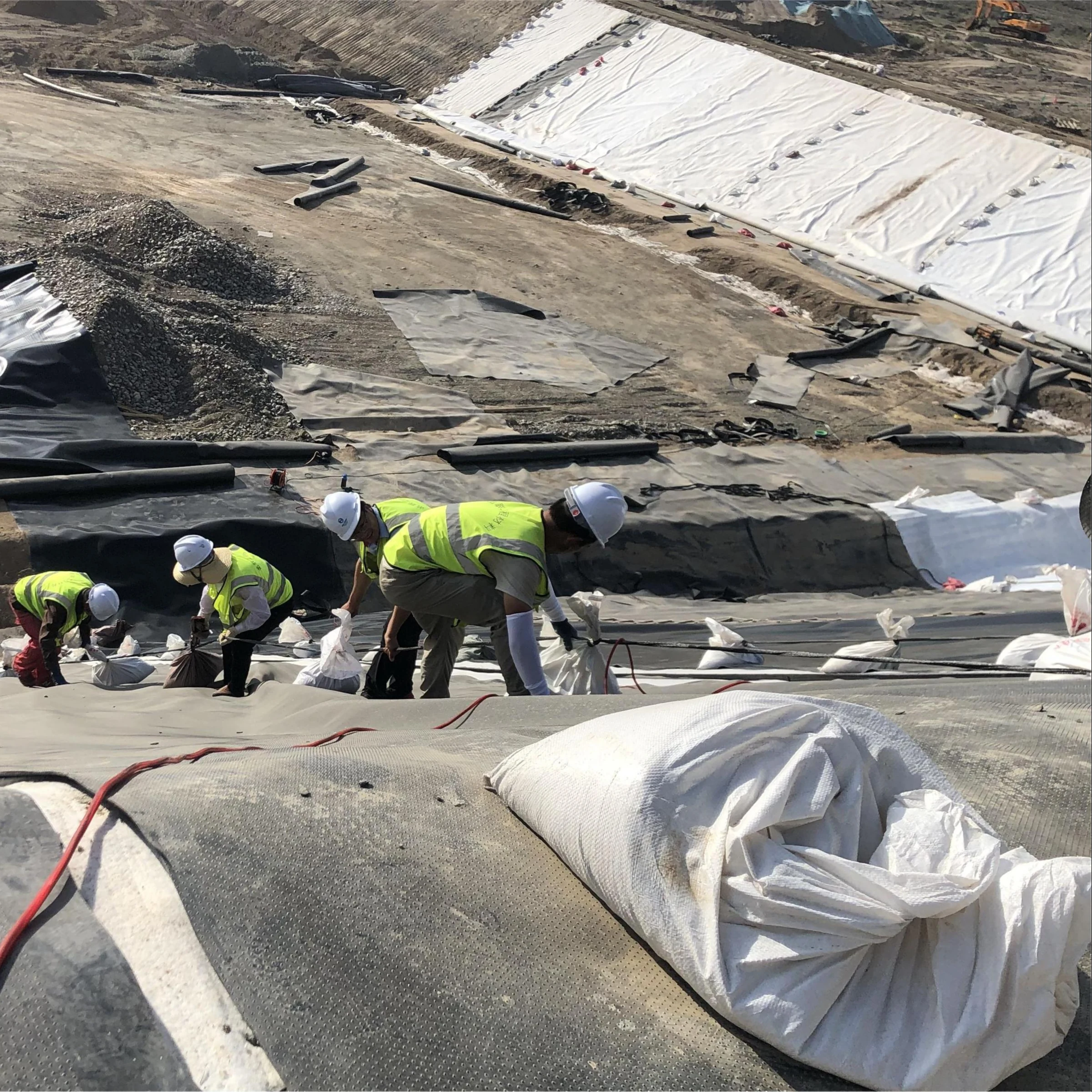
Long accessible seams can be joined with a dual-track hot wedge weld. Corners, penetration boots, and repairs may need extrusion welding, with more preparation and manual work relative to the short seam length involved. Ask for separate rates or lump sums for these details rather than applying the straight-seam rate to every joint.
Thickness and surface
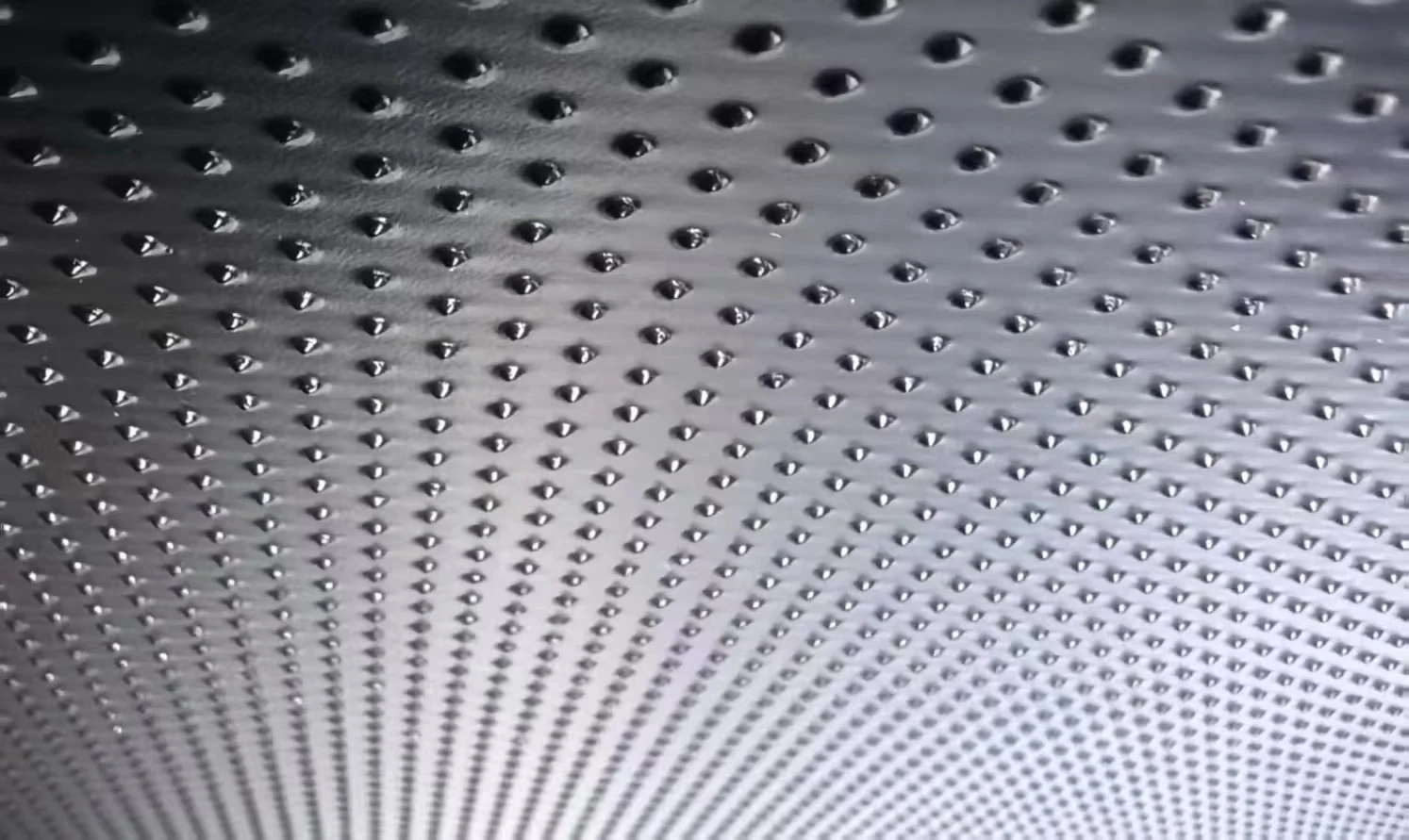
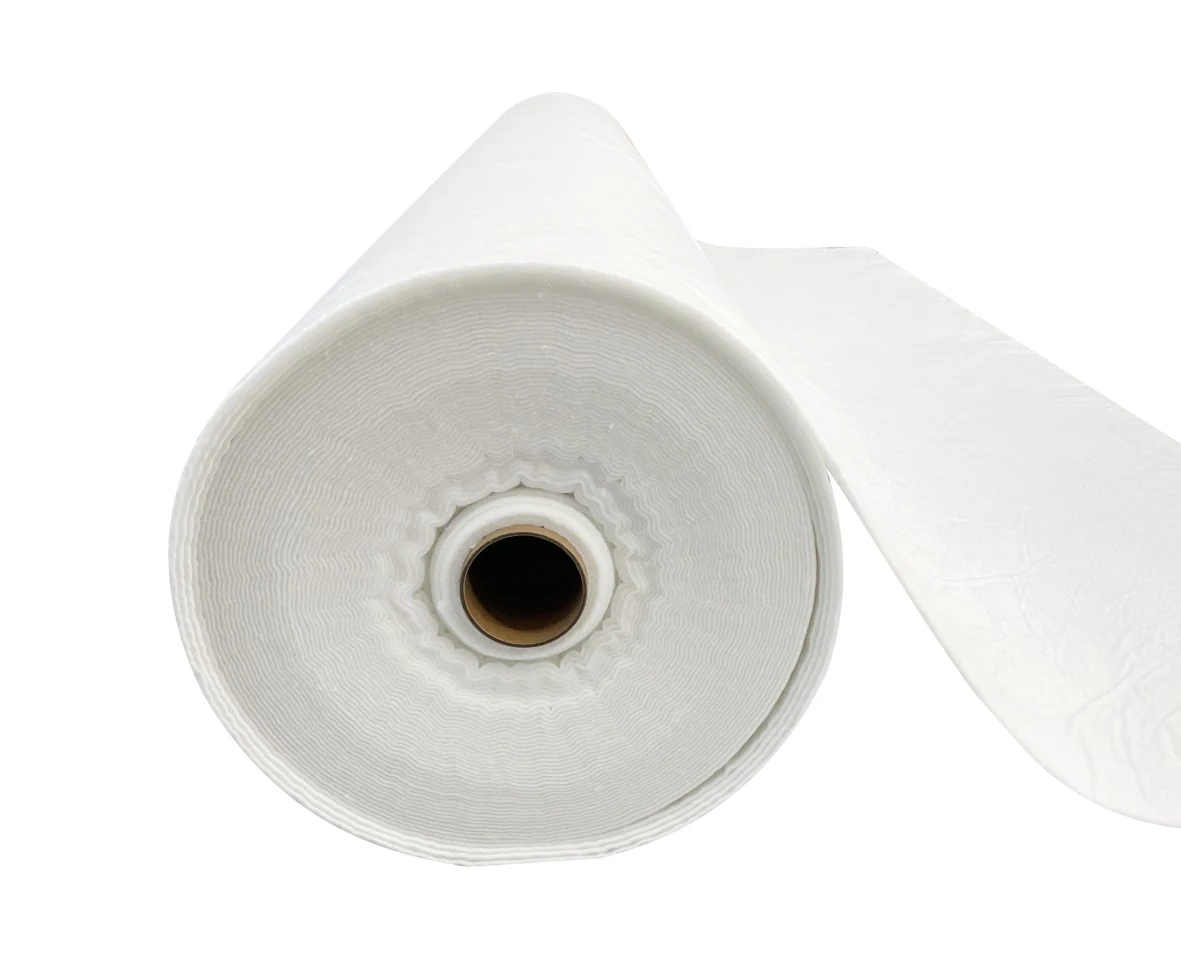
Specify the actual membrane before asking for a welding price: smooth HDPE or textured HDPE, nominal thickness, roll dimensions, and the project specification. GRI-GM13 Revision 19 covers HDPE geomembranes from 0.75 to 3.00 mm; that material range is not a welding-price schedule or a set of installation settings. Gm13r.pdf Have the installer confirm the trial-weld and procedure requirements for the supplied material. Do not substitute a quote for LLDPE without checking the different material and welding scope.
For a landfill liner system, quote against the approved design rather than choosing thickness by price. Under the composite-liner option in 40 CFR 258.40(b), the HDPE component must be at least 60 mil thick and in direct, uniform contact with at least two feet of compacted soil having hydraulic conductivity no greater than 1 × 10⁻⁷ cm/sec. These are requirements for that U.S. municipal solid waste landfill design option, not a rule for every liner project. Section 258.40
Site readiness and weather delays
Ask whether the rate assumes a dry, accessible work area with the subgrade accepted before installation. Identify who handles standing water, panel placement, overlap cleaning, and wind protection. Where the design includes a protection geotextile, state whether its placement is a separate item. Agree on weather-delay and standby charges before mobilization.
Testing and repair obligations
ASTM D5820 addresses pressurized air-channel evaluation of dual-seamed geomembranes. D5820 95r23 ASTM D6392 addresses the integrity of thermofused, nonreinforced geomembrane seams through peel and shear testing. D6392 12r18 These references describe testing, not contractor prices or a guarantee that a seam passes.
Air-test pressure and duration vary with geomembrane type and thickness; use the project’s approved testing requirements rather than a generic value. DS13 20.pdf The quote should allocate trial welds, field tests, laboratory testing where required, sample patches, failed-seam repairs, retests, and records. Omitting testing from a quote does not establish a saving, and an untested seam cannot be assumed acceptable from appearance alone.
Mobilization and local charges
Request a separate mobilization or minimum-charge line, including crew travel, accommodation, equipment transport, and any return visit. Record the project location, quotation date, currency, validity period, and tax treatment. A rate from a different country or year needs those conditions checked before it can inform your budget.
Send contractors a comparable enquiry
| Information to supply | Pricing detail to request |
|---|---|
| Material specification | Polymer, thickness, surface, roll dimensions, and any material exclusions |
| Seam layout and quantities | Straight-seam meters, detail-weld quantities, and penetration count, priced separately |
| Site location and construction window | Mobilization, minimum charge, access assumptions, standby, and return visits |
| Preparation responsibilities | Subgrade acceptance, dewatering, panel placement, cleaning, and protection-layer scope |
| Testing and acceptance plan | Included tests, sample patches, repairs, retests, records, and responsibility for each cost |
| Billing and commercial terms | Accepted, tested seam counting rule; treatment of rewelded lengths; currency, taxes, validity, and payment terms |
Ask each bidder to extend its rates against your quantities and show the total. Confirm that a dual-track seam is counted by the agreed joint length, rather than silently treating its two weld tracks as two billable seam lengths. State how destructive-test patches and rewelded sections affect payment; do not assume repaired lengths are either free or automatically billable twice.
Keep material supply separate from installation
The geomembrane supplier can quote the membrane against your specification. Obtain welding labor, site testing, and installation obligations from the installation contractor, with responsibilities for material defects and workmanship stated in the contract. Neither a material certificate nor an agreed sheet description, by itself, establishes why a field seam failed.
Have qualified personnel execute welding and testing under the approved project specification and applicable local requirements. Reduce avoidable cost through ready access, an accepted subgrade, and coordinated material delivery, not by removing required testing.
Need a membrane supply quote?
Send Jinseed your membrane specification, required area, and delivery location. Keep the material quotation separate from your contractor’s welding and installation price.
