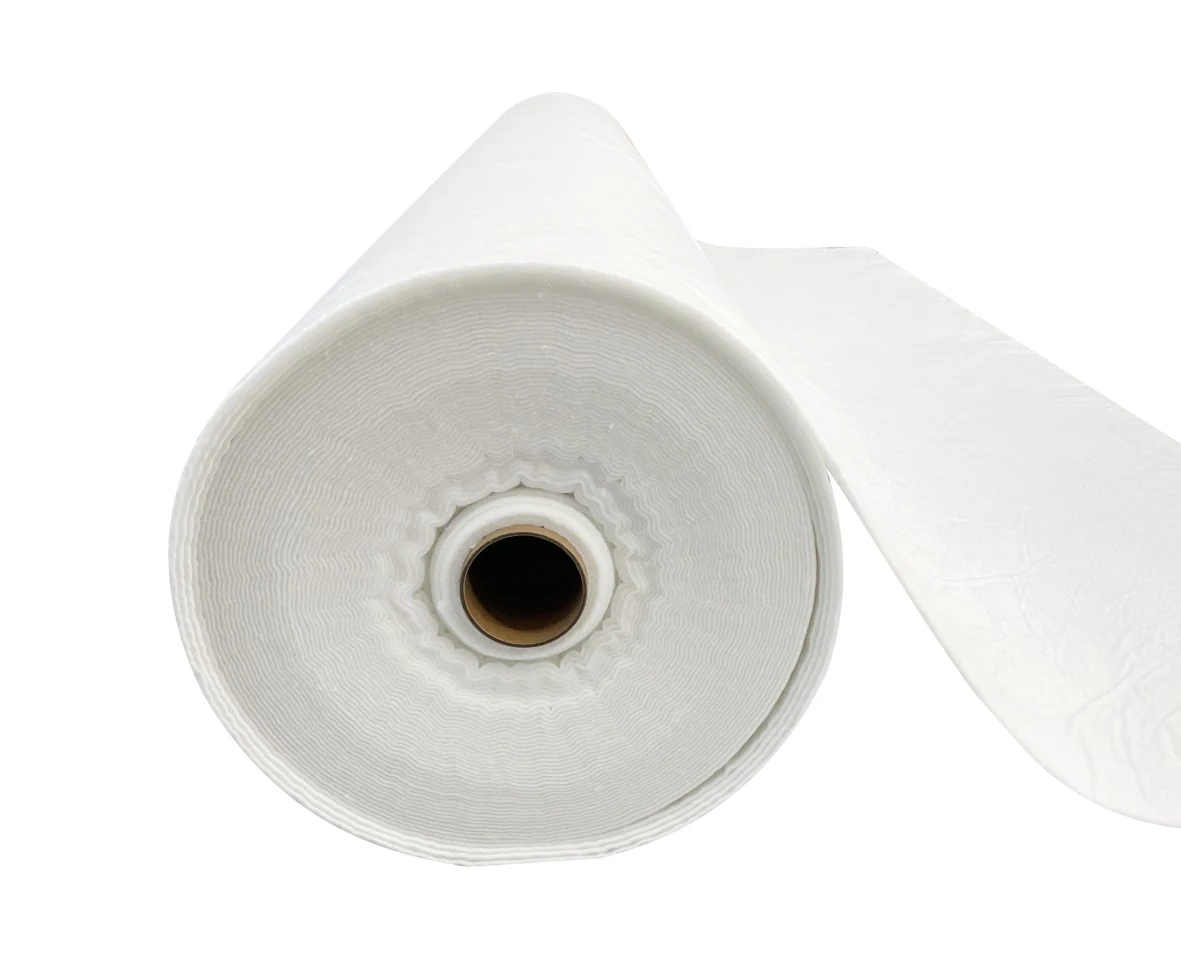

A landfill gas cover budget is the purchased membrane area multiplied by its quoted sheet price, plus delivery, installation, gas-system connections, earthworks and testing. A sheet-only price per square metre is not an installed-cover price. For an illustrative 10,000 m² footprint, a purchased quantity of 12,000 m² would give a sheet allowance of 12,000 × P, where P is your dated price per purchased square metre. This is a calculation example, not a market quotation or a standard area allowance.
No verified current installed-price range is available in the sources used here. To get a defensible total, first specify whether you need an interim exposed cover or a permanent closure system, then have suppliers and installers price the same drawings and exclusions. Design and installation must be carried out by qualified personnel under the approved design and applicable local regulations.
What exactly are you paying for?
Start by defining the cover’s job. An interim gas cover and a permanent closure cover can have different layers, anchorage details and removal obligations, so their prices are not directly interchangeable.
| Cover type | Scope to include in the budget |
|---|---|
| Interim exposed membrane cover | Membrane, installation, anchorage or engineered ballast, well and pipe seals, inspections, and any planned removal or integration into a later cover |
| Permanent closure cover with gas control | Approved barrier and soil layers, membrane where specified, drainage and protection, gas-system interfaces, construction quality assurance and monitoring. US municipal solid waste landfill closure criteria are one jurisdiction-specific benchmark [1]. |
Next, identify which price basis each bidder uses:
| Price basis | What to confirm | Measurement basis |
|---|---|---|
| Sheet only | Polymer, thickness, surface, specification, roll dimensions, currency and price validity | Purchased sheet area, including specified overlaps, extensions and cutting allowance |
| Delivered material | Sheet plus agreed freight, unloading, duties and taxes | Ordered quantity at a named delivery point |
| Installed membrane | Supply, deployment and welding; confirm whether seals, anchorage, testing and supervision are included | Installed area under the contract’s measurement rule |
| Complete cover system | All specified layers and interfaces; define any gas-plant, electrical, earthworks and monitoring exclusions | Each pay item measured separately, with a total for the agreed cover footprint |
Check who supplies penetration seals and clamping bands, who provides temporary ballast, and whether mobilisation, repairs and electrical leak location surveys are included where specified. For applicable US municipal solid waste landfills, gas collection and control obligations arise under the relevant air-rule framework; applicability must be checked for the facility [2].
This budget concerns a cover over landfill waste, not a leachate-collecting bottom liner or a tank-spanning digester cover. Keep the cover bill of quantities separate from the underlying landfill liner system.
How much sheet must your budget cover?
Use the actual surface and panel layout rather than the flat footprint alone. Side slopes, benches, anchorage and seam overlaps change the purchased quantity.
- Measure the installed surface from the drawings, including the top deck, side slopes and benches.
- Add the specified seam overlaps, anchor-trench extensions and penetration detailing.
- Apply the project-specific cutting and repair allowance without counting an extension twice.
- Multiply the resulting purchased area by the quoted finished-sheet price P.
For the opening example, assume the drawing take-off and allowances produce 12,000 m² of purchased sheet for a 10,000 m² footprint. The difference is 2,000 m², or 20% of the footprint. That percentage is an assumption for this example only; it is not a recommended allowance for another landfill.
One acre is 43,560 ft², or approximately 4,047 m² using the exact international foot of 0.3048 m [3]. To convert a sheet price to a cost per footprint acre, multiply P by the purchased area serving that acre. Do not multiply P by 4,047 unless the purchased area actually equals the footprint. Divide the complete system total by footprint acres only after all included work is priced.
How thickness affects freight
For a uniform smooth HDPE sheet, nominal thickness in millimetres multiplied by an assumed density of 0.94 g/cm³ gives the following calculated mass per square metre. These figures exclude roll cores and packaging and are not certified shipping weights.
| Nominal thickness | Calculated sheet mass | Mass for 12,000 m² |
|---|---|---|
| 1.0 mm | 0.94 kg/m² | 11.28 tonnes |
| 1.5 mm | 1.41 kg/m² | 16.92 tonnes |
| 2.0 mm | 1.88 kg/m² | 22.56 tonnes |
At that density, another 0.5 mm adds 0.47 kg/m² of formulated sheet material. Obtain actual gross roll weights and dimensions for freight and handling quotations. Use the supplied weights for unloading and lifting plans; do not substitute this calculation for a textured product’s measured mass or an LLDPE grade’s actual density.
Which material choices change what you pay?
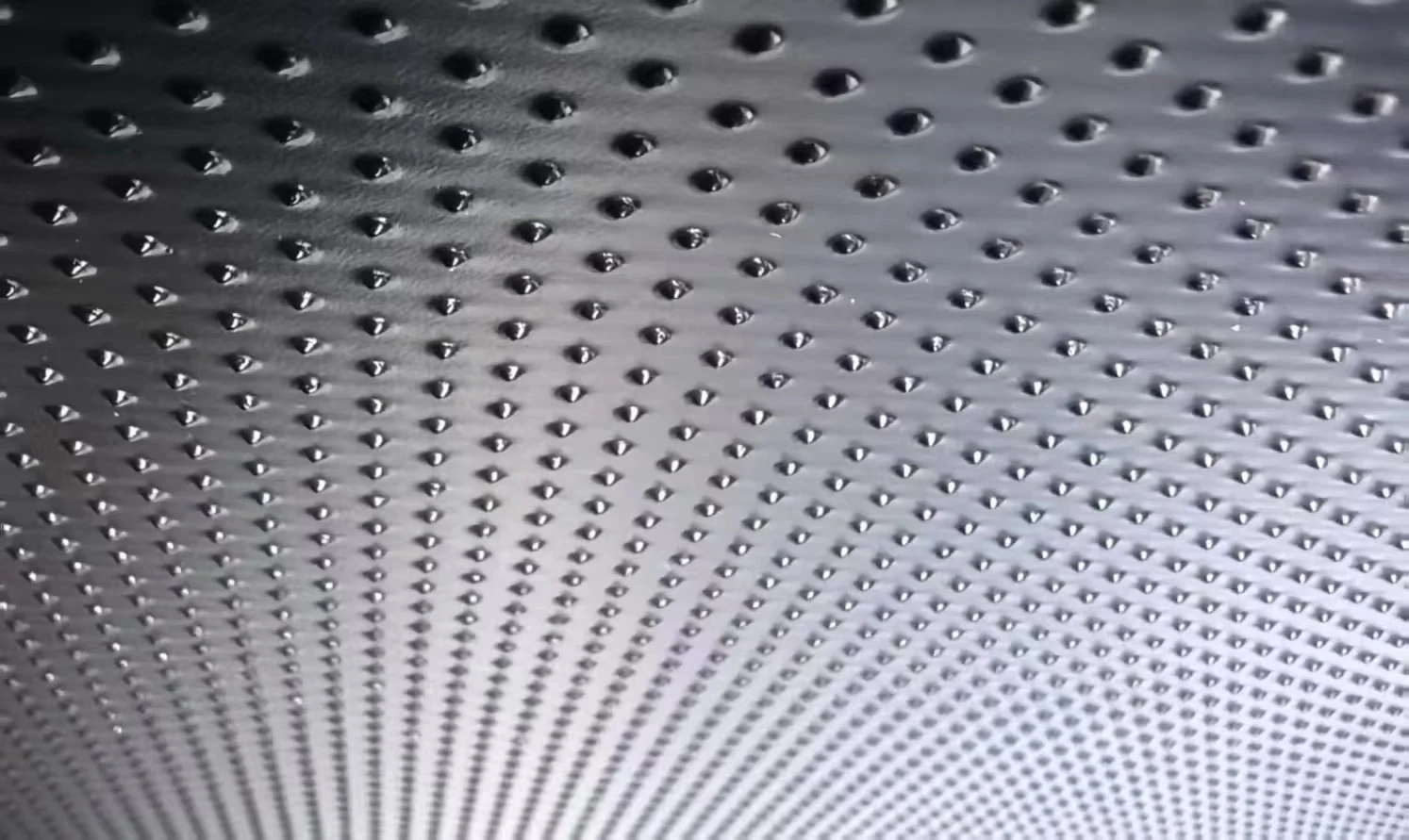
Request prices for the specified HDPE liner or LLDPE liner at the same thickness, quantity and delivery terms. Compare smooth and textured surfaces only where both meet the design. A textured HDPE liner should not be selected on price or appearance alone: the designer needs project-specific interface shear data for the adjacent materials and loading conditions.
GRI-GM13 covers smooth and textured HDPE geomembranes with formulated sheet density of at least 0.940 g/ml in the 0.75–3.0 mm thickness range. It is a manufacturing quality-control specification, not a complete landfill-cover design or a guarantee of project suitability [4]. GRI-GM17 is the corresponding specification for smooth and textured LLDPE geomembranes [5].
Have each quotation identify the standard and edition, thickness measurement method and acceptance criteria. Request the batch certificate and roll traceability for the ordered material. Check density, carbon black content and dispersion, oxidative induction time, tensile and puncture properties against the specified methods and conditions. Confirm seam acceptance separately. Where exposure, gas permeability or chemical compatibility matters, ask the designer which additional evidence is needed; a GM13 or GM17 reference alone does not establish those project requirements.
If the design calls for cushioning or separation, price the specified PET continuous-filament nonwoven geotextile as a separate layer. IGS identifies protection as a geosynthetic function, but that general function does not establish a particular cushion’s adequacy [6]. Match the geomembrane protection geotextile to the specified aggregate, loads and acceptance requirements.
Keep drainage products, gas piping, mechanical equipment and other third-party items on their own supply lines. Their inclusion in a cover system does not mean they are supplied by Jinseed.
What site and gas-system items add to the total?
Penetrations and seals
Schedule each gas well, pipe crossing and monitoring penetration by diameter, detail and quantity. Ask for a unit rate for the specified boot or seal, including its required welding, clamping and testing. Price anchorage details separately rather than assuming every anchor needs a penetration boot.
Gas collection and tie-ins
State whether existing wells and piping remain in service and which new connections are included. Separate the gas collection layer, piping, condensate handling, blower or flare connections, and any utilisation-plant work. Ask who coordinates the work with the operator and prices any operating restrictions or temporary arrangements.
Ballast, soils and closure requirements
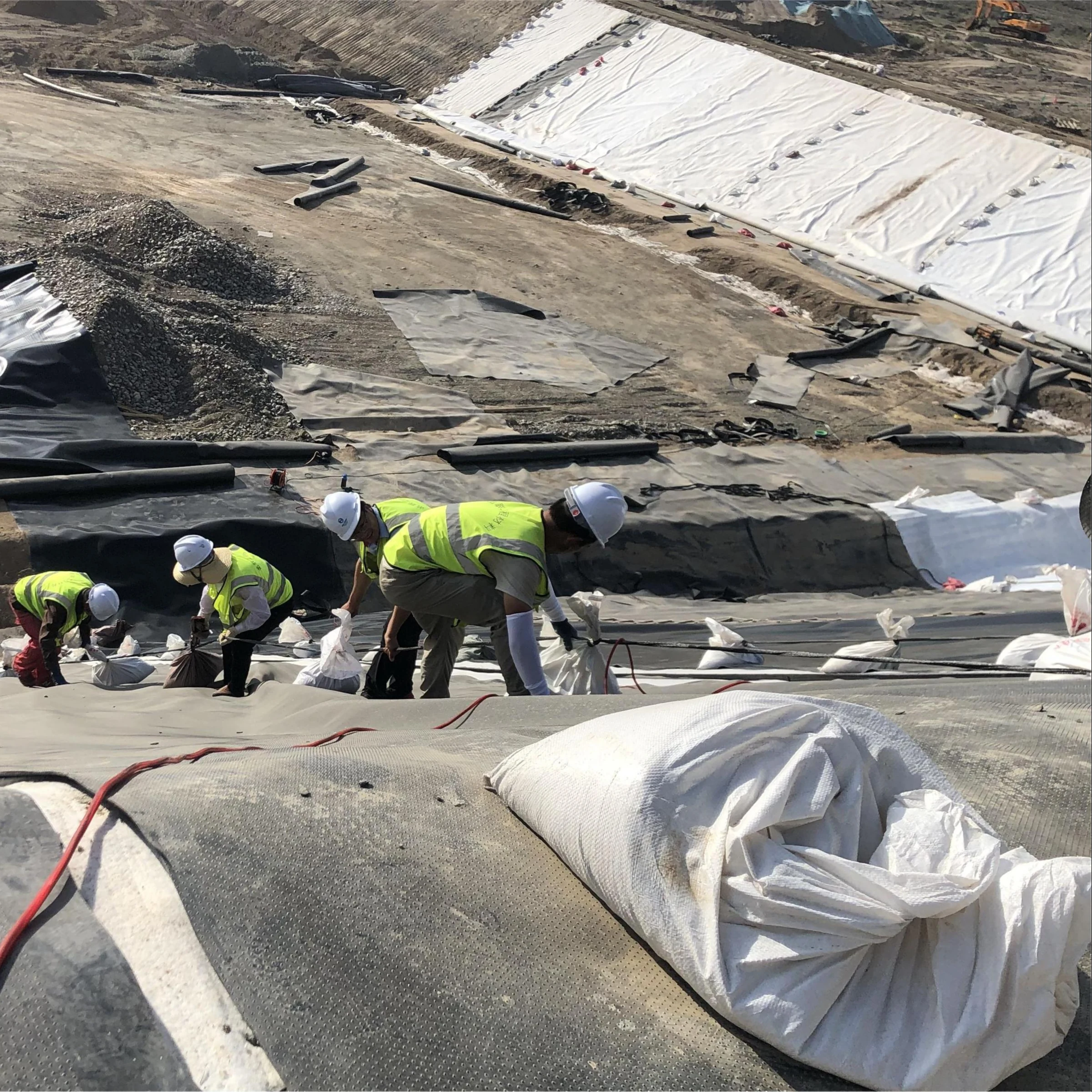
For an exposed cover, obtain the designer’s wind-uplift and anchorage requirements before requesting ballast prices. For a soil-covered closure, specify layer thicknesses, quantities, haul distances and placement restrictions.
Under the prescriptive US municipal solid waste landfill closure criteria in 40 CFR 258.60(a), the permeability limit is the lower of the bottom liner system or natural subsoil permeability and 1 × 10⁻⁵ cm/sec. The design also requires an infiltration layer containing at least 18 inches of earthen material and an erosion layer containing at least 6 inches of earth capable of sustaining native plant growth. Section 258.60(b) allows an approved State’s Director to approve alternative designs meeting the stated equivalent-performance requirements. These are jurisdiction-specific provisions, not universal membrane specifications [1].
Price the approved closure build-up, not just a membrane and a nominal soil depth. Do not assume that adding a geomembrane automatically replaces the prescribed earthen layer.
Subgrade and settlement
Include subgrade preparation and acceptance, removal of unsuitable material and any specified regrading. Set out who pays for settlement-related adjustment, subsequent repairs and access. Distinguish construction defects covered by the contract from later movement or operational damage.
Testing, assurance and monitoring
List trial seams, destructive and non-destructive seam testing and records, specified integrity surveys and independent construction quality assurance. Separate commissioning from recurring inspections and gas monitoring. Have qualified personnel establish the applicable methods, frequency and acceptance criteria before tendering; do not assume testing is included in a membrane-only rate.
How do you build a budget you can compare?
Use a bill of quantities that shows quantity × rate for each item. Add sheet, delivery, installation, penetration seals, anchorage, earthworks, gas-system work, testing and applicable taxes or duties. Count an item only once: if the installation price already includes membrane supply or seals, do not add them again.
A worked scope check
Consider an illustrative comparison, not a recorded Jinseed project. Both bids cover the same purchased sheet quantity, but Bid A includes 6 pipe seals while the drawing schedule requires 18. Ask Bid A to price the missing 12 seals with the same welding and testing scope. If each additional seal has a quoted all-in rate U, that correction is 12 × U. The lower sheet price alone cannot tell you which bid has the lower complete cost.
Also check whether both bids use purchased or installed area, include delivery to the same point, and cover the same testing. Keep future repairs and recurring monitoring separate from the initial construction total so the comparison uses the same time horizon.
Send every bidder the same enquiry pack:
- Cover type, intended service period, and whether the membrane will be removed or incorporated into later closure work.
- Drawings showing footprint and surface areas, slopes, benches, panel and anchorage details, plus the penetration schedule.
- Polymer, thickness, surface, standards and editions, roll-size limits, required test evidence and acceptance criteria.
- Adjacent gas, protection, drainage and soil layers, with quantities and supply responsibilities.
- Delivery point, currency, quotation validity, access and operating restrictions, unloading responsibilities and applicable taxes or duties.
- Installation inclusions, testing and assurance scope, exclusions, and responsibility for repairs and later monitoring.
Require the reply to identify purchased quantity, sheet rate P, installed-area measurement rules, separately priced work and exclusions. Use the resulting complete total for a cost per footprint hectare or acre; retain the itemised schedule to explain differences between bids.
So how much does a landfill gas cover cost?
For the illustrative 12,000 m² purchased quantity, the membrane component is 12,000 × P. The amount payable for the cover is that sheet allowance plus the non-overlapping delivery, installation, gas-system, earthworks and testing lines in your quotation. A permanent closure budget must also reflect its approved layer build-up and monitoring obligations. Without those quantities and dated rates, a single installed price would conceal more than it explains.
Need a material quotation for your landfill gas cover?
Send Jinseed your drawings, membrane specification, required quantity and delivery location. Request a dated material price with clear supply inclusions, and obtain installation and gas-system prices from the responsible contractors.
References
- [1] eCFR, 40 CFR 258.60(a)–(b): US municipal solid waste landfill closure criteria and approved alternative final cover designs. Accessed 2026-11-10.
- [2] US EPA, Municipal Solid Waste Landfills: New Source Performance Standards, Emission Guidelines and Compliance Times. Accessed 2026-11-10.
- [3] NIST, U.S. Survey Foot: international-foot conversion basis used for the acre calculation. Accessed 2026-11-10.
- [4] Geosynthetic Institute, GRI-GM13, Revision 16, March 17, 2021: scope, manufacturing quality control and limits of general specifications. Accessed 2026-11-10.
- [5] Geosynthetic Institute, GRI-GM17, Revision 14, March 17, 2021: specification for smooth and textured LLDPE geomembranes. Accessed 2026-11-10.
- [6] International Geosynthetics Society, Geosynthetic Functions: University Online Lecture Series. Accessed 2026-11-10.