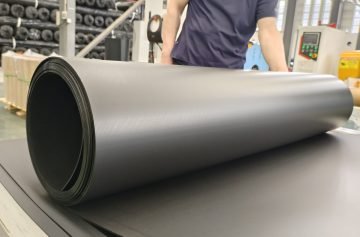
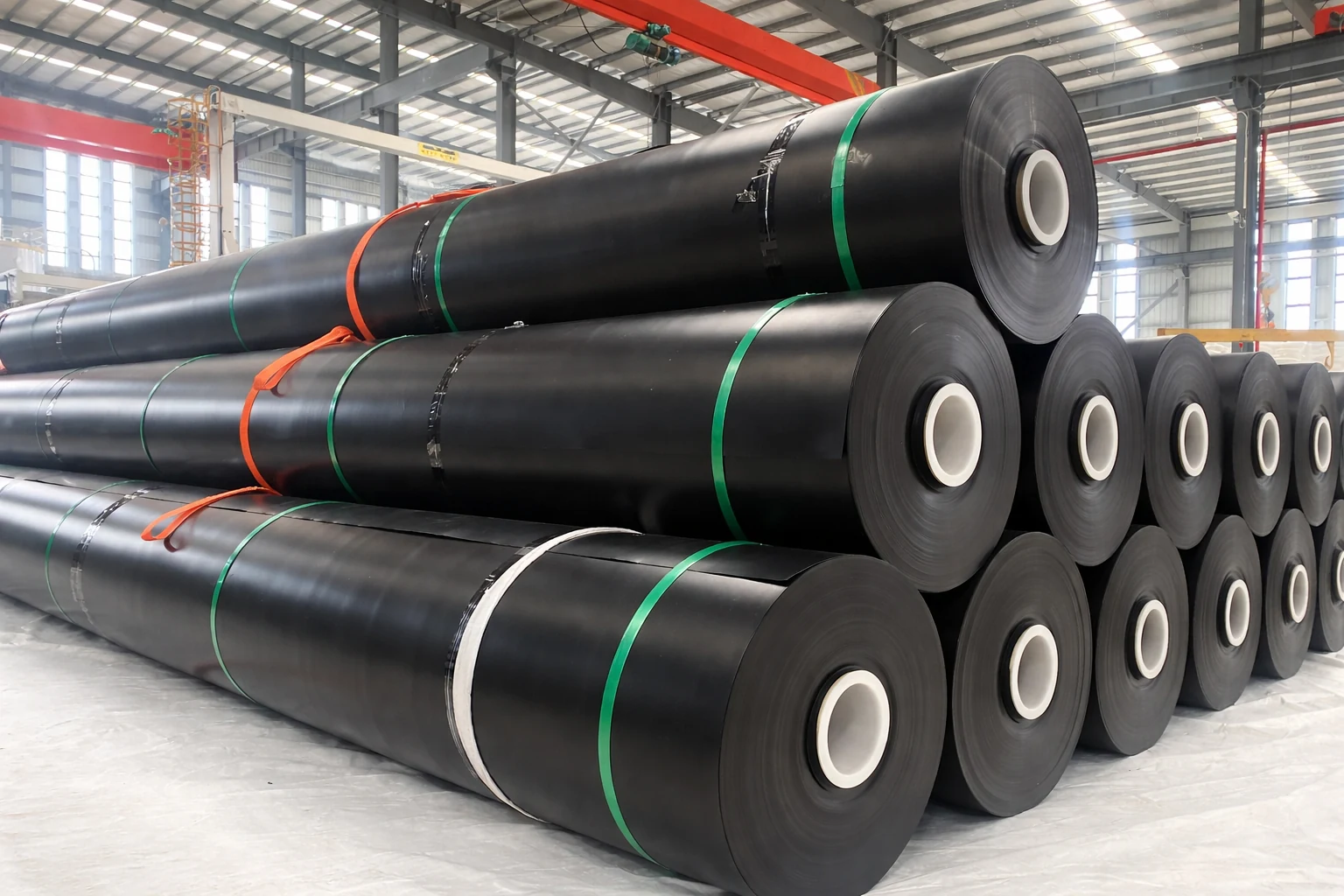
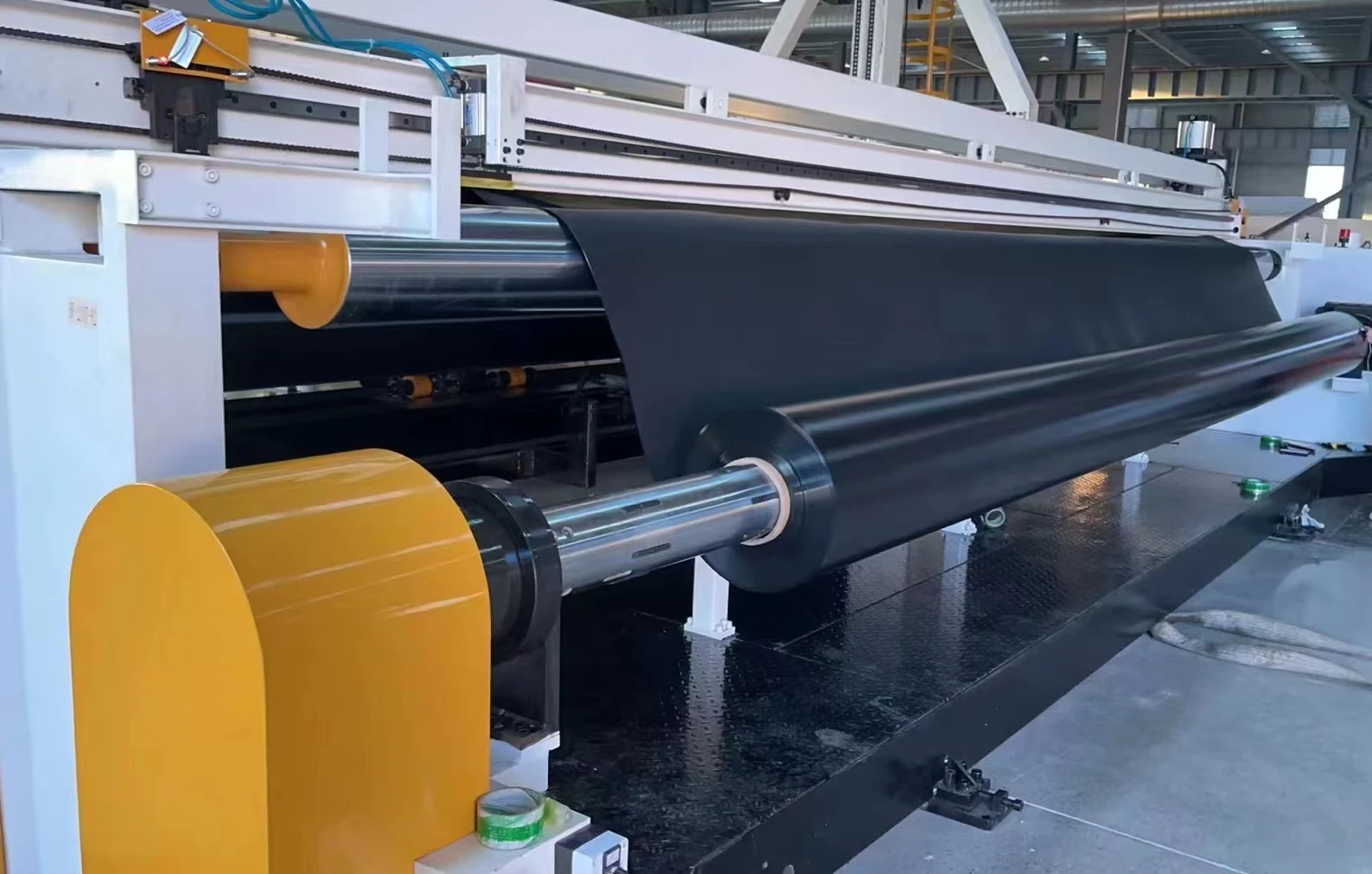
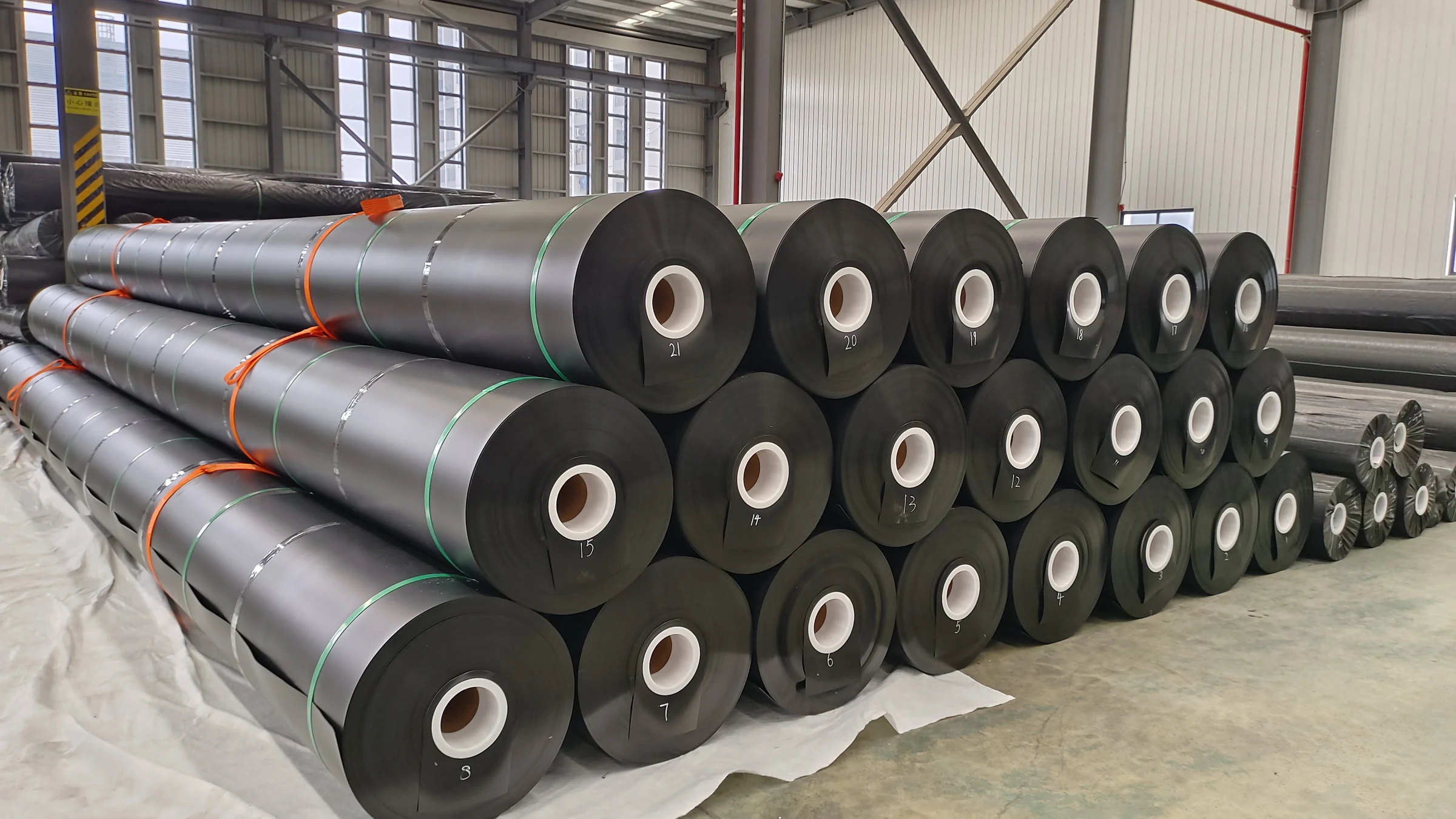

A landfill cap liner budget starts with the specified sheet price per m² multiplied by the purchased sheet quantity. Installation, earthworks, other cover layers, and post-closure care are separate costs unless the quotation explicitly includes them. For the illustrative cap below, a rectangular sheet-envelope allowance is about 13,987 m², giving a preliminary sheet allowance of 13,987 × P, where P is the quoted finished-sheet price per m². This is a planning calculation, not a market price or a final material takeoff.
A defensible currency total needs a dated quotation stating the polymer, thickness, surface, quantity, delivery location, and installation scope. No independently verified, current cap-specific price range is available in the sources used here, so this guide does not assign an unsupported dollar figure.
What does a cap liner quotation include?
Separate three price bases before comparing bids. A sheet-only offer cannot be compared directly with an installed rate.
| Price basis | What the quotation should define |
|---|---|
| Sheet only | Polymer, nominal thickness, smooth or textured surface, applicable specification, roll sizes, purchased quantity, currency, and validity period. |
| Delivered sheet | Material plus agreed freight, unloading, duties, and taxes, with delivery terms and exclusions. |
| Installed membrane | Material and agreed deployment, welding, testing, anchorage, penetration details, and supervision. Identify whether final subgrade trimming and acceptance are included; price bulk earthworks separately. |
Compare the same total-cost scope on the same area basis. Purchased sheet area, accepted installed surface, top-deck area, and total horizontal footprint are different measurements. The footprint includes the horizontal projection of the slopes; it is not the top deck alone. Jinseed’s landfill liner cost per acre guide discusses area-based comparisons, while its landfill liner cost breakdown separates the membrane from adjacent layers.
How much sheet does a landfill cap need?
Consider an illustrative rectangular top deck measuring 100 × 60 m, with 6 m high outer slopes at 3H:1V, no benches, and a nominal 1 m sheet extension beyond each toe. The deck is 6,000 m². Each slope has an 18 m horizontal run and a slope length of √(18² + 6²), or about 18.974 m.
One preliminary rectangular envelope calculation is:
- Envelope length: 100 + (2 × 18.974) + (2 × 1) = about 139.947 m.
- Envelope width: 60 + (2 × 18.974) + (2 × 1) = about 99.947 m.
- Envelope allowance: 139.947 × 99.947 = about 13,987 m², or 2.33 times the deck area.
This rectangle is not the actual installed cap surface or an optimized panel layout. It is a simplified budgeting envelope. For a rectangular frustum with planar sides and straight corner intersections, the deck-plus-slope surface in the same example is about 13,438 m² before toe extensions and anchorage: 6,000 + (320 + 4 × 18) × 18.974. Corner treatment, panel orientation, roll width, and reuse of offcuts affect purchased quantity.
Before ordering, replace the envelope allowance with a drawing-based panel takeoff showing seams, overlaps, anchor-trench wraps, penetrations, and cutting waste. The nominal 1 m extension is already in the envelope; do not add it again as a generic anchorage allowance. Actual trench detailing may require additional sheet.
| Outer slope | Slope length | Rectangular envelope allowance | Multiple of deck area |
|---|---|---|---|
| 2.5H:1V | 16.155 m | 12,667 m² | 2.11 |
| 3H:1V | 18.974 m | 13,987 m² | 2.33 |
| 4H:1V | 24.739 m | 16,886 m² | 2.81 |
These are author calculations using the same deck, height, and nominal extension. Changing 3H:1V to 4H:1V increases this envelope allowance by about 2,899 m², or 20.7%. It does not establish an identical percentage increase in actual installed area or total closure cost.
A worked quotation check
If P is a written sheet-only rate per m², the 3H:1V envelope produces an allowance of 13,987 × P. Pricing only the 6,000 m² deck produces 6,000 × P. The difference is 7,987 × P before any installation costs. This comparison demonstrates the consequence of the measurement basis; it is not a customer project or a report of procurement experience.
For each offer, write down the priced quantity, area definition, allowances, and exclusions alongside the rate. If both suppliers quote the same rate but one excludes overlaps and anchorage, their totals are not equivalent. If an installed rate already includes welding and testing, do not add those items a second time.
How do thickness and material change the budget?
The specification comes before the price comparison. The final cover is a system, not just a sheet: under the US federal MSWLF framework, it must minimize infiltration and erosion. The prescriptive cover includes at least 18 inches of earthen infiltration material and at least 6 inches of erosion material capable of supporting native plants; approved alternative designs are possible. These US requirements are not a universal specification for every country or landfill type. [1]
The federal rule specifies permeability no greater than that of the bottom liner system or natural subsoils present, or 1 × 10⁻⁵ cm/s, whichever is less. It does not prescribe one geomembrane thickness for every cap. The approved closure design determines the membrane and surrounding layers to price. [2]
GRI-GM13 Revision 19 covers smooth and textured HDPE geomembranes from 0.75 to 3.0 mm with formulated sheet density of at least 0.940 g/cm³. At that density, the nominal smooth-sheet mass is thickness in mm × density in g/cm³, expressed in kg/m². This calculation is not a roll-weight certificate. [3]
| Nominal smooth-sheet thickness | Calculated mass at 0.940 g/cm³ |
|---|---|
| 1.00 mm | 0.94 kg/m² |
| 1.50 mm | 1.41 kg/m² |
| 2.00 mm | 1.88 kg/m² |
At an identical price per kg and density, 1.5 mm sheet has 50% more nominal mass and sheet cost per m² than 1.0 mm sheet. Actual quotations also reflect formulation, texture, order size, and delivery terms. For freight planning, the 13,987 m² envelope multiplied by 1.41 kg/m² gives about 19.7 tonnes, excluding additional layout allowances. Use confirmed roll weights for shipping. Jinseed’s HDPE liner cost guide distinguishes material and delivery factors.
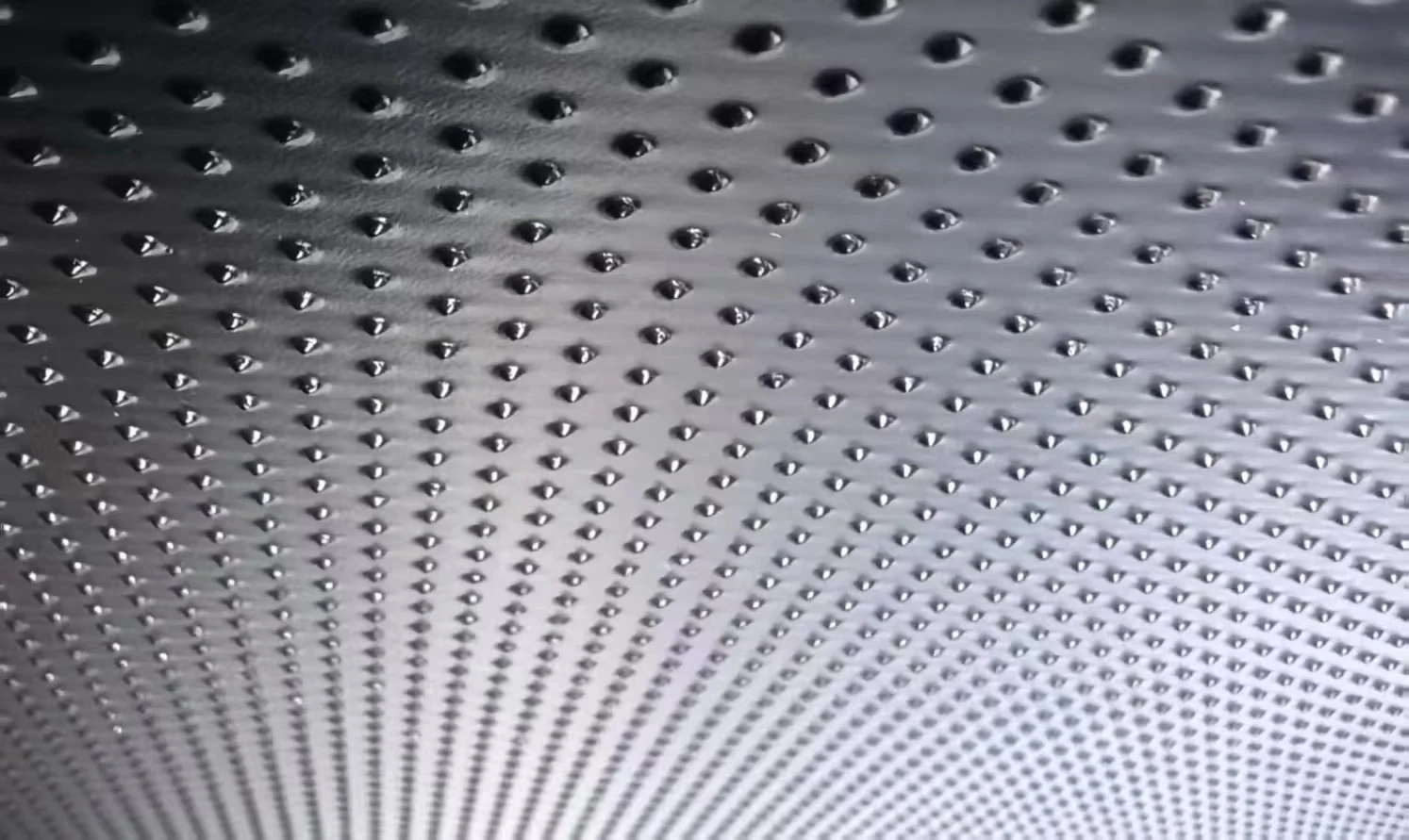
Ask the designer to compare the specified HDPE liner and LLDPE liner options against settlement and strain requirements, rather than substituting one solely on price. Jinseed’s LLDPE settlement-area applications provide product context. Any single- or double-sided textured HDPE option must suit the specified interfaces and stability analysis; texture alone does not establish slope safety.
What should a low-priced offer prove?
For an HDPE offer, require the applicable GRI-GM13 property table and batch or roll reports, not just a claim that the sheet is “landfill grade.” Thickness and density should be tied to the specified methods; ASTM D5199 addresses nominal thickness, and ASTM D1505 addresses density by the density-gradient technique. [4] [5]
GRI-GM13 also identifies tensile testing under ASTM D6693, tear resistance under D1004, puncture resistance under D4833, carbon-black content of 2.0–3.0% under D4218, dispersion under D5596, and stress-crack resistance under D5397. Apply the appropriate smooth or textured table and thickness column; these properties are not interchangeable acceptance values. Its initial OIT minimum averages are 100 minutes under D8117 or 400 minutes under high-pressure D5885. For oven aging at 85°C, the 90-day retention requirements are 55% standard OIT or 80% high-pressure OIT. UV acceptance uses at least 50% high-pressure OIT retention after 1,600 hours under D7238, with a 20-hour UV cycle at 75°C followed by four hours of condensation at 60°C. These laboratory conditions are not a prediction of years of cap service. [3]
Use an applicable LLDPE specification for LLDPE, not GM13 by default. Request traceable records from the geomembrane manufacturer; Jinseed’s quality documentation page is a supplier-information link, not independent certification of a quoted batch. Have qualified personnel assess chemical compatibility for the expected fluids, concentrations, temperatures, and exposure duration.
Which costs sit beyond the sheet price?
Use a separate cost line for each relevant item. The approved design decides which layers and tests are required; this list is not a universal construction specification.
- Earthworks: waste-surface shaping, grading soil, compaction, soft-spot repairs, haulage, and any settlement-related rework.
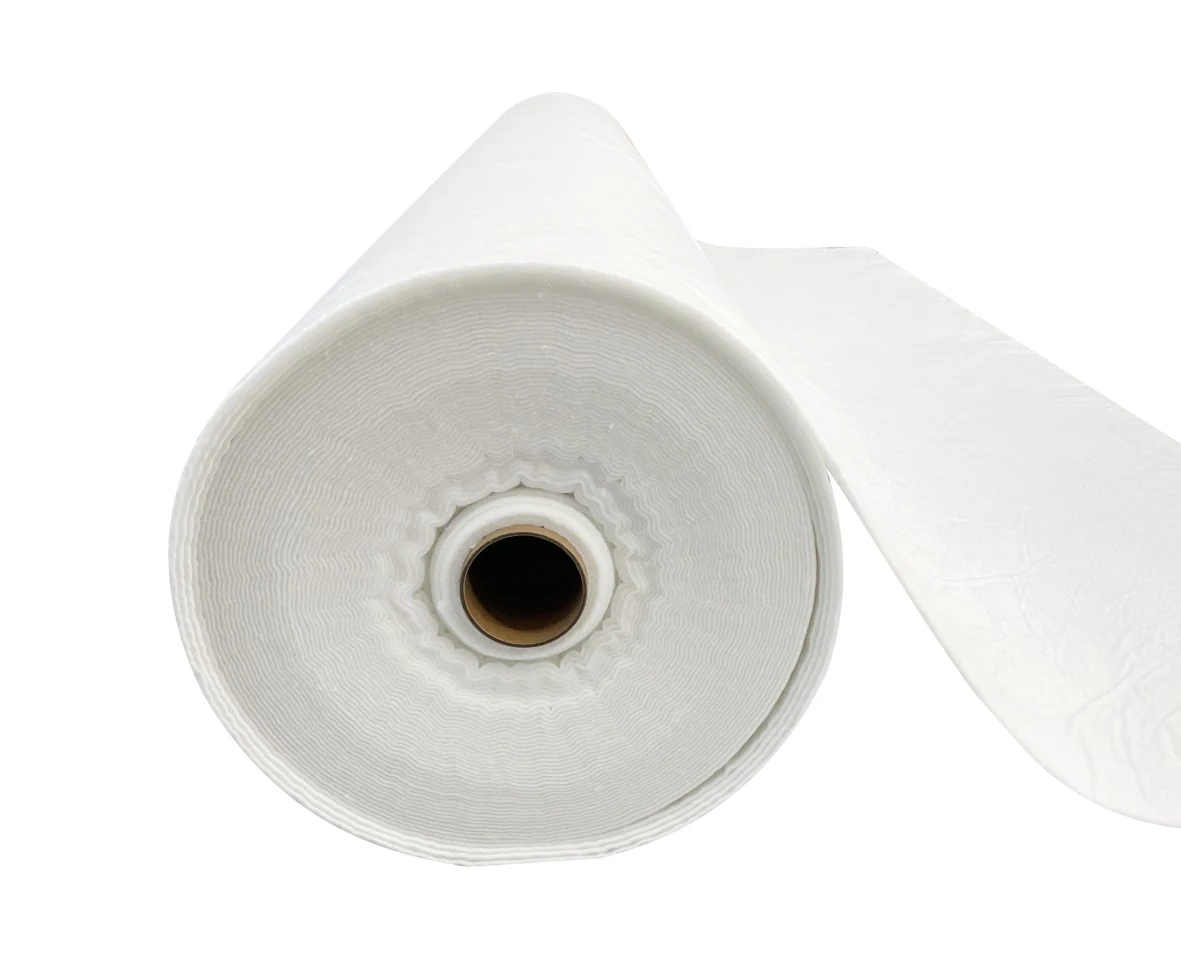
- Protection and drainage: specified cushions, drainage layers, and placement. A nonwoven geotextile used for geomembrane protection needs project-specific selection; it is not automatically required above and below every sheet.
- Gas and penetration details: vents, wells, pipe boots, seals, and testing, measured by the drawings rather than assumed to be included in a flat sheet rate.
- Edges and anchorage: excavation, trench wraps, backfill, tie-ins, and reinstatement, with material and labor allocations stated.
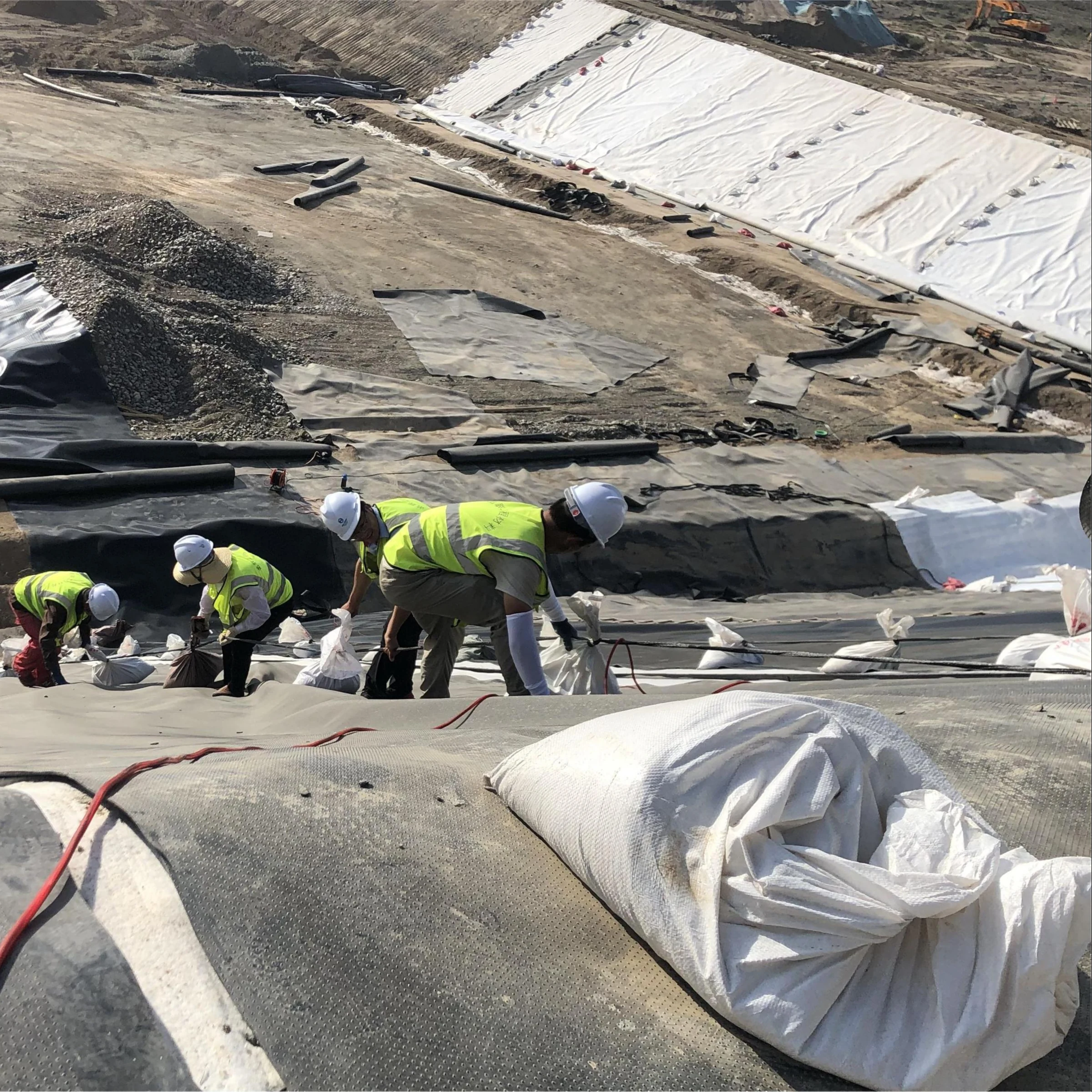
- Installation and acceptance: deployment, trial seams, production welding, required nondestructive checks, destructive sampling, repairs, and retests. ASTM D6392 addresses thermo-fusion seam integrity testing; it is not the method for every nondestructive seam check. [6]
- Cover placement: specified soils, vegetation, equipment restrictions, protection during placement, and any inspection and repair obligations.
- Commercial and site costs: freight, unloading, taxes, mobilization, weather standby, supervision, independent quality assurance, and certification.
Define welding scope alongside the relevant procedures in Jinseed’s welding and seaming guide. GCLs, compacted clay, and drainage composites may appear in a closure design, but their mention here does not identify them as Jinseed-manufactured products.
Why is a cap budget different from a bottom-liner budget?
A cap closes over waste that may continue settling. The budget must address the resulting geometry, strain requirements, gas structures, cover-soil placement, and access restrictions. A bottom-liner price from another project does not establish a cap rate, even if both specify the same polymer and thickness. Jinseed’s landfill liner system and landfill application pages describe the product context, not a substitute closure design.
Schedule assumptions also matter. Under the US rule, closure generally begins within 30 days of known final waste receipt, with specific provisions for remaining capacity and further receipts. Completion is generally required within 180 days after closure begins, subject to approved extensions. Do not treat the completion deadline as 180 days from the last waste delivery. [2]
Keep post-closure care separate from the installation budget. The US federal default is 30 years, but an approved state program director may shorten or extend it. Care covers the final cover, leachate collection, groundwater monitoring, and methane monitoring systems. EPA describes financial-assurance estimates based on third-party performance, with annual inflation adjustments during the active life of the facility; these estimates are not simply the membrane purchase invoice. [1]
Have qualified personnel determine the cover design, slope stability, chemical compatibility, installation procedures, and acceptance requirements under local rules and the approved project specification. Construction equipment must not travel on exposed membrane without an approved protective arrangement.
What should you send for a comparable quotation?
- Closure drawings with top deck, slopes, benches, anchorage, and penetration details.
- Polymer, thickness, surface, standard revision, and the required property and testing schedule.
- Panel takeoff or agreed preliminary quantity, payable-area definition, and explicit overlap, anchorage, and waste allowances.
- Adjacent-layer build-up, installation sequence, settlement assumptions, and site access limits.
- Delivery destination, currency, quotation date and validity, freight terms, taxes, exclusions, and responsibility for quality assurance.
Bottom line: obtain a defined rate and a defensible quantity, then add only the costs excluded from that rate. The 13,987 × P example is a preliminary sheet-envelope allowance, not a complete landfill closure price.
Need a cap liner quotation with a defined scope?
Send your drawings, sheet specification, quantity basis, and delivery location.
References
- [1] US EPA, Requirements for Municipal Solid Waste Landfills. Accessed November 9, 2026.
- [2] US Government Publishing Office, 40 CFR §258.60, Closure criteria, 2025 annual edition. Accessed November 9, 2026. Check current regulations and permit conditions for the project.
- [3] Geosynthetic Institute, GRI-GM13, Revision 19, June 11, 2025. Accessed November 9, 2026.
- [4] ASTM International, ASTM D5199-25, nominal thickness of geosynthetics. Accessed November 9, 2026.
- [5] ASTM International, ASTM D1505-25, density of plastics by the density-gradient technique. Accessed November 9, 2026.
- [6] ASTM International, ASTM D6392-25, integrity of thermo-fusion geomembrane seams. Accessed November 9, 2026.