
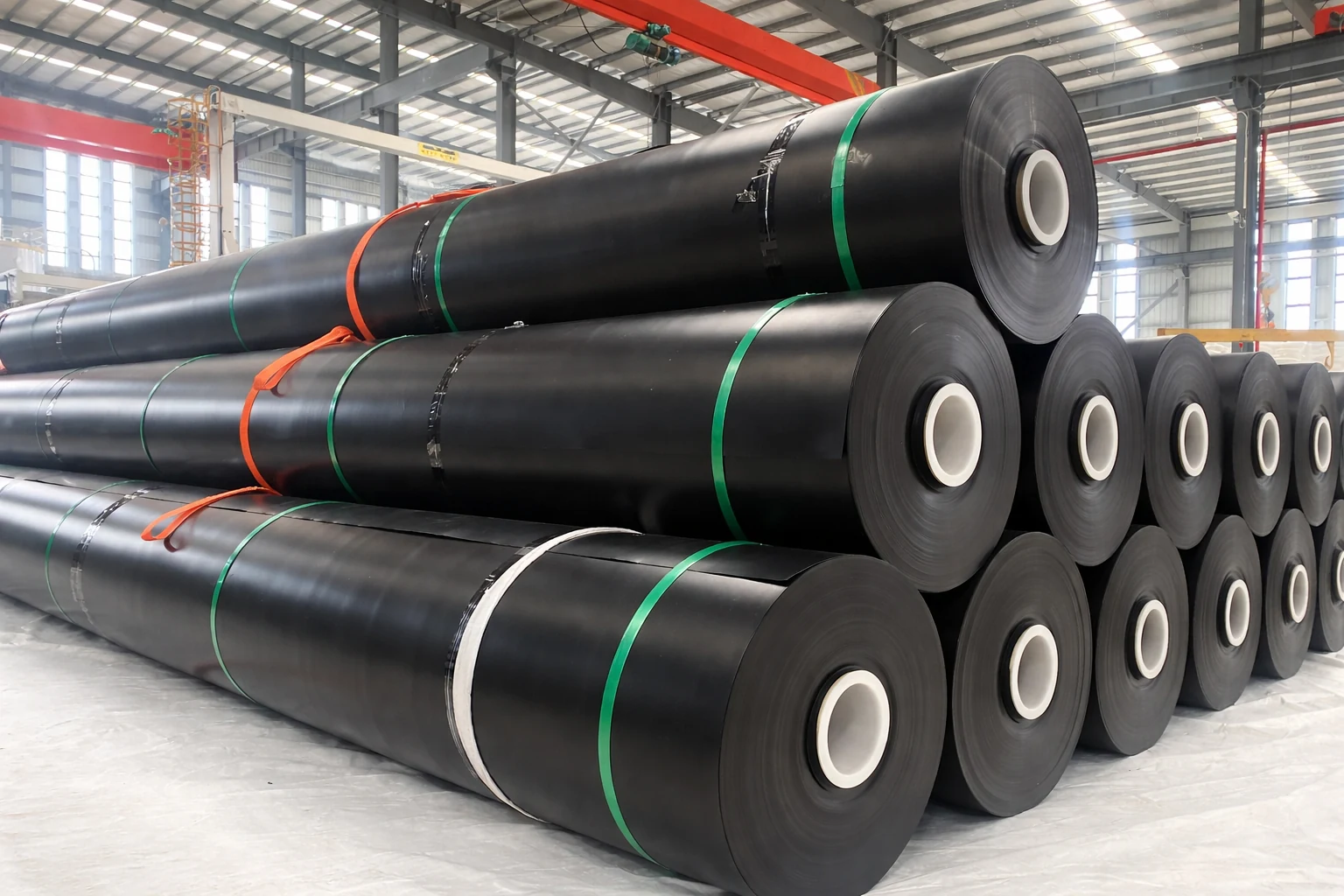
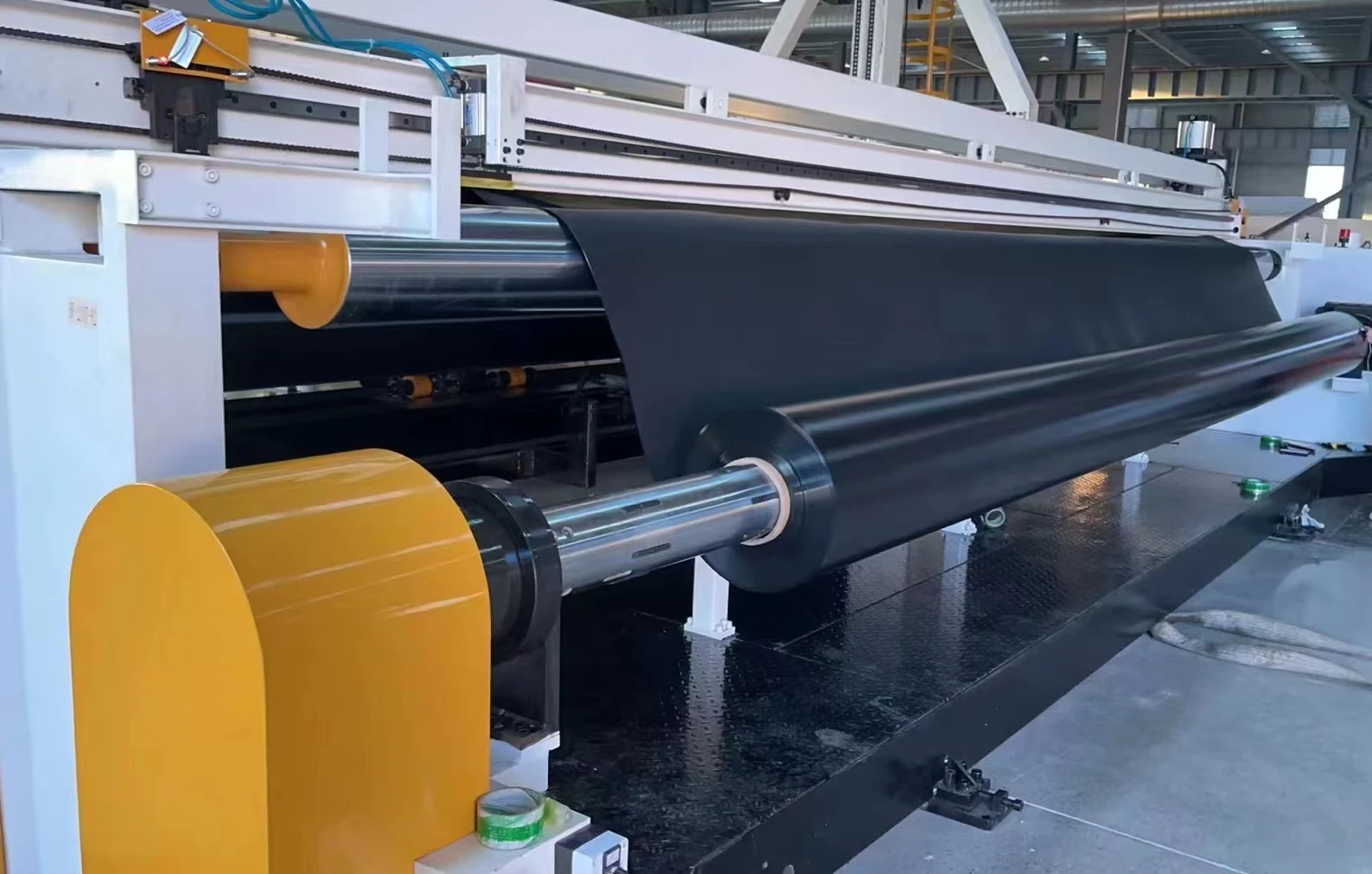
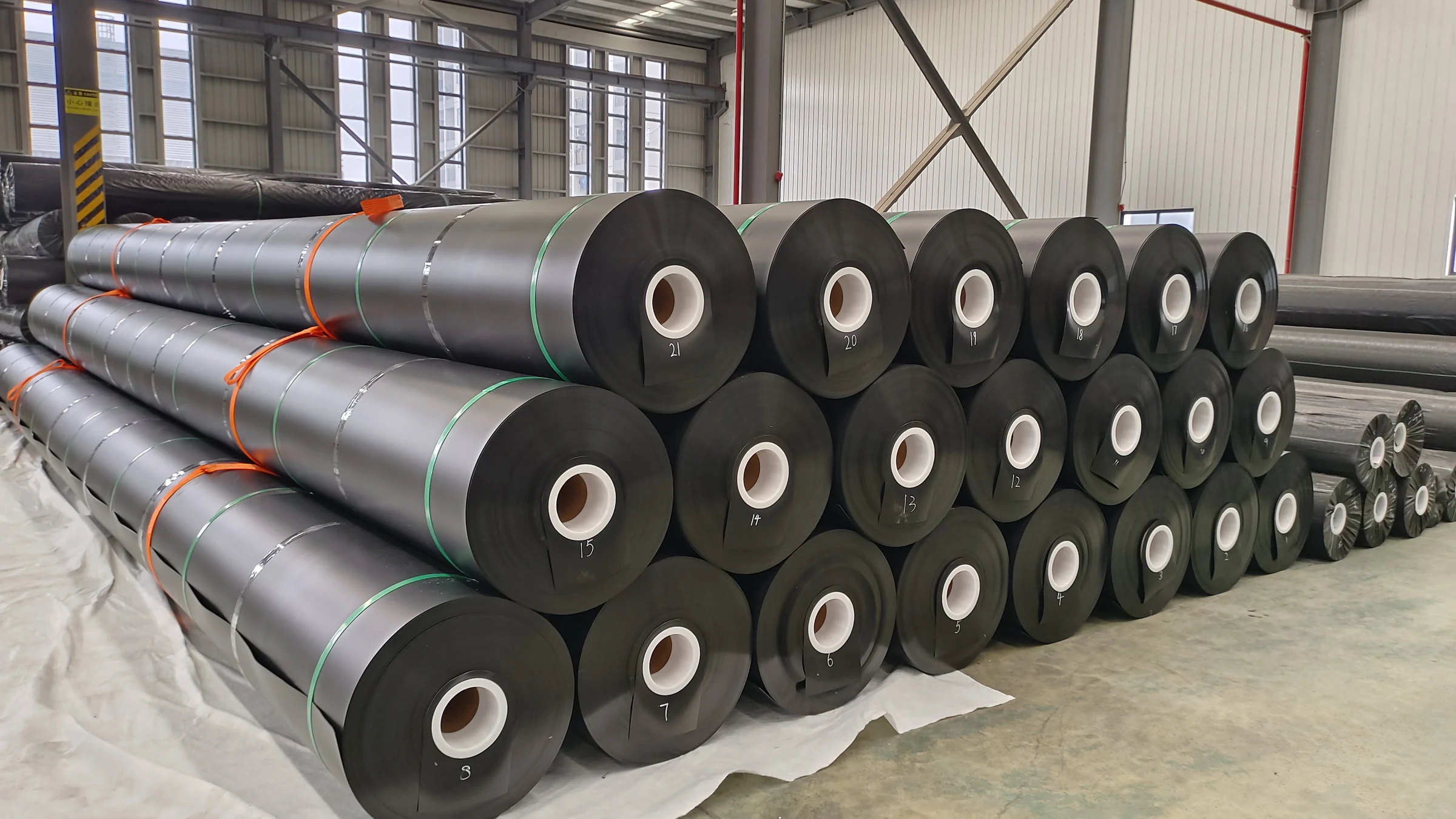

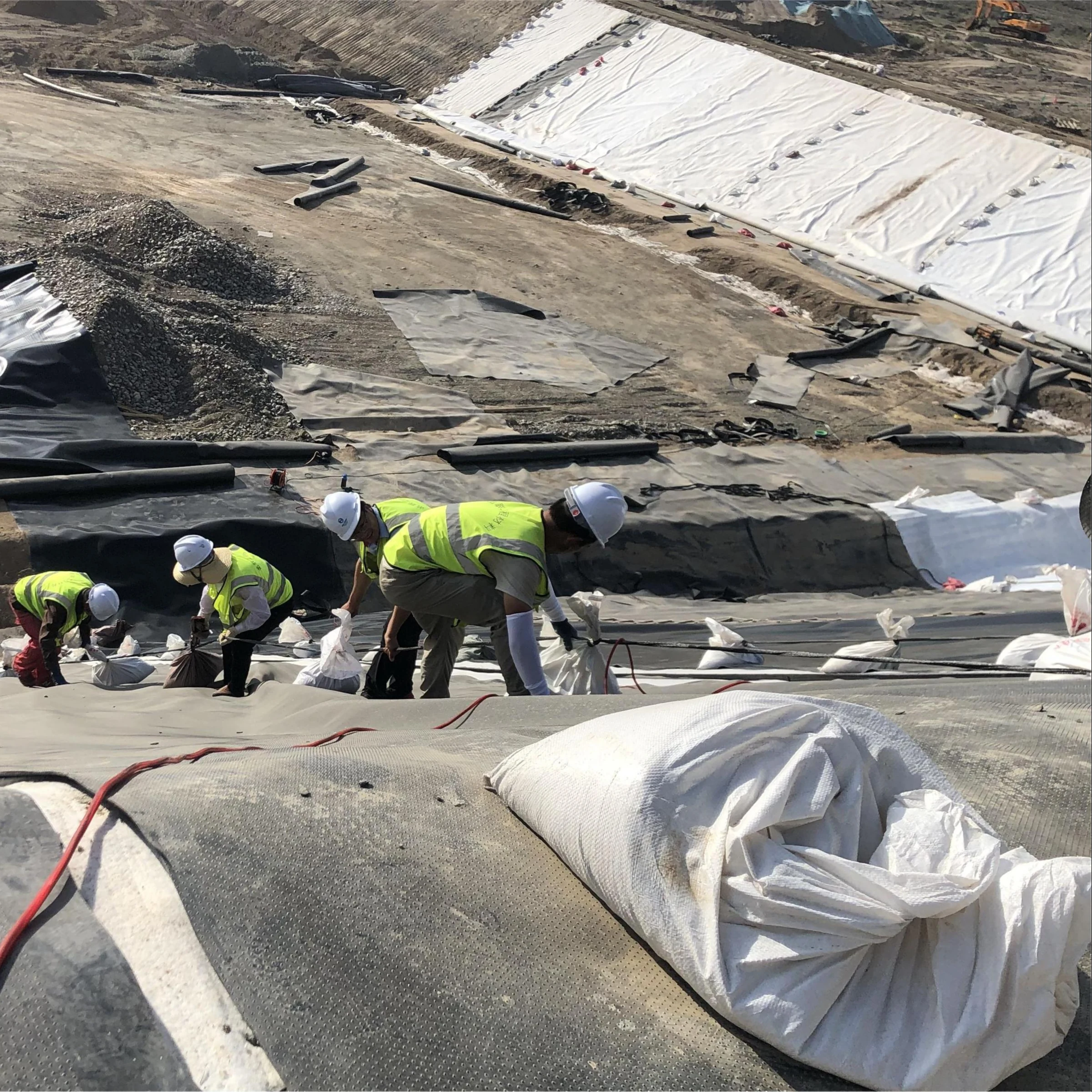
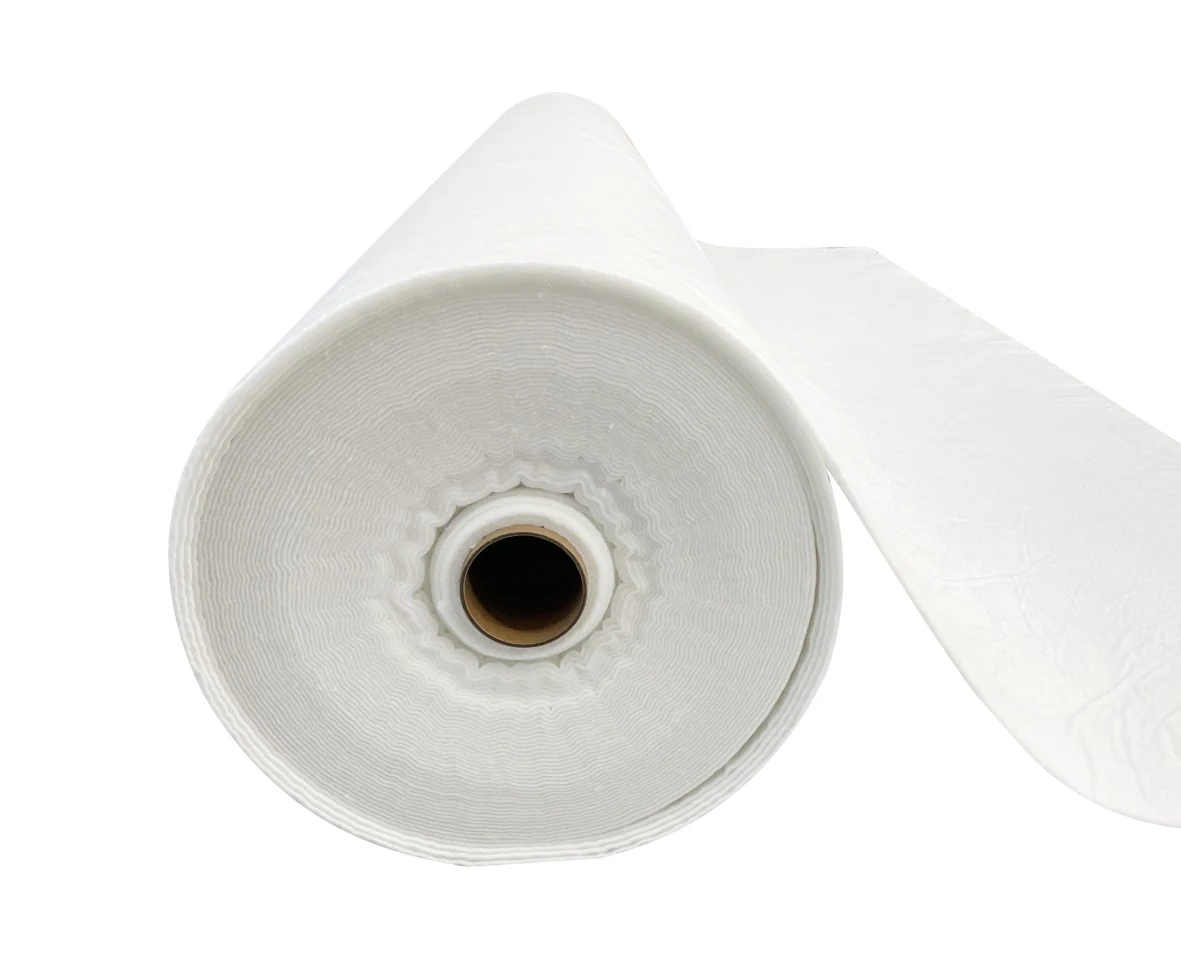

HDPE liner has no single fixed price per roll: you need the roll dimensions, thickness, surface and a dated unit quote. For a 6 m × 50 m roll, the sheet-only cost is 300 times the price per m². As a calculation example, not a market quote, a 1.5 mm smooth roll of that size weighs about 423 kg at the density assumed below; at a hypothetical USD 2.00/kg, its sheet-only cost would be USD 846.
This guide does not provide a verified current market-price range or a Jinseed offer. Its examples show how to convert a supplier’s price into a roll subtotal and check what that subtotal includes.
Installation, welding and testing must be carried out by qualified personnel under local regulations and the project specification. A price comparison is not a liner design or an acceptance decision.
What a per-roll price covers
- Roll width (m) x roll length (m) = sheet area per roll, which is the area you pay for.
- Thickness and surface must match the specified product before roll prices can be compared.
- Price basis: per square metre or per kilogram, plus currency, quantity and how long the price holds.
Jinseed lists HDPE liner from 1.0 to 3.0 mm in rolls up to 8.0 m wide. The roll sizes below are calculation examples, not confirmed stock or packing sizes.
How to price one roll
From a price per square metre
The math takes two lines. Area = roll width x roll length. Subtotal = area x quoted price per m².
A 6.0 m x 50 m roll holds 300 m² of sheet. An 8.0 m x 50 m roll holds 400 m². A 5.0 m x 100 m roll holds 500 m². These examples only show the math. They are not confirmed packing sizes.
If the quoted sheet-only rate is P per m², a 300 m² roll costs 300 × P and a 400 m² roll costs 400 × P. Use the rate for the same thickness, surface, order quantity, currency and quote validity period.
From a price per kilogram
Some export quotes price by weight instead. Then the sheet weight comes first, because the roll price is net weight times the per-kg rate.
For the smooth-sheet estimates below, we use 0.940 g/cm³, the minimum average formulated density in GRI-GM13 Revision 16. This is a calculation assumption, not the measured density or guaranteed weight of a supplied roll Gm13.pdf.
Estimated smooth-sheet mass per m² (kg/m²) = density (g/cm³) × thickness (mm). Formulated density already includes additives; do not add their weight again.
| Nominal thickness | Calculated smooth-sheet mass at 0.940 g/cm³ | Sheet per tonne (rounded) |
|---|---|---|
| 1.0 mm | about 0.94 kg/m² | about 1,064 m² |
| 1.5 mm | about 1.41 kg/m² | about 709 m² |
| 2.0 mm | about 1.88 kg/m² | about 532 m² |
| 2.5 mm | about 2.35 kg/m² | about 426 m² |
| 3.0 mm | about 2.82 kg/m² | about 355 m² |
Estimated net sheet weight = roll area × mass per m². These tables use nominal thickness and exclude cores and packaging. Actual density and thickness can change the result; textured sheet needs supplier-confirmed mass rather than a blanket texture allowance. Use the agreed billable weight for a per-kg purchase.
| Roll size (example) | Sheet area | 1.0 mm roll (~0.94 kg/m²) | 1.5 mm roll (~1.41 kg/m²) | 2.0 mm roll (~1.88 kg/m²) | 2.5 mm roll (~2.35 kg/m²) | 3.0 mm roll (~2.82 kg/m²) |
|---|---|---|---|---|---|---|
| 6.0 m x 50 m | 300 m² | about 282 kg | about 423 kg | about 564 kg | about 705 kg | about 846 kg |
| 7.0 m x 50 m | 350 m² | about 329 kg | about 494 kg | about 658 kg | about 823 kg | about 987 kg |
| 8.0 m x 50 m | 400 m² | about 376 kg | about 564 kg | about 752 kg | about 940 kg | about 1,128 kg |
| 5.0 m x 100 m | 500 m² | about 470 kg | about 705 kg | about 940 kg | about 1,175 kg | about 1,410 kg |
Rule of thumb: every extra 0.5 mm adds about 0.47 kg per m² (0.5 x 0.940). On a 300 m² roll, that means roughly 141 kg more to move.
For the example in the opening, 300 × 1.41 = 423 kg, and 423 × USD 2.00 = USD 846. The USD 2.00/kg rate is hypothetical, not a current price. Confirm whether the invoice uses net sheet weight or includes the core and wrapping.
ASTM D5199 covers nominal-thickness measurement; a nominal value does not mean every point has identical thickness. Check the applicable thickness tolerances and the supplied test report, rather than treating an estimated weight as an acceptance test D5199 01r19.
What moves the per-roll price
At equal area, density and price per kilogram, a 2.0 mm smooth roll has twice the estimated sheet weight and sheet cost of a 1.0 mm roll. Actual quotations may also use different unit rates.
Quote smooth and textured liner separately against the project specification. Do not assume equal mass or equal unit rates. Texture alone does not establish slope stability; qualified engineers must assess the actual interfaces and site conditions.
Compare the required test package as well as the sheet. High-pressure OIT is measured under ASTM D5885 D5885 08r21. Stress-crack resistance is tested under ASTM D5397 D5397 20. Tensile properties are tested under ASTM D6693/D6693M D6693_d6693m 20. Ask for batch test reports linked to the roll labels. Reports help document compliance, but their presence alone does not guarantee project acceptance or service life.
Ask whether a custom roll width or length changes the unit rate, minimum order or lead time. Do not assume that a larger roll is cheaper per square metre.
LLDPE liner is a different resin family with its own spec. Do not price it like HDPE.
What a per-roll sheet price leaves out
A sheet-only per-roll price leaves a lot out:
- international or domestic freight, insurance, duties and taxes;
- unloading and site storage;
- subgrade preparation;
- deployment labour;
- wedge and extrusion welding;
- anchor trench excavation and backfill;
- protective nonwoven geotextile above or below the membrane;
- destructive and non-destructive seam testing;
- third-party construction quality assurance.
A landfill liner system may require soil, geotextiles and drainage components in addition to the membrane. These are separate budget items, not extra sheet area inside a roll.
For the U.S. municipal solid waste landfill composite-liner option, 40 CFR 258.40 specifies HDPE at least 60 mil thick over at least two feet of compacted soil with hydraulic conductivity no greater than 1 × 10⁻⁷ cm/sec, in direct and uniform contact. The rule also provides an approved alternative-design route Section 258.40. Sixty mil is 1.524 mm: a roll labelled 1.5 mm should not automatically be treated as meeting a 60 mil requirement. Confirm compliance with the responsible engineer and approval authority before comparing prices.
If the specification calls for index puncture resistance, compare results under the same method, such as ASTM D4833/D4833M. An index value alone does not establish field puncture protection D4833_d4833m 07r20.
How roll count turns one per-roll price into a project total
To turn a roll price into a material budget, allow for slopes, anchor trenches, overlaps, offcuts and test coupons without counting any allowance twice.
- Calculate the sheet area from the drawings, including slopes, anchor details and penetrations.
- Agree the additional overlap and cutting allowance with the installer, identifying what is already included.
- For a whole-roll order, divide the adjusted area by the area per roll and round up. Confirm whether cut lengths or custom packing are available.
- Check weight against site access. Wide rolls may need a machine to unroll. Smaller rolls that local equipment can handle suit remote aquaculture or farm ponds.
A worked buying scenario
Suppose the drawing-based sheet area is 1,000 m² and a further 12% is allowed for items not already counted. The requirement becomes 1,120 m². The 12% is illustrative, not a recommended allowance; the installer must establish it from the layout.
With 300 m² rolls, 1,120 ÷ 300 = 3.73, so a whole-roll order needs four rolls. With 400 m² rolls, it needs three. Both purchases supply 1,200 m², leaving 80 m² above the adjusted requirement before checking whether offcuts can be used in the panel layout. At an identical sheet rate P per m², both cost 1,200 × P for material. Fewer rolls do not automatically mean a lower sheet bill.
For scale, a hypothetical 100 mm overlap along one 50 m seam consumes 0.1 × 50 = 5 m². It is not a prescribed overlap width; use the approved seam and panel details.
Include unloading equipment and site access in the budget. Agree a roll-handling and storage plan with qualified personnel using the supplier’s instructions; a calculated net weight is not a lifting plan.
How to compare per-roll quotations
First match the technical specification, then compare delivered cost on a common area basis. Ask each supplier for these seven lines:
- Thickness, surface, resin type and the governing standard (for example GRI-GM13 for HDPE).
- Roll width, roll length, sheet area per roll, and number of rolls offered.
- Price per m² or per kg — and whether billable weight includes cores and packaging.
- Sheet-only, delivered-to-port or delivered-to-site, with the trade term named.
- Which tests and documents ship with the rolls, and whether roll labels trace to those reports.
- What is excluded: freight, duties, unloading, installation, testing and protection layers.
- Currency, price validity period and lead time.
Delivered material cost per purchased m² = total material and agreed delivery charges ÷ total purchased roll area. Keep installation and system-layer costs separate. If delivery is quoted for the entire shipment, do not multiply that charge by the number of rolls.
What to send to get a per-roll quotation
To get a usable per-roll figure back, tell the supplier what you are building and where. A mining project, a landfill project, a reservoir and a shrimp pond all point to different specs. Add the thickness and surface you need, the standard and test reports, the roll size you can handle, the quantity in rolls or square metres, the delivery address and terms, and the date you need it. If slopes, leachate or warranties are in play, send the drawings and the spec section too, so the HDPE geomembrane manufacturer can confirm smooth versus textured and which tests belong in the offer. Anything regulated, steep or chemically aggressive needs qualified engineers under local rules, not a price article.
Request a dated quotation that states the sheet subtotal per roll, the number of rolls, total purchased area, billable weight where applicable, and delivery charges separately.
