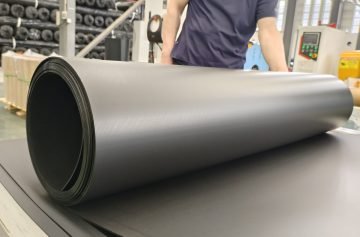
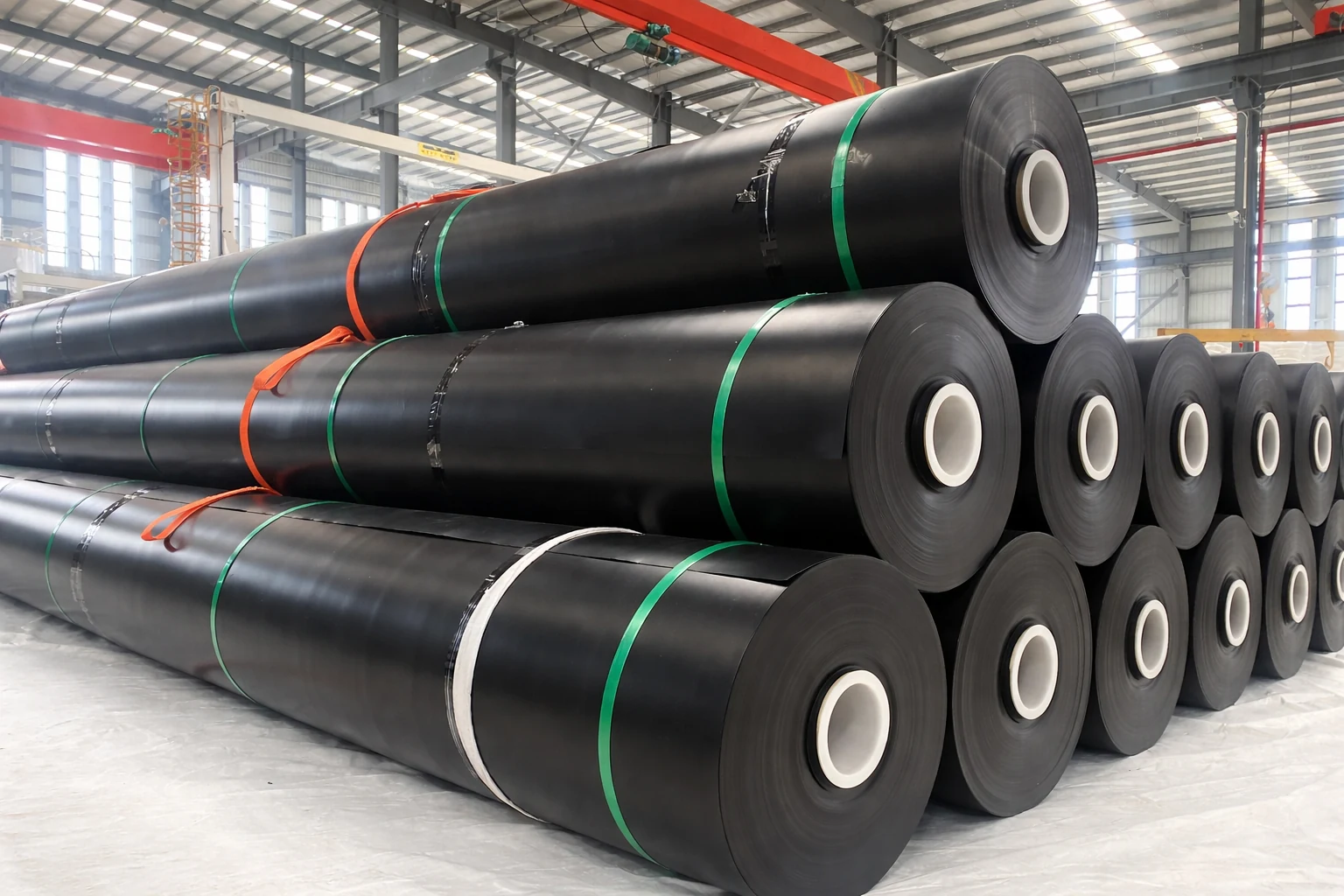
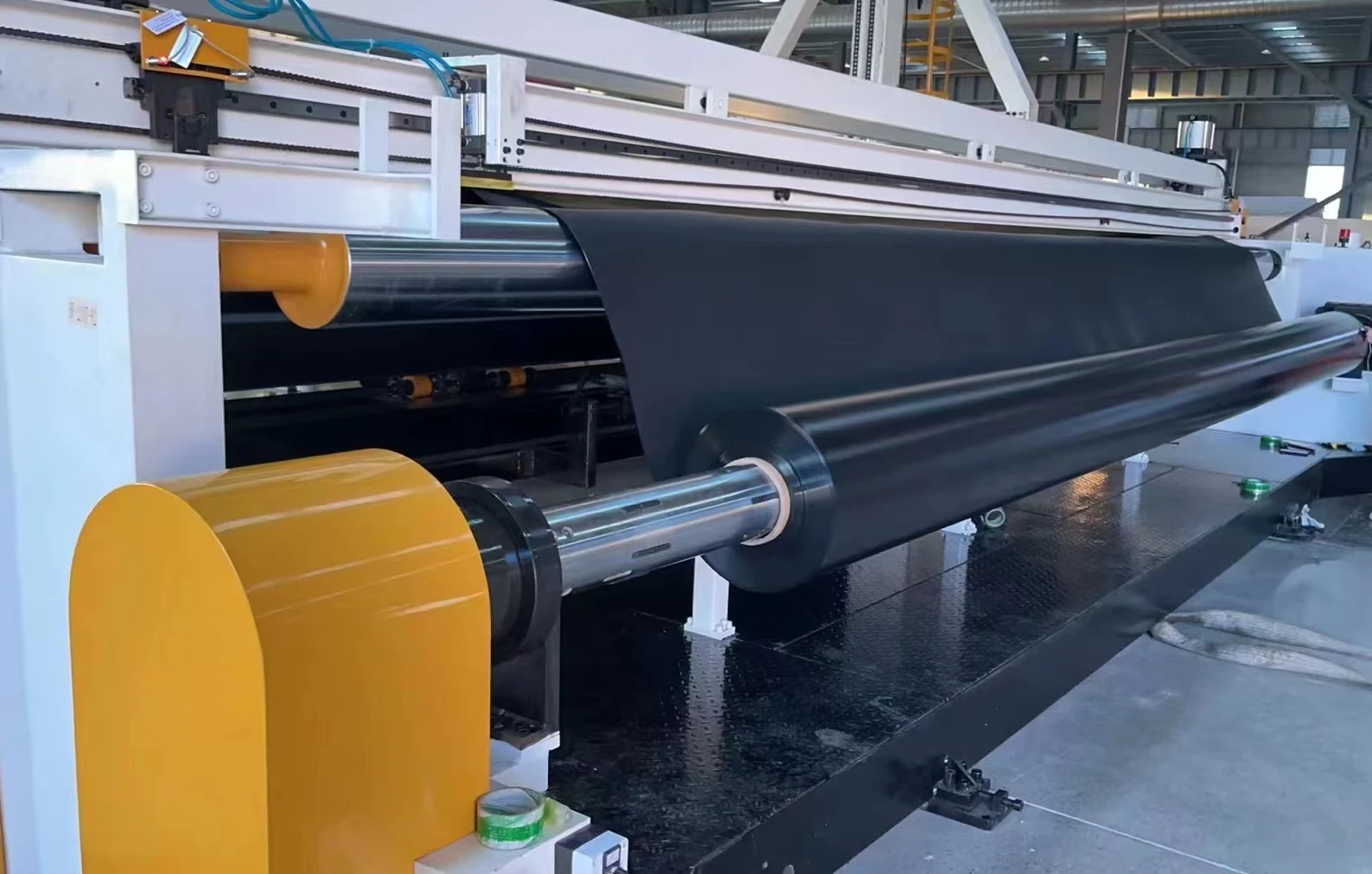
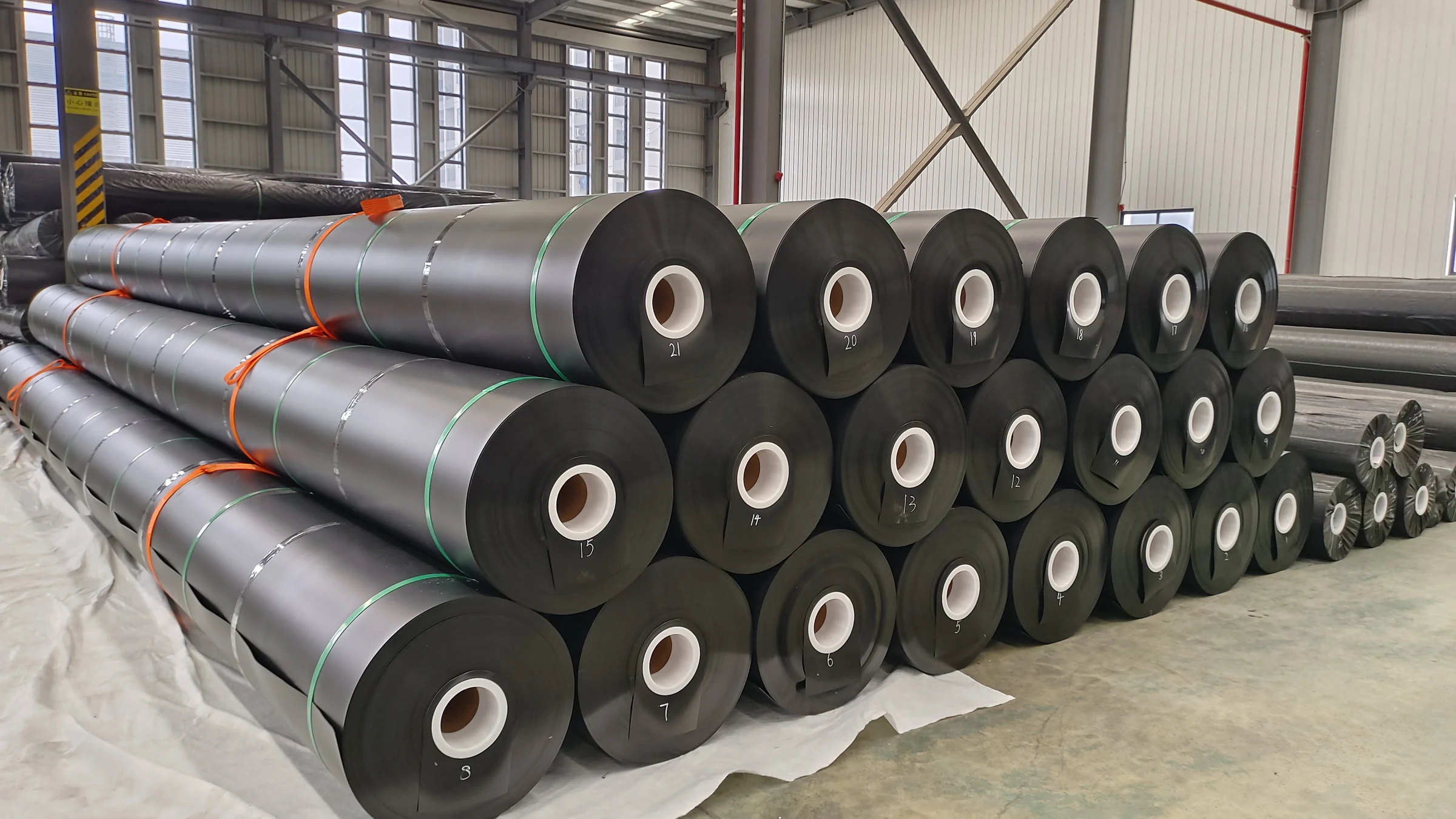

For a landfill cell requiring 5,200 m² of net liner per footprint acre, every $1/m² in an installed-area quotation contributes $5,200 per acre. At a hypothetical installed rate of $10/m², that is $52,000 per acre before excluded work. This is a calculation example, not a market price or a Jinseed quotation. Your budget needs the actual lined area, a written rate with a defined scope, and any separately priced earthworks, drainage, testing, and mobilization.
One flat acre is 4,046.86 m², rounded from the international-foot-based conversion. A landfill cell also has side slopes and anchorage details, so footprint acres alone do not establish how much membrane to buy. [1]
Are you pricing membrane rolls or the complete liner system?
A sheet-only price and a complete landfill liner system price cover different work. Before converting either to dollars per acre, identify the quotation basis.
| Price basis | Items to identify in writing | Area basis to confirm |
|---|---|---|
| Sheet only | Polymer, thickness, surface, roll dimensions, conformance documents, and quantity | Purchased sheet area, including the specified allowances |
| Delivered material | Sheet plus agreed freight, unloading, duties, and taxes | Ordered quantity and delivery terms |
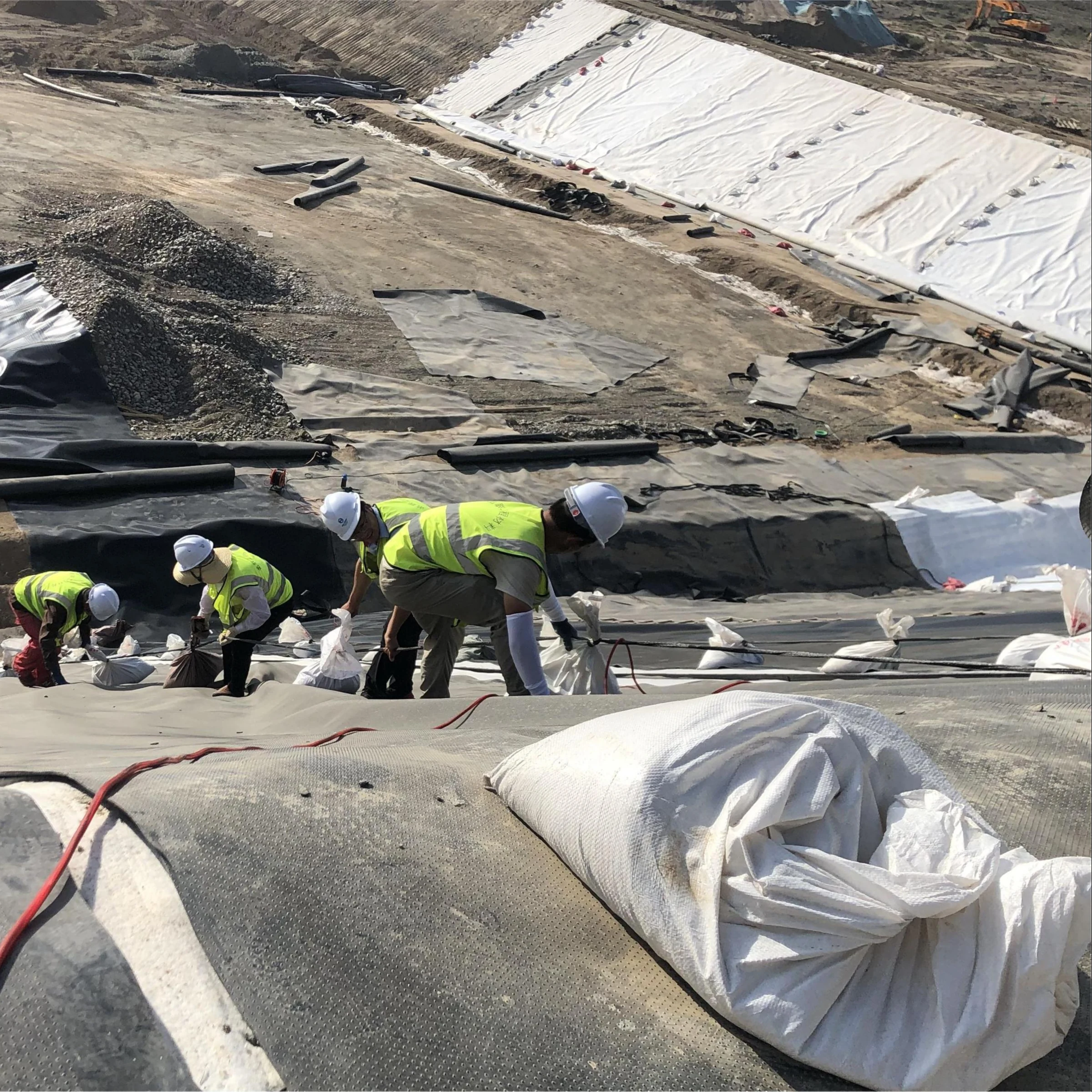
| Installed geosynthetics | Placement, welding, anchorage, penetrations, protection layers, testing, and mobilization; identify inclusions and exclusions | Net installed area or another explicitly agreed measurement rule |
| Complete cell lining works | Geosynthetics plus specified subgrade, soil barrier, drainage, leachate infrastructure, and assurance work | Individual pay items and the footprint acreage used for normalization |
Do not assume that “installed” includes independent construction quality assurance, electrical leak location, or every drainage component. Request a separate amount for each excluded item. The cost breakdown across membrane, protection, barrier, and drainage layers helps define those boundaries; GCL, clay, pipes, and pumps are system-scope items here, not claims about Jinseed’s product supply.
How much liner does one footprint acre require?
Separate three quantities: horizontal footprint, net surface to be lined, and purchased membrane. Calculate the floor and each slope separately. Only the horizontal projection of a sloping surface receives a slope factor; the flat floor does not.
| Surface geometry | Surface-to-plan factor | Surface area |
|---|---|---|
| Flat | 1.0000 | 4,047 m² |
| 4H:1V slope | 1.0308 | 4,171 m² |
| 3H:1V slope | 1.0541 | 4,266 m² |
| 2H:1V slope | 1.1180 | 4,525 m² |
The slope factor is √(H² + V²) ÷ H. Areas above use unrounded factors and are rounded to the nearest square meter. They exclude anchor trenches, overlaps, offcuts, and repairs. A whole cell containing both floor and slopes does not take the full slope percentage shown for a slope-only area.
For example, a hypothetical one-acre footprint with 3,200 m² of flat floor and 846.8564 m² of horizontal slope projection at 3H:1V has approximately 4,093 m² of net lined surface: 3,200 + (846.8564 × √10 ÷ 3). Applying the slope factor to the entire acre would instead give about 4,266 m² and overstate this example’s surface area.
After measuring the net surface, add anchorage and other details from the drawings. Develop overlap and cutting quantities from the panel layout rather than treating a universal waste percentage as a design rule.
What does the $52,000-per-acre example actually cover?
The opening example uses a different hypothetical takeoff: 5,200 m² of net installed surface per footprint acre. Assume an installed geosynthetic package priced at $10 per net installed m², with overlaps and offcuts already allowed for in that rate. The square-meter rate then converts to 5,200 × $10 = $52,000 per footprint acre.
If the membrane purchasing allowance were hypothetically 10%, the order would be 5,720 m² before any separately measured anchorage or detail allowance. That does not change the net installed quantity to 5,720 m². Multiplying the installed-area rate by the purchasing quantity would produce $57,200, overstating this particular subtotal by $5,200.
This is a worked budgeting scenario, not a completed project, field test, or customer case. Its practical lesson is to match each rate to its contractual quantity: purchased sheet m² for a sheet rate, net installed m² for a net-area installation rate, and separate quantities for other pay items. If a contractor uses a different measurement convention, use that convention consistently.
Cost per footprint acre = total cost of all included pay items ÷ footprint acres.
For a multi-acre quotation, add the actual fixed charges once before dividing by acreage. Do not multiply a whole-project mobilization charge by the number of acres. State currency, quotation date, validity, delivery terms, and tax treatment beside the resulting figure.
Which thickness and material specification should you price?
The permitted design sets the specification; a cheaper, thinner roll is not automatically a valid alternative. For context, the 2025 codified edition of 40 CFR 258.40 describes a composite-liner option for new U.S. municipal solid waste landfill units and lateral expansions. It requires HDPE membrane at least 60 mil thick over at least two feet of compacted soil with hydraulic conductivity no greater than 1 × 10⁻⁷ cm/s, in direct and uniform contact. Its leachate collection requirement is less than 30 cm of depth over the liner. The section also provides a performance-based design path. These are jurisdiction-specific provisions, not a universal specification for every landfill. [2]
Sixty mil equals 1.524 mm exactly. Although 1.5 mm HDPE and 60-mil products appear in commercial comparisons, do not assume that a nominal 1.5 mm product satisfies a 60-mil minimum. Confirm the required nominal thickness, acceptance tolerances, test method, and applicable specification edition with the designer.
For HDPE geomembrane, GRI-GM13 Revision 16 covers smooth and textured material with formulated sheet density of at least 0.940 g/cm³. It lists carbon black content of 2.0–3.0% using ASTM D4218, with specified correlated alternative methods, while ASTM D5596 addresses carbon black dispersion. Content and dispersion are different checks. [3]
Keep the adopted specification and test reports consistent across bids. GM13 also addresses tensile, tear, puncture, stress-crack, OIT, oven-aging, and UV properties; a generic claim of “UV resistant” or “GM13 quality” is not a substitute for the required reports. These laboratory properties do not by themselves establish field service life or compatibility with a particular leachate.
How does thickness affect shipping weight per acre?
For a smooth sheet calculation, areal mass in kg/m² equals density in g/cm³ multiplied by thickness in mm. Using 0.940 g/cm³ as a stated planning assumption gives the quantities below. The density basis comes from GM13, not a measured Jinseed batch. [3]
| Metric thickness | Calculated mass | Mass per 4,046.8564 m² |
|---|---|---|
| 1.0 mm | 0.94 kg/m² | 3,804 kg |
| 1.5 mm | 1.41 kg/m² | 5,706 kg |
| 2.0 mm | 1.88 kg/m² | 7,608 kg |
| 2.5 mm | 2.35 kg/m² | 9,510 kg |
The rows illustrate mass, not approved thickness choices for a landfill. For the 1.5 mm calculation, hypothetical purchasing allowances of 10% and 15% increase flat-acre sheet mass to about 6,277 kg and 6,562 kg respectively. Neither percentage is a recommended default.
Use actual roll dimensions, packaged weights, and container loading limits for freight. Weight alone does not determine roll count or container capacity; roll diameter, packaging, payload restrictions, and handling access also matter. Textured-sheet mass should come from the quoted product data rather than this smooth-sheet estimate. Doubling thickness doubles the calculated sheet mass at fixed density, not necessarily the installed cost.
Which design details can change the total?
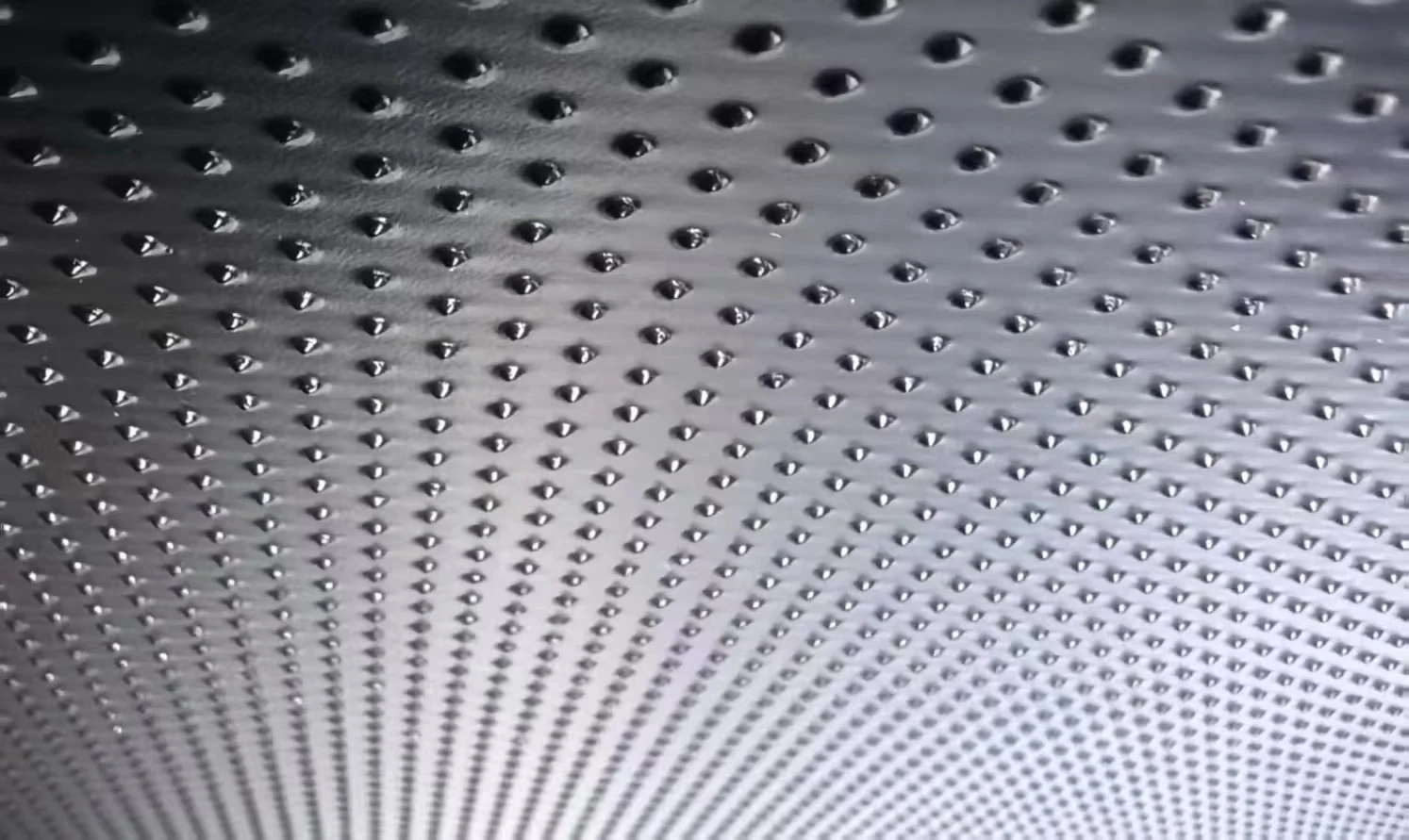
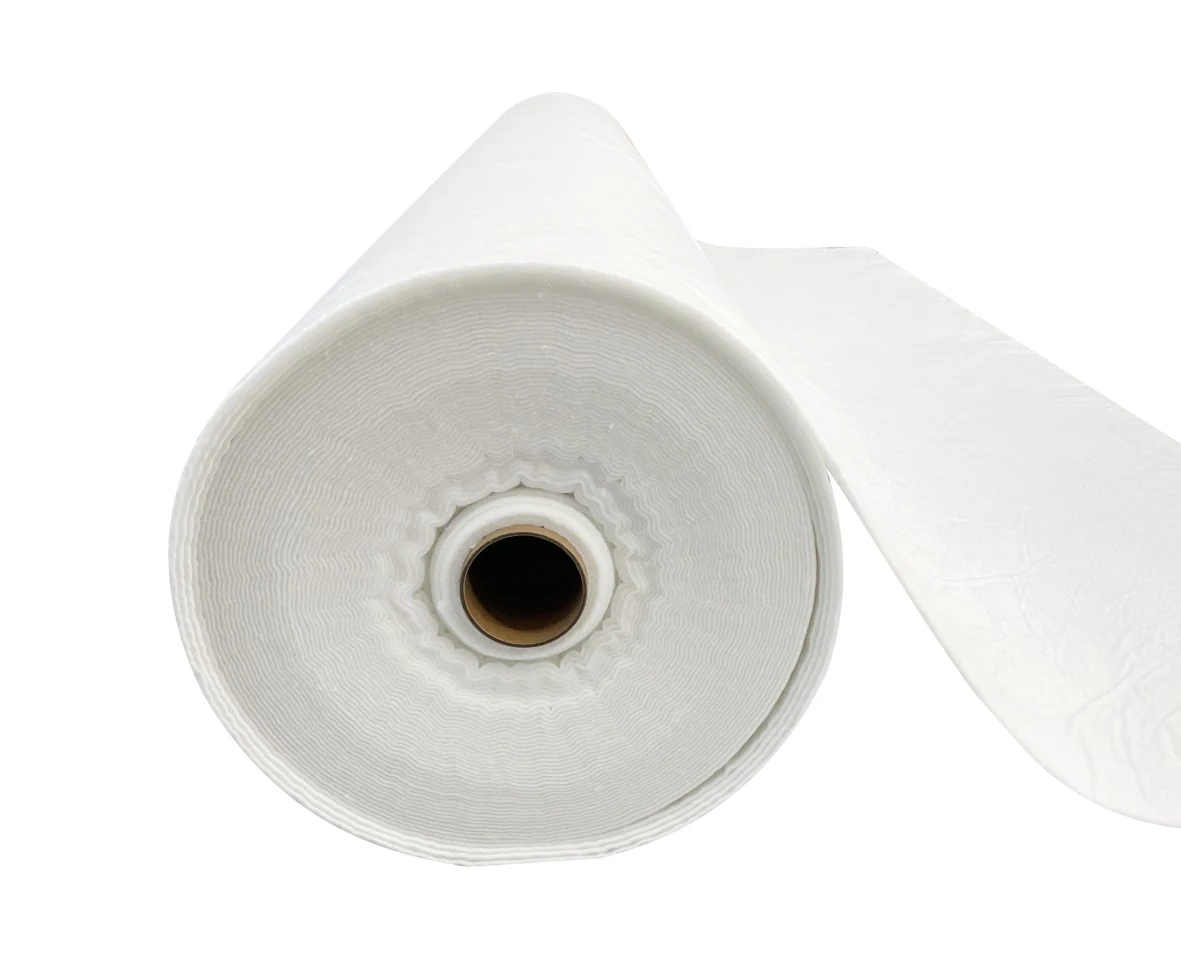
Specify smooth or single- or double-sided textured geomembrane for the relevant zones, based on the engineered design. Interface stability needs project-specific assessment; texture alone does not guarantee a stable slope. Match the specified geomembrane protection geotextile to the loading and adjacent materials rather than choosing by mass alone.
Price additional barriers, drainage, sumps, penetrations, and anchorage as defined pay items. An approved GCL integration is not an automatic replacement for the compacted soil in a permitted design. If the design specifies LLDPE geomembrane, GRI-GM17 is the relevant smooth-and-textured LLDPE manufacturing specification; it does not authorize substituting LLDPE for specified HDPE. [4]
Confirm chemical compatibility for the actual leachate and temperature. Earthworks, dewatering, weather protection, independent assurance, and leak-location work should each be included or expressly excluded, not left inside an undefined “liner installation” allowance.
What should you send for a comparable quotation?
- Footprint acreage, floor dimensions, slope ratios, and the net surface takeoff.
- Approved layer schedule, polymer, thickness, surface finish, and protection requirements.
- Panel-layout basis, purchasing allowances, anchor details, penetrations, and the measurement rule for each rate.
- Delivery location, unloading arrangements, access, and construction schedule.
- Required conformance reports, seam testing, independent assurance, and responsibility for repairs and acceptance.
- Separately priced site work, fixed charges, taxes, currency, and quotation validity.
Use qualified designers, installers, and verification personnel in accordance with current local regulations and the project permit. This guide provides a quantity-and-scope method, not a current market-average price, a final design, or documented field-performance experience.
Request pricing for your landfill liner materials
Send your drawings, material specification, quantities, and delivery location. Identify which installation and site-work items you are pricing separately.
References
- NIST, U.S. Survey Foot: Revised Unit Conversion Factors. International-foot-based acre: 4,046.8564224 m². Source. Accessed November 4, 2026.
- U.S. EPA regulation, 40 CFR 258.40(a)–(b), 2025 codified edition, published by the U.S. Government Publishing Office. Composite-liner design and leachate collection provisions. Source. Accessed November 4, 2026; confirm current requirements and the applicable permit before design or procurement.
- Geosynthetic Institute, GRI-GM13, Revision 16, March 17, 2021. HDPE smooth and textured geomembranes; scope and Tables 1(a) and 2(a). Source. Accessed November 4, 2026.
- Geosynthetic Institute, GRI-GM17, Revision 14, March 17, 2021. LLDPE smooth and textured geomembranes, Section 1. Source. Accessed November 4, 2026.